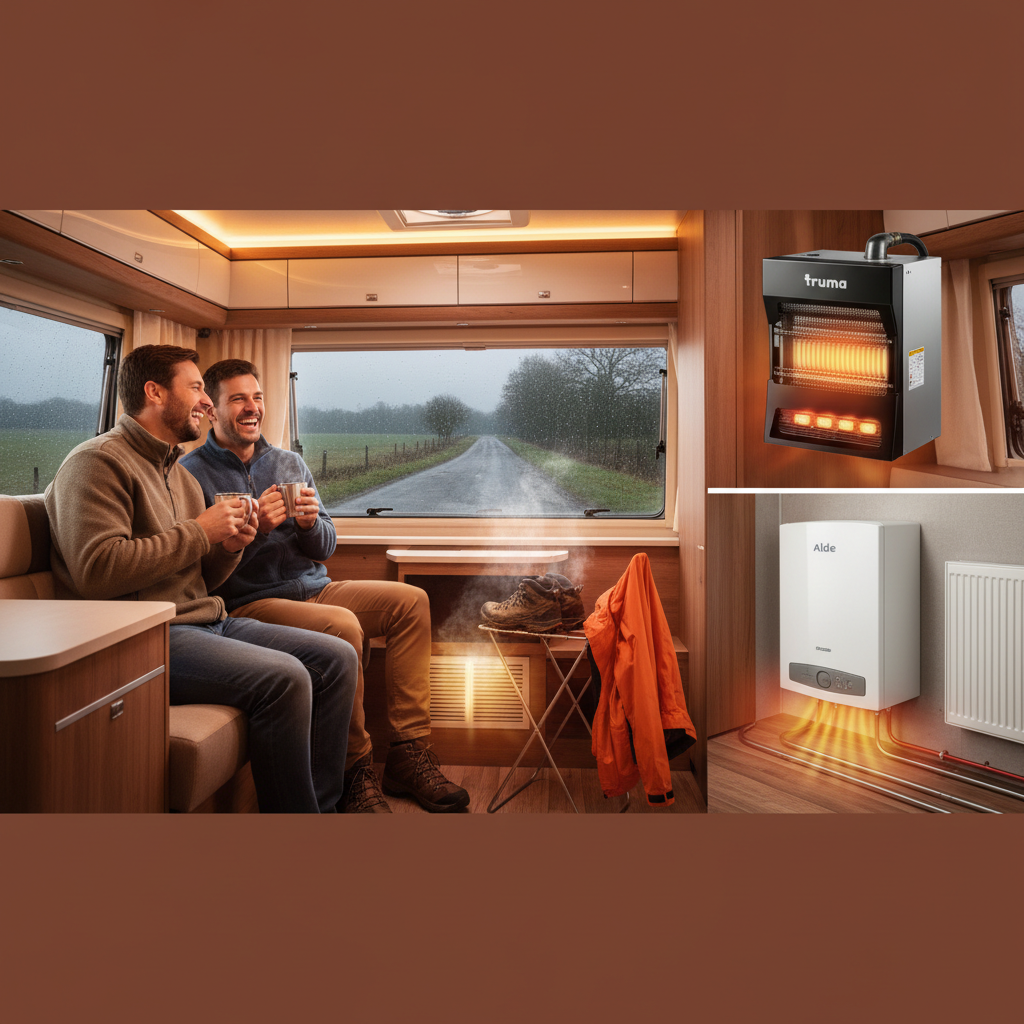
- Truma (Blown Air): Heats up rapidly, making it ideal for short trips and directed drying of wet gear.
- Alde (Hydronic): Provides silent, even radiator heat similar to a domestic home system, preferred for long-term winter use.
- Moisture Management: In the UK, heating is your primary tool for drying damp gear and preventing condensation during shoulder seasons.
- Insulation Standards: Look for NCC Grade 3 Thermal Insulation to ensure the vehicle is capable of maintaining comfortable internal temperatures in sub-zero conditions.
- Maintenance: Both systems require annual servicing; Alde specifically requires glycol fluid changes to prevent internal corrosion.
Heating is one of those features you might ignore during a sunny July viewing, but by your first cold, wet weekend in February, it becomes the most important system in your leisure vehicle. In the UK market, the choice usually involves two industry leaders: Truma and Alde. The real question for any owner is how effectively the system manages the British climate, dries damp gear, and prevents condensation.
Truma vs Alde: Understanding the Technology
Before choosing between different caravan makes or motorhome brands, you need to understand which technology suits your touring style. Both systems typically offer "dual-fuel" capability, running on LPG (gas) or 230V electric hook-up. When purchasing a pre-owned vehicle, it is vital to consult a used caravan inspection checklist to ensure the heating system has been regularly maintained by a qualified technician.
1. Truma Combi (Blown Air Heating)
Commonly found in mid-range caravans and motorhomes, Truma systems use a gas or electric burner to heat air, which is then distributed through ducts via a fan. Truma has been a specialist in caravan accessories for 75 years, developing the first officially recognized caravan heater in 1961.
- Pros: Rapid heat delivery; excellent for directed drying of wet boots or coats; generally lighter in weight than hydronic alternatives.
- Cons: Fan noise may be noticeable at night; can create "hot spots" near vents; moving air can sometimes feel like a draught.
- Best for: Weekend tourers and those who want immediate warmth after returning from outdoor activities.
2. Alde (Hydronic Central Heating)
Found in premium models, Alde works by circulating hot glycol fluid through radiators and pipes hidden behind the furniture. This provides a silent, consistent heat often found in high-end caravan layouts. Alde International notes that this system is designed to make "away feel like home," providing comfort from the Arctic Circle to the Sahara.
- Pros: Completely silent operation; consistent, even heat distribution; often includes integrated underfloor heating.
- Cons: Takes longer to reach temperature from a cold start; heavier overall system weight; requires periodic fluid changes.
- Best for: Seasonal pitch users, full-timers, and those who prioritize a silent environment.
| Feature | Truma Combi | Alde Hydronic |
|---|---|---|
| Heating Method | Blown Air | Fluid-filled Radiators |
| Noise Level | Moderate (Fan-based) | Silent |
| Drying Capability | High (Directed Air) | Ambient (Radiant Heat) |
| Maintenance | Annual Gas Service | Annual Service + Glycol Change |
The Reality of UK Winter Touring & Moisture Management
If you tour in the shoulder seasons or winter, heating matters more than almost any other upgrade. Wet coats that never dry can lead to significant condensation issues. When browsing used caravans for sale, check the service history for heating maintenance. Effective heating must work alongside ventilation to prevent damp in motorhomes and caravans.
Modern systems are often integrated with digital control panels. When visiting caravan dealers, ask for a demonstration of the control interface. Some systems allow for "delayed start," which is a key feature for returning to a warm vehicle after a winter walk. This functionality allows you to set the heater to activate at a specific time, ensuring a cozy welcome.
How to Evaluate Heating During a Viewing
Don't just take the seller's word for it. Whether you are looking at a family tourer or a luxury motorhome, perform these checks:
- The Distribution Test: Ask to run the heating on full power while you inspect the vehicle. Does the heat reach the furthest vents or radiators?
- The Washroom Check: Ensure warmth reaches the washroom effectively. A cold bathroom in February makes morning routines difficult.
- Acoustic Check: Sit in the lounge area and listen to the system. Is the fan noise intrusive? This is particularly important for light sleepers.
- Fluid Inspection: For Alde systems, check the header tank. The glycol fluid contains corrosion inhibitors that degrade over time and must be replaced to protect the boiler and aluminium pipes.
Practical Winter Heating Checklist
- [ ] Power Source: Confirm if the system runs on Gas, Electric (230V), or a combination of both.
- [ ] Service History: Verify the last service date and, for Alde systems, the last glycol change.
- [ ] Insulation Grade: Look for the 'Grade 3' thermal insulation badge—the industry standard for winter use.
- [ ] Vent Placement: Check where vents or radiators sit relative to bedding in different family caravan layouts.
Frequently Asked Questions
Can I leave my heating on while I drive?
This is only permissible if your vehicle is fitted with a crash-sensing gas regulator. Without this safety device, gas cylinders must be turned off at the bottle while in motion to comply with UK safety regulations. Always consult your specific vehicle manual.
Why does hydronic heating take longer to warm up?
Hydronic systems must heat the glycol fluid first, which then warms the radiators, which finally warms the air. While this takes longer than blowing hot air directly, it results in a more consistent and even temperature throughout the vehicle.
Do I need to change the fluid in my Alde system?
Yes. The glycol fluid contains inhibitors that prevent corrosion within the aluminium piping and boiler. Over time, these inhibitors lose their effectiveness. Failing to change the fluid can lead to expensive internal damage.
What is Grade 3 Thermal Insulation?
Grade 3 is a thermal standard (BS EN 1645-1) verified by the NCC. It indicates that the vehicle can maintain an internal temperature of +20°C when the outside temperature is -15°C, provided the heating system is operational. This is a critical metric for year-round touring.
Which system is better for drying wet clothes?
Truma blown air is generally more effective for drying gear because you can direct the airflow toward specific vents where wet items are placed. Alde provides a more ambient, radiant heat which is excellent for comfort but slower for drying heavy fabrics.
Is one system more reliable than the other?
Both Truma and Alde are highly regarded for reliability when maintained correctly. Truma systems are often praised for their simplicity, while Alde systems require more specific maintenance regarding fluid levels and chemical balance.
Does the heating system affect my payload?
Yes. Hydronic systems are generally heavier than blown-air units because they include radiators, extensive piping, and several litres of glycol fluid. Always check your vehicle's remaining payload when choosing a high-specification model.
Summary: Which is for you?
If you are a "weekend warrior" who wants the van warm shortly after arrival, Truma is often the preferred choice. If you spend long periods away, especially in sub-zero temperatures, the silent luxury of Alde is often worth the additional investment. Before committing, visit UK caravan dealers to experience both systems in person and determine which best fits your comfort requirements.