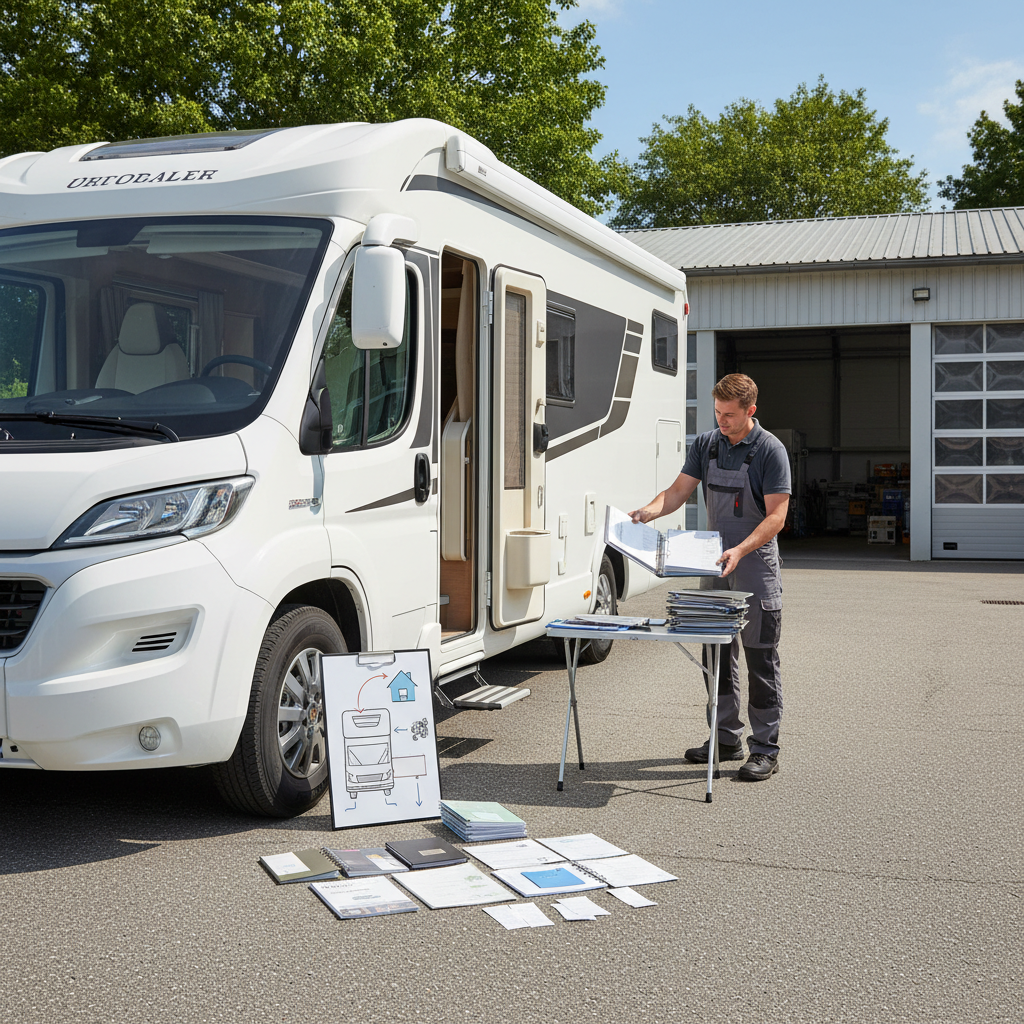
Quick Answer: What Good Paperwork Looks Like
- The Dual Requirement: A motorhome needs two distinct service records: a mechanical 'base vehicle' service and a specialised 'habitation' check performed annually.
- Invoices Over Stamps: Service book stamps are easily falsified. Detailed invoices showing specific parts, labour, and fluid types are the gold standard for verifying maintenance.
- The Damp Report: This is the most critical habitation document. It must show a diagram with percentage readings to identify areas of water ingress.
- AWS Certification: For habitation work, look for the Approved Workshop Scheme (AWS) logo, which ensures the technician is independently assessed and recognised by major UK manufacturers.
Service history is more than just a record of oil changes; it is the only way to verify that a motorhome has been maintained as both a roadworthy vehicle and a safe living space. Because these vehicles serve two purposes, they require two distinct types of maintenance. Whether you are inspecting a compact Devon conversion or a flagship Niesmann And Bischoff, the paperwork is your primary protection against hidden mechanical failure or structural decay.
The Three Pillars of a 'Gold Standard' Service History
When reviewing a vehicle at motorhome dealers or in a private sale, do not just look for a thick folder; look for these three specific categories of documentation:
1. Base Vehicle Mechanical History
This covers the engine, chassis, and drivetrain (typically a Fiat Ducato, Ford Transit, or VW Crafter). A solid history should include:
- Annual Service Invoices: Showing oil changes, filter replacements, and brake fluid flushes. These documents provide the granular detail that a simple stamp lacks, such as the specific grade of oil used.
- Cambelt/Timing Belt Records: Crucial for diesel engines. These are replaced based on manufacturer-specific age or mileage intervals. Failure to provide this evidence is a significant risk factor for the buyer.
- Tyre Age & Condition: Motorhome tyres often perish from UV damage and sidewall stress before the tread wears out. Check the DOT code on the sidewall to verify the manufacture date and look for receipts of recent replacements.
- MOT History: Use the DVSA MOT History Service to verify mileage and check if previous 'advisories' were addressed with corresponding repair receipts. This cross-referencing ensures the seller hasn't ignored safety-critical maintenance.
2. Habitation Service Records
The 'hab check' is unique to leisure vehicles. A comprehensive report from an Approved Workshop Scheme (AWS) technician—a scheme supported by the NCC, the Caravan and Motorhome Club, and the Camping and Caravanning Club—should detail:
- Damp Inspection: A diagram of the vehicle with percentage readings. This is the single most important document for protecting the vehicle's future resale value and identifying leaks early.
- Gas Safety: A gas tightness test to ensure no leaks in the hobs, oven, or heating system. This includes checking the health of the regulator and ensuring the system is safe for occupancy.
- Electrical Testing: An RCD trip test for the 230V mains system and a health check of the 12V leisure battery and charging circuit.
- Water System: Inspection of the pump, taps, and the cassette toilet seals to ensure the plumbing remains watertight and functional.
3. Warranty and Specialist Repairs
If the motorhome is a premium brand like Bürstner, Laika, or Le Voyageur, look for evidence that repairs were carried out by authorised workshops. This is vital to maintain the water ingress warranties common in modern builds from manufacturers like Bailey or Swift. Many manufacturers require these checks to be performed within a specific window of the registration anniversary to keep the warranty valid.
Red Flags: What Gaps Actually Matter?
Long gaps in service history are not always fatal, but they require context. A motorhome can sit unused for a year and remain "low mileage," but mechanical seals can dry out and batteries can deep-discharge. Stagnant water systems can also develop biofilm buildup if not properly winterised or sanitised.
Always prioritise a well-used, well-serviced vehicle over a neglected 'garage queen'. This is especially true for popular touring motorhome layouts like the Auto-Trail Imala or Bailey Autograph. If a vehicle has only done 500 miles in three years but hasn't been serviced, the oil may have acidified and the tyres may have developed flat-spots.
Buyer's Paperwork Checklist
- [ ] Cross-reference the mileage on the latest service invoice with the current odometer.
- [ ] Check the MOT history online to see if previous 'advisories' were actually fixed.
- [ ] Verify the VIN (Vehicle Identification Number) on the V5C matches the chassis plate and the service records.
- [ ] Ensure the Habitation Check was performed by an AWS-approved workshop to protect warranty validity.
- [ ] Check for a 'Weight Bridge' certificate if the vehicle has been uprated or has heavy accessories like air-con. Use our Motorhome Weight Checker to see if you are near your limit.
Stamps are a Start, Not the End
A stamp in a book tells you something happened; a detailed invoice tells you what happened. When you are spending significant sums on high-end models like a Frankia Platin, aim for the receipts. They prove the quality of parts used and the depth of the inspection. If you are browsing used motorhomes, always ask to see the physical folder before transferring a deposit. A lack of physical paperwork in a digital age is often a sign of poor record-keeping by previous owners.
Frequently Asked Questions
Does a missing habitation check void my warranty?
In most cases, yes. UK manufacturers typically require an annual habitation check (specifically the damp inspection) within a strict window to maintain the long-term water ingress warranty. Missing even one year can lead to a claim being rejected.
What is the AWS and why does it matter?
The Approved Workshop Scheme (AWS) is the benchmark for motorhome servicing in the UK. It is a joint enterprise between the NCC and the major touring clubs. Using an AWS workshop ensures the technician is qualified and the work meets manufacturer standards, which is often a requirement for maintaining warranties.
How do I verify the ownership history?
The V5C logbook is the primary document. According to GOV.UK, when you buy a vehicle, the seller must tell the DVLA you are the new keeper. You should never buy a vehicle without a V5C unless you are prepared to apply for a replacement (form V62). The V5C should match the VIN on the vehicle chassis.
How often should the cambelt be changed?
This varies by base vehicle manufacturer (Fiat, Ford, Peugeot). Intervals are determined by the manufacturer based on age or mileage. Because motorhomes carry heavy loads, adhering to these intervals is critical. Always check the specific manufacturer guidelines for your engine type.
Can I check the history of a conversion?
For van-based projects or professional conversions, use our Campervan Conversion Checker to verify the build. You should also look for NCC approval stickers or AWS pre-purchase inspection reports which indicate the vehicle met specific safety standards at the time of the check.
What should I do if the service book is missing?
If the physical book is missing, contact the motorhome dealers who previously sold or serviced the vehicle. Many modern workshops keep digital records and can provide duplicate invoices. A vehicle with no paperwork at all should be approached with extreme caution.
Is a DIY service history acceptable?
While you can perform basic maintenance, 'DIY' history significantly reduces the resale value of a modern motorhome. It provides no legal protection for gas safety and offers no recourse against damp claims or manufacturer warranty issues.
What is a damp report?
A damp report uses a moisture meter to find water ingress. It provides a percentage reading of moisture levels within the wall structures. High readings indicate a leak that requires professional repair to prevent structural rot and protect the vehicle's integrity.
Before committing to a purchase, use our Motorhome Weight Checker to ensure the vehicle's payload capacity matches your needs, especially if heavy extras like solar panels or awnings have been added. If you are looking for your next vehicle, explore our used motorhomes for sale or visit our Motorhome Makes hub for brand-specific advice. You can also find local experts via our caravan dealers directory.