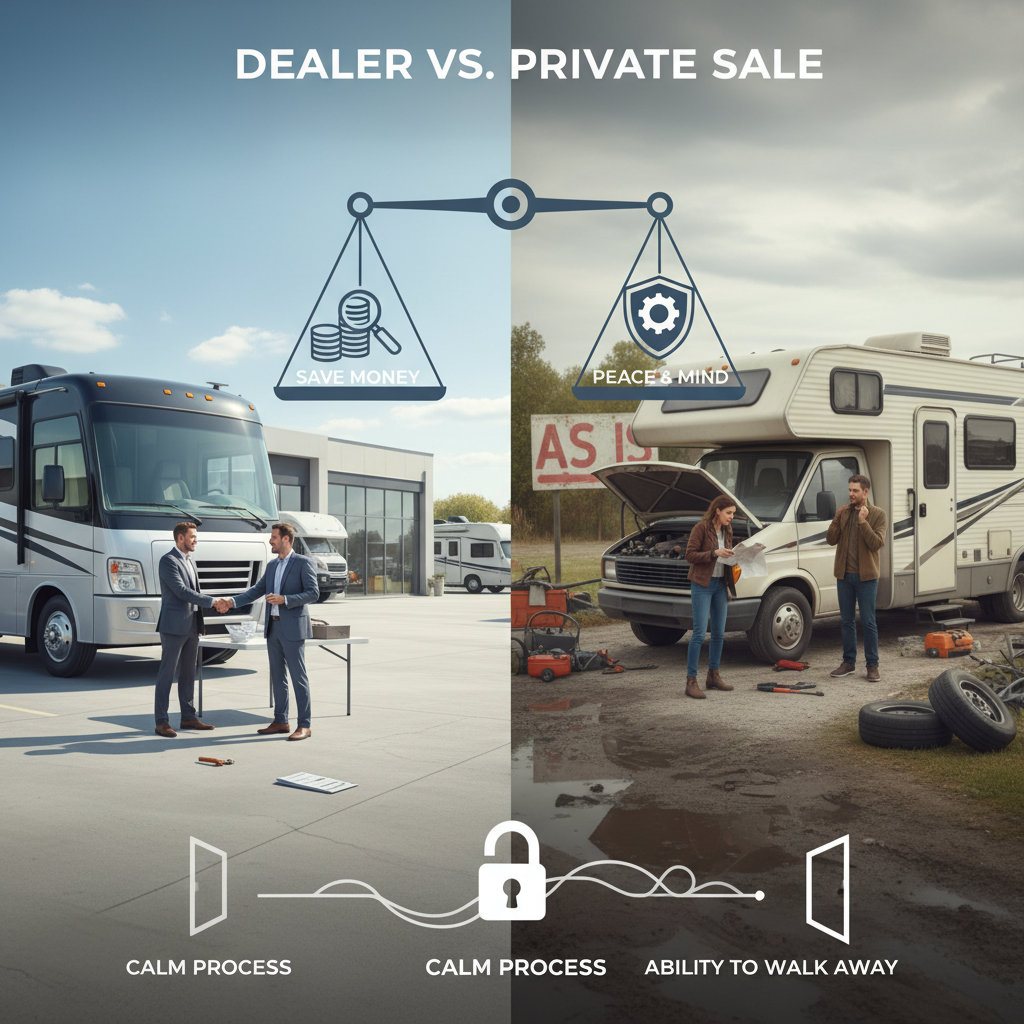
- Dealers: Provide professional support and are often members of the National Caravan Council (NCC). They typically offer Pre-Delivery Inspections (PDI) and warranties.
- Private Sales: Often closer to trade-in value but operate under 'Buyer Beware'. You must verify the vehicle's condition and history yourself.
- Safety First: Always verify ownership via a CRiS check for caravans. Never purchase without a thorough damp meter inspection and a check of the 17-digit VIN.
- 2026 Context: Digital systems like Swift Command and annual habitation records are now critical components of the pre-purchase verification process.
Deciding whether to buy from a professional dealer or a private individual is a significant choice when searching for used caravans for sale. While a private seller might offer a lower price, a dealership provides a professional framework that can protect your investment. This guide breaks down the implications and technical risks of both routes to ensure you avoid expensive surprises.
Dealer vs Private: The Comparison
The choice between these two routes often comes down to a trade-off between price and professional preparation. In the current market, the complexity of modern leisure vehicles—with integrated smart systems and advanced construction—makes the dealer's preparation process attractive to many buyers.
| Feature | Dealership Purchase | Private Sale |
|---|---|---|
| Legal Context | Professional trade standards apply | Description must be accurate (Buyer Beware) |
| Price | Higher (includes overheads and margin) | Lower (often closer to trade-in value) |
| Condition | Serviced and PDI checked | 'Sold as seen' - condition is your responsibility |
| Finance | Available on-site with part-exchange options | Cash, bank transfer, or personal loan only |
Buying from a Dealer: Professional Standards
When you buy from a professional caravan dealer, you are paying for a level of preparation. Reputable dealers should provide a Pre-Delivery Inspection (PDI) and a warranty, but it is vital to understand the extent of this cover. Some warranties may have specific exclusions, so reviewing the terms regarding water ingress or bodywork seals is essential.
Industry Standards and AWS
To ensure high safety standards, check if the dealer uses an Approved Workshop Scheme (AWS) technician. This scheme is a joint enterprise between the NCC, the Caravan and Motorhome Club, and The Camping and Caravanning Club. It ensures that habitation checks are performed by qualified professionals who pass annual inspections. Furthermore, look for the National Caravan Council (NCC) logo, which indicates the dealer is part of the trade association representing the UK supply chain.
The Value of the PDI
A Pre-Delivery Inspection is a technical check ensuring systems—such as gas, water, electrics, and the chassis—are functional. For a buyer, this means the fridge should be tested on power sources and the gas system should be checked for safety before you take ownership. This is a key benefit of buying from established dealers.
Buying Privately: The Safety Protocol
Buying privately requires a 'buyer beware' mindset. If you fail to spot a soft wall caused by damp or a cracked chassis, you have limited recourse once the transaction is complete. However, for those who know what to look for, private sales can be a way to find popular caravan makes at a lower entry price.
Verification and Provenance
Always view the vehicle at the seller's home address and match this to the V5C logbook for motorhomes or the CRiS registration document for caravans. The CRiS document is the national register for UK caravans and is essential for verifying the registered keeper. Avoid any seller who suggests meeting in a public car park, as this can be a tactic to hide the seller's true location.
The 'Damp' Test
Damp is a significant threat to a leisure vehicle's longevity. Never buy privately without using a damp meter. Focus your inspection on corners, window seals, around rooflights, and inside lockers. Musty smells are a major red flag. If you are unsure, consider hiring a professional to perform a pre-purchase inspection via an Approved Workshop. These professionals are trained to identify issues that are not visible to the naked eye.
Identity and Security Checks
For caravans, the 17-digit VIN (Vehicle Identification Number) is your primary tool for verification. This number is typically etched on the windows and stamped on the chassis. A CRiS check will confirm if the name of the registered keeper matches the seller, if the vehicle has been reported stolen, if there is outstanding finance, or if it has been written off by insurers.
Essential Pre-Purchase Checklist
1. Documentation & History
- [ ] CRiS/HPI Check: Confirm the vehicle is not stolen, has no outstanding finance, and has not been an insurance write-off.
- [ ] Service History: Check for annual habitation reports. Missing a year can impact manufacturer warranties on newer models.
- [ ] Weight Limits: Use a motorhome weight check or towing calculator to ensure the vehicle is legal for your car.
- [ ] V5C/CRiS Document: Ensure the document is original and the address matches the viewing location.
2. Technical Inspection
- [ ] Tyre Condition: Check the DOT code for age. Rubber degradation can occur even if the tread looks deep.
- [ ] Gas & Electrics: Ensure the fridge, hob, and heating work on all power sources. Check for a valid habitation service record.
- [ ] VIN Matching: Ensure the 17-digit VIN on the chassis matches the windows and the paperwork.
- [ ] Conversion Integrity: If buying a van, use a campervan conversion check to verify the build.
- [ ] Smart Systems: For modern models, ensure any control apps are functional and can be transferred to your account.
Common Red Flags to Watch For
The "Too Good to Be True" Price: High-end models listed at significantly lower prices are often used to lure quick deposits. Never pay a deposit before seeing the vehicle and verifying the paperwork in person. If a flagship model is listed far below market value, proceed with caution.
Inconsistent Paperwork: If the CRiS document or V5C appears tampered with, or if the seller claims the paperwork is unavailable, walk away. You can find more advice on avoiding these traps in our buying used paperwork checklist.
The Pressure Sell: Be wary of sellers who claim multiple other buyers are on their way with cash. A legitimate seller will allow you the time to perform a thorough inspection. Rushed decisions often lead to expensive repairs later.
Decision-Making Scenarios
When deciding between a dealer and a private sale, consider your own technical ability. If you are comfortable using a damp meter and checking gas connections, a private sale might offer savings. However, if you are a first-time buyer, the support of an NCC-member dealer provides a professional framework that many find justifies the retail price.
Consider also the method of payment. Dealers can offer finance packages and part-exchange options for your current outfit. Private sales are almost exclusively cash or bank transfer, which offers less protection if the transaction goes wrong. Always ensure you have a receipt and have verified the seller's identity before transferring large sums.
Frequently Asked Questions
Can I get a warranty on a private sale?
Standard private sales do not come with a warranty. However, you can purchase independent habitation warranties from third-party providers. Always check the 'exclusions' list carefully, as many do not cover pre-existing water ingress.
What is a PDI in a dealer sale?
A Pre-Delivery Inspection is a final technical check by the dealer to ensure all systems—gas, water, electrics, and chassis—are safe and functional before you take ownership.
Is a damp meter really necessary?
Yes. Even relatively new vehicles can develop leaks. A damp meter can detect moisture trapped behind wallboards long before it becomes visible. Visual checks are rarely sufficient to identify early-stage water ingress.
How do I check if a caravan is stolen?
Perform a CRiS Check using the 17-digit VIN. This will reveal if the caravan has been reported as stolen, has outstanding finance, or has been written off by an insurer.
What should I check on the tyres?
Check the DOT code for the age of the tyre. Rubber can degrade over time regardless of use. It is also important to check for any signs of cracking in the sidewalls.