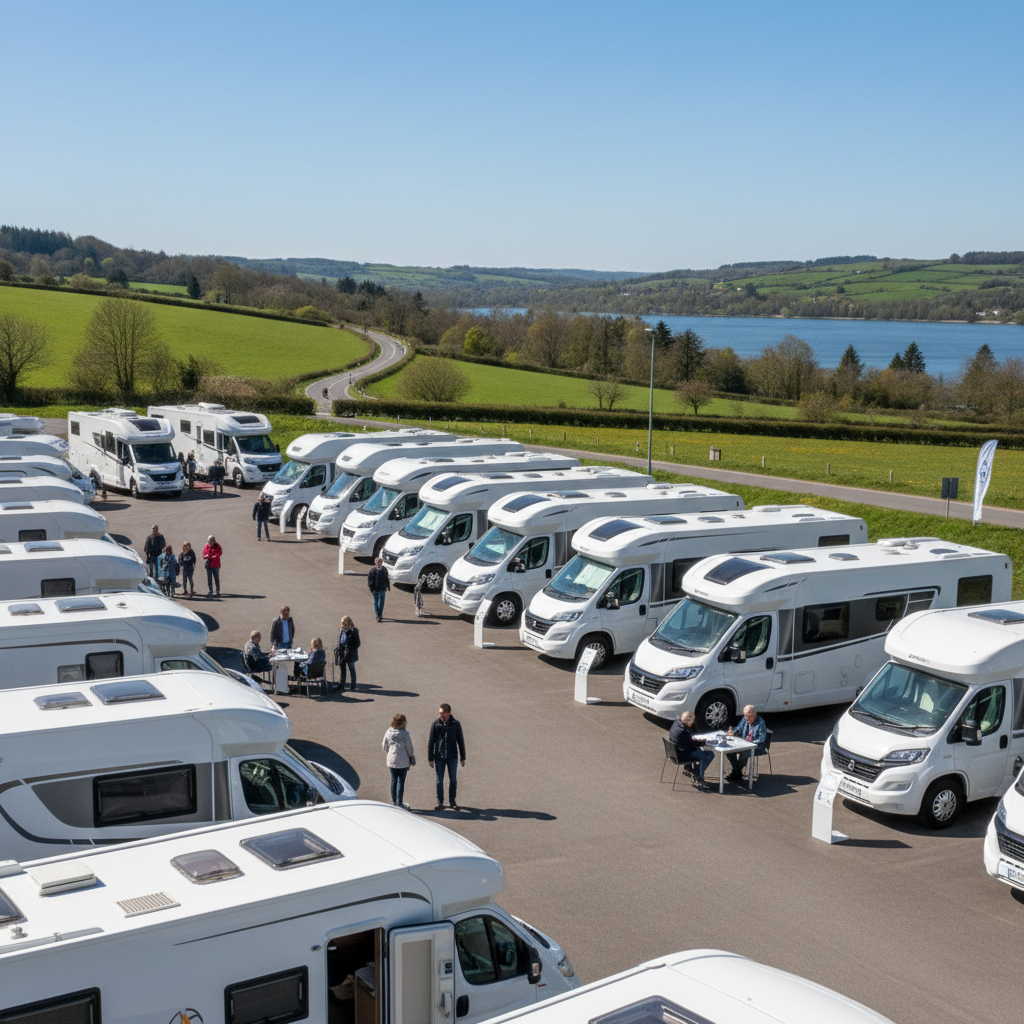
Executive Summary: Mid-February 2026
- Demand Spike: High demand for 'holiday-ready' units, specifically fixed-bed layouts like the Etrusco T 7400 and Bailey Autograph 69 2.
- Value Drivers: Documented habitation history (NCC-approved), recent damp reports, and clear payload margins are the primary price anchors.
- Market Warning: Private sales with maintenance gaps or missing service history are seeing significant price softening as buyers avoid 'project' risks.
- Regulatory Focus: Increased awareness of weight limits is making the Motorhome Weight Checker an essential pre-purchase tool.
- Stock Trends: Premium A-Class models from Frankia and Niesmann And Bischoff are holding value better than entry-level coachbuilts.
As we move through mid-February 2026, the UK motorhome market is shedding its winter lethargy. We are observing a distinct shift in buyer psychology: the 'project' season is over, and the 'holiday-ready' season has begun. With the first bank holidays of the year on the horizon, buyers are rewarding transparency and penalising ambiguity. For those looking to enter the market, browsing used motorhomes now offers the best balance of stock availability before the peak spring rush. The National Caravan Council (NCC) continues to represent the supply chain, ensuring that manufacturers and dealerships adhere to industry standards, which is increasingly important as buyers seek verified quality.
What Buyers are Rewarding Right Now
In the current climate, a clean aesthetic is secondary to mechanical and structural confidence. Sellers who provide the following are achieving closer to their asking prices and faster completion times:
- Verified Habitation History: Recent damp reports (within the last 6 months) and gas safety certificates are now non-negotiable for premium valuations. The best motorhome dealers are now lead-generating with these documents front-and-centre.
- Honest Interiors: Simple, durable layouts—particularly those from reliable brands like Carado or Etrusco—that photograph accurately without heavy filtering.
- Fixed Bed Layouts: The convenience of a fixed rear bed remains the most sought-after configuration. Premium models like the Frankia Platin or the Laika range are seeing high engagement due to their balance of luxury and practicality.
The shift toward transparency is also driven by the Driver and Vehicle Standards Agency (DVSA) and their role in monitoring vehicle roadworthiness. Buyers are increasingly checking the MOT history of vehicles via official portals to ensure that previous failures or advisories have been addressed. This level of scrutiny is becoming the norm for mid-February transactions.
Market Deterrents: What is Stalling Sales?
Buyers are becoming increasingly sophisticated regarding legal compliance and long-term reliability. The following issues are currently 'deal-breakers' in the used market:
- Payload Ambiguity: With reports of increased roadside weight enforcement, buyers are wary of units with slim margins. It is vital to check the Maximum Authorised Mass (MAM) against the user payload before committing. Use our Motorhome Weight Checker to verify your limits.
- Maintenance Gaps: Long periods of SORN or storage without evidence of 'exercise' runs, battery conditioning, or tyre rotation. The DVSA provides guidance on keeping commercial and heavy vehicles safe to drive, emphasizing daily checks and regular inspections.
- Cosmetic Masking: Fresh sealant or 'quick-fix' interior paint that may hide deeper structural damp issues.
The 'Fast Bargain' Litmus Test
If a price looks too good to be true this month, it usually is. Mid-February is rarely a time for genuine 'fire sales' without underlying issues. If you find a bargain, perform a rigorous inspection using this checklist:
Pre-Purchase Inspection Checklist
- The Damp Profile: Use a calibrated moisture meter to check window seals, roof lights, and the garage area. Look for readings consistently below 15%. Readings between 15-20% require investigation; over 20% suggest active ingress.
- Tyre Age: Check the DOT codes (four digits representing week/year). Even with good tread, motorhome tyres over 5-6 years old require replacement due to sidewall degradation. The DVSA manual for axles, wheels, and tyres highlights the importance of these components for road safety.
- Paperwork Trail: Ensure the V5C matches the physical VIN. For heavier units (over 3,500kg), verify if the vehicle requires a C1 licence category. According to GOV.UK, you need a C1 licence for vehicles between 3.5 and 7.5 tonnes.
- Gas & Electric: Ensure the fridge, heating (e.g., Alde or Truma systems), and hob are fully functional on all power sources (Gas, 12V, 230V). The NCC warns against using portable gas heaters indoors due to safety risks.
- Service History: Look for a stamped book for the base vehicle (engine) and separate annual habitation certificates from an NCC Approved Workshop.
Regulatory Compliance and Size Limits
When purchasing or importing a motorhome, it is essential to understand the UK size restrictions. GOV.UK specifies that you cannot register a motorhome that exceeds 12 metres in length or 2.55 metres in width. These measurements exclude driving mirrors, rear bumpers, lamps, or reflectors. While there is no specific height limit, any motorhome over 3 metres tall must have a notice showing the height where the driver can clearly see it. Failure to adhere to these limits can lead to registration issues and legal complications.
Furthermore, the licence you require is strictly tied to the vehicle's MAM. If you are driving a motorhome with a MAM between 3.5 and 7.5 tonnes, a category C1 licence is mandatory. For vehicles exceeding 7.5 tonnes, a category C licence is required. It is important to note that licence requirements may differ in Northern Ireland, so buyers should verify their specific regional regulations before completing a purchase.
Buying Strategy for Late February 2026
To secure the best value, we recommend filtering your search strictly by your driving licence weight band. You can browse used motorhomes here to find units with verified histories. If you are looking for specific premium builds, explore our Motorhome Makes hub to compare specifications for brands like Frankia, Laika, or Niesmann And Bischoff. For those seeking specific configurations, our motorhome layouts guide helps narrow down the search between island beds and twin-bed options. Additionally, finding a reputable dealer through a member directory can provide extra peace of mind regarding the vehicle's history and preparation.
Frequently Asked Questions
Is February a good time to buy a motorhome?
It is a competitive time. While selection is high as dealers refresh stock, prices begin to rise as spring approaches. It is the best time for choice, but rarely for the absolute lowest price. Check current motorhome listings to gauge local pricing.
What is the most important document to ask for?
Beyond the V5C and MOT, a recent Habitation Service Report (NCC approved) is vital to ensure the living area is safe, the gas system is sound, and the bodywork is damp-free. This is the industry standard for safety and consumer rights.
Should I worry about high mileage on a used motorhome?
In the motorhome world, 'low mileage' can sometimes be a red flag if it means the vehicle has sat idle. A well-maintained engine with 50,000 miles and a full service history is often preferable to a 5,000-mile unit that hasn't moved in three years. Always check the MOT history via the DVSA portal to see if the vehicle has been regularly tested.
What is the difference between MAM and Payload?
MAM (Maximum Authorised Mass), also known as MTPLM, is the absolute maximum the vehicle can weigh, including passengers, fuel, and all cargo. Payload is what is left for your gear after the vehicle's empty weight is subtracted. Exceeding the MAM is a primary focus for roadside enforcement.
Do I need a special licence for a large motorhome?
Yes. According to GOV.UK, if the vehicle's Maximum Authorised Mass (MAM) is between 3.5 and 7.5 tonnes, you require a category C1 licence. Over 7.5 tonnes requires a category C licence. Always verify your licence categories before purchasing heavier models.
What are the size limits for motorhomes in the UK?
GOV.UK states that you cannot register a motorhome more than 12 metres long and 2.55 metres wide. While there is no height limit, vehicles over 3 metres must have a notice showing the height visible to the driver.
Can I use portable gas heaters inside my campervan?
The NCC warns campervan users not to use portable gas heaters indoors. These devices can pose significant safety risks, including fire and carbon monoxide poisoning. Always ensure your vehicle's integrated heating system is serviced by an approved workshop.