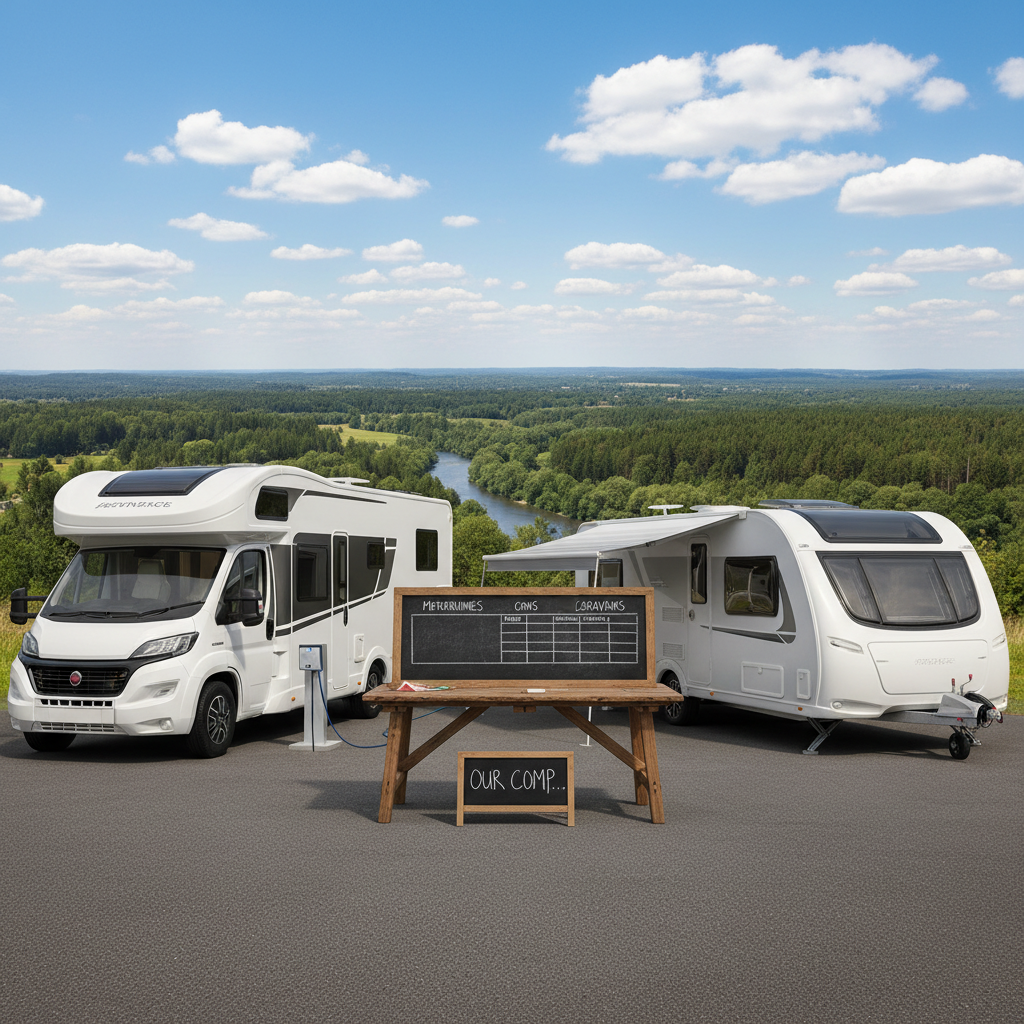
At a Glance: Motorhome vs Caravan
- Motorhomes are best for "touring"—moving frequently between locations with minimal setup time.
- Caravans offer more living space for your money and are ideal for longer stays where you want a car for day trips.
- Costs: Motorhomes have higher upfront and maintenance costs; caravans are more budget-friendly but require a capable tow car.
- Licensing: Both may require specific UK driving licence categories depending on Maximum Authorised Mass (MAM).
- Storage: Caravans are easier to store long-term; motorhomes require regular engine maintenance and battery care.
Choosing between a motorhome and a caravan is the biggest decision any aspiring UK nomad will face. It isn't just about the vehicle; it's about how you want to experience the road. This guide breaks down the practicalities, costs, and lifestyle shifts for 2026.
The Comparison Table
| Category | Motorhome | Caravan |
|---|---|---|
| Setup Time | Fast (5–15 mins). Park and you're done. | Moderate (20–45 mins). Levelling and unhitching. |
| Day Trips | Whole home moves or use e-bikes/public transport. | Convenient. Unhitch and use your car. |
| Purchase Price | Higher (includes engine/chassis costs). | Lower (more living space per £). |
| Maintenance | MOT, engine service + habitation check. | Habitation check + tow car servicing. |
| Driving | Large van feel; easier to reverse than a trailer. | Requires towing confidence and reversing skill. |
| Off-Grid | Excellent for Aires and short wild stops. | Possible, but less discreet and harder to park. |
1. Financial Considerations
When comparing costs, remember that a motorhome like a Bailey Autograph 69-2 is a self-contained vehicle. You are paying for an engine, a drivetrain, and a cab. Conversely, a caravan like the Swift Challenger SE 480 allows your entire budget to go into the living quarters. For those looking at Caravan Layouts, you'll often find more diverse floorplans in trailers than in similarly priced motorhomes.
- Depreciation: High-end motorhomes (e.g., Niesmann And Bischoff or Bürstner) often hold value well, but high mileage can impact resale. Caravans tend to depreciate more slowly if kept damp-free.
- Insurance: Motorhome insurance includes road risks. Caravan insurance is technically optional but highly recommended, alongside your car policy.
- Fuel Economy: A motorhome generally achieves better MPG than a car towing a heavy caravan, though the motorhome is your primary vehicle for all local travel.
2. Driving, Licences, and Weights
UK regulations are strict regarding weights. Before buying, check your driving licence categories (B or C1).
- Motorhomes: Many modern motorhomes are plated at 3,500kg to suit standard licences, but larger models (like the Coachman Laser range) may require a C1 licence. Use our Motorhome Weight Checker to stay legal.
- Caravans: You must ensure your car's towing capacity exceeds the caravan's MTPLM. For safety, the "85% rule" is recommended for beginners. Check your match with our Caravan Towing Calculator.
3. The "On-Site" Experience
The Motorhome Rhythm: Ideal for the "North Coast 500" style of travel. You arrive, perhaps deploy levelling ramps, and you are having tea within minutes. However, if you realize you've run out of milk, you have to pack everything away to drive to the shops. This is why many motorhome owners choose Motorhome Models with large garages for e-bikes.
The Caravan Rhythm: Best for 1-2 week stays at a single base, such as a Haven resort. Once the Adria Alpina is pitched and the awning is up, your car is free for exploring narrow Cornish lanes or city centres where a motorhome wouldn't fit. Browse Caravan Models to see which offer the best awning connectivity.
4. Storage and Winterising
Motorhomes need to be driven occasionally to keep the engine healthy and the tyres from flat-spotting. Caravans can be tucked away in specialist CASSOA storage sites for months. For winter travel, premium brands like Laika or Le Voyageur offer superior insulation and heated tanks, making them better suited for year-round use than entry-level caravans.
Frequently Asked Questions
Which is better for families?
Caravans often win for families due to the extra floor space and the ability to use the car for day trips to attractions. However, motorhomes like the Roller Team Kronos 590 offer a fun "all-together" travel experience during the journey.
Can I park a motorhome anywhere?
In the UK, "wild camping" laws vary (legal in most of Scotland, restricted in England/Wales). Motorhomes are more welcome on European "Aires" than caravans, which are often prohibited from overnighting in non-campsite car parks.
Do I need a special licence for a large caravan?
Since 2021, most UK drivers can tow trailers up to 3,500kg MAM without an additional B+E test, but you must still check your specific licence issue date and the car's towing limits.
The Decision Checklist
- ✅ Choose a Motorhome if: You hate towing, plan to move every 24-48 hours, and enjoy off-grid spontaneity.
- ✅ Choose a Caravan if: You want the most "house" for your money, have a capable tow car, and prefer staying in one place for longer.
- ✅ Consider a Campervan if: You need a dual-purpose vehicle that fits in a standard supermarket parking space. Check our Campervan Conversion Checker for more.
Ready to browse? View our latest used motorhomes or Find a Dealer to see these models in person.