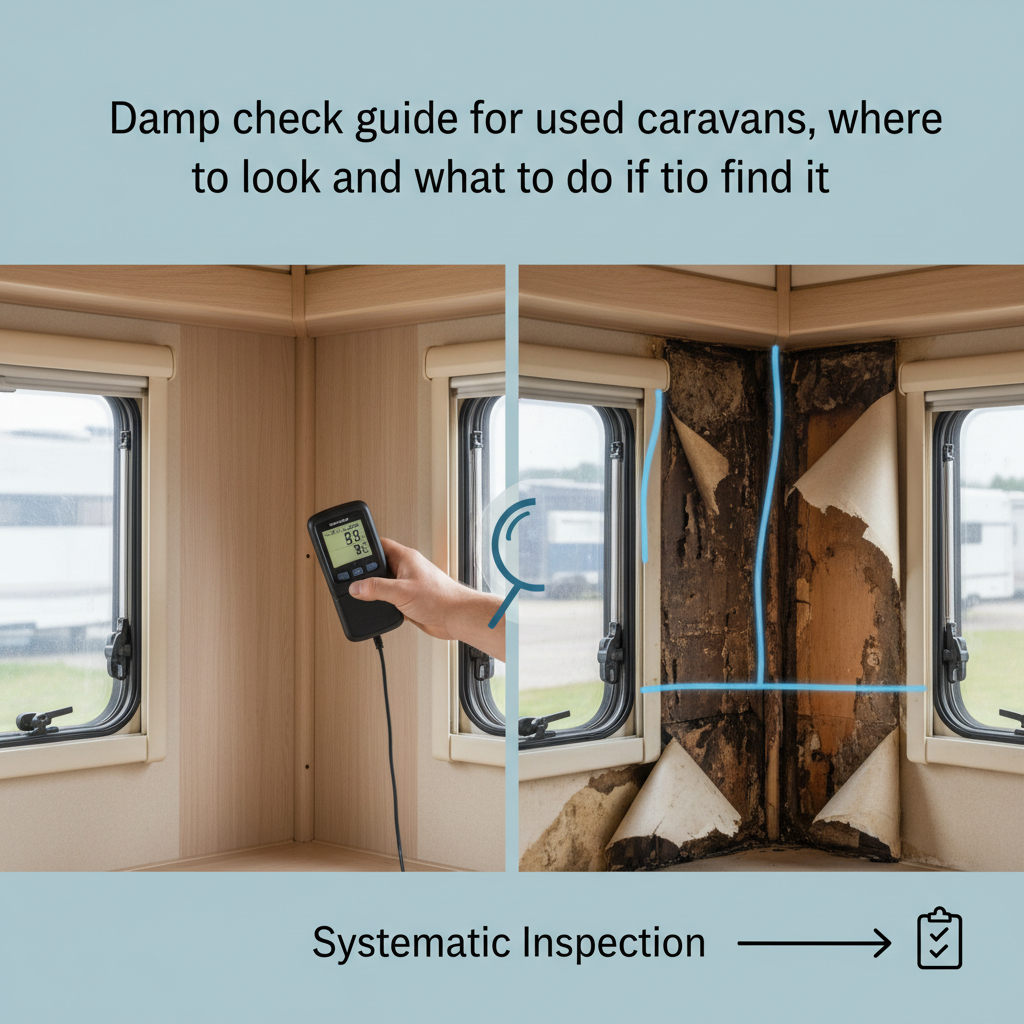
- The 20% Rule: Any reading above 20% on a moisture meter indicates active ingress requiring professional repair.
- Critical Zones: Focus on the "four corners," window rubbers, and rooflight surrounds where seals typically fail.
- Modern Tech: While systems like Bailey's Alu-Tech and Swift's SMART construction are more resilient, they are not immune to damp.
- Documentation: Always demand an Approved Workshop Scheme (AWS) habitation report from the last 12 months.
Damp remains the single greatest financial risk when buying a used caravan in 2026. It hides behind aesthetic finishes, spreads through capillary action, and can cost thousands to rectify. Even a premium model like a Swift Elegance 565 or a Bailey Unicorn Cartagena can suffer from moisture ingress if the external sealant has degraded. This guide provides a systematic routine to ensure your next purchase is a dry one.
The Reality of Caravan Damp in 2026
As caravans age, the flexible sealants used on awning rails, window frames, and roof joins naturally dry out and shrink. In the UK climate, even a small breach can lead to significant structural rot within 12-18 months. Whilst modern timberless construction methods have reduced the risk of structural rot, moisture can still damage internal wallboards and soft furnishings. When browsing Caravan Models, it is vital to understand that no brand is 100% immune to the British weather.
What Damp Looks, Feels, and Smells Like
Before reaching for a meter, use your senses to detect early warning signs:
- The Smell: A distinct, musty, or "mushroomy" odour. Be wary of caravans with all windows open or heavy use of air fresheners during a viewing.
- The Touch: Press wallboards with your thumb. They should be firm. If they feel soft, spongy, or "give" under pressure, the timber frame behind may be compromised.
- The Sight: Look for "pimplings" (small bubbles) on the wall tape, black mould spots in the back of cupboards, or rusted screw heads.
- Floor Delamination: A "spongy" feeling underfoot, particularly near the kitchen or Caravan Layouts with high-traffic central corridors, often indicates the floor layers are separating.
The Highest-Risk Areas to Check
Focus your 30-minute inspection on these critical "ingress points":
- Front and Rear Corners: Check inside the upper and lower lockers. This is where the awning rails and body joins are under the most stress during towing.
- Window Surrounds: Peel back the rubber seals slightly. Look for dampness or staining in the timber or wallboard directly beneath the window sill.
- Rooflights and Vents: Water often tracks from the roof. Check for staining around the edges of all skylights, including the bathroom extractor.
- Service Points: Check the internal wallboard behind the battery box, external BBQ points, and the toilet cassette housing.
How to Conduct a Professional Damp Routine
- The Perimeter Walk: Start outside. Look for cracked sealant or gaps in the awning rail.
- The Internal Press Test: Open every locker and lift all seat cushions. Press firmly on the wallboards, especially where the wall meets the ceiling.
- The Moisture Meter Test: Use a pronged or pinless moisture meter.
- 0-15%: Normal/Dry. No action required.
- 15-20%: Potential concern. This requires monitoring or a follow-up check in different weather conditions.
- 20-30%: Evidence of ingress. Structural damage may not have started, but the source of the leak must be identified and sealed.
- 30%+: Severe damp. Professional structural repair is almost certainly required.
Pro Tip: If you are considering a larger twin-axle model like a Coachman Laser 665 or a Bailey Pegasus Bologna, ensure your vehicle is up to the task by using our Caravan Towing Calculator.
Actionable Damp Inspection Checklist
| Inspection Zone | What to Look For |
|---|---|
| Upper Lockers | Staining or softness in top corners where roof meets walls. |
| Floor Corners | Check the underside corners for "soft" plywood or rot. |
| Grab Handles | Check the internal wall directly behind where the external handles are bolted. |
| Wheel Arches | Look for road spray ingress inside the cupboards above the wheels. |
Frequently Asked Questions
Is a damp meter essential?
Yes. Human hands cannot detect moisture levels below the point of "softness." A meter can find a leak months before it becomes visible. For more on professional tools, see our full inspection checklist.
What is the "Condensation Myth"?
Sellers often claim damp patches are "just condensation" from winter storage. Whilst condensation occurs, it should dry quickly. If a patch remains damp or the wallboard is soft, it is ingress, not condensation.
Should I buy a caravan with 25% damp?
Only if the price reflects the cost of professional repair (often £500-£2,000+ per panel) and you have a quote in hand. For most buyers, it is safer to walk away and Find a Dealer who provides a comprehensive warranty.