
Caravan security essentials, the layers that actually reduce risk
Protect your investment with our 2026 caravan security guide. From Sold Secure locks to Thatcham trackers, learn the layers that stop thieves and lower premiums.
Protect your investment with our 2026 caravan security guide. From Sold Secure locks to Thatcham trackers, learn the layers that stop thieves and lower premiums.
Ready to find yours?
Put this knowledge into action

The RoamWorthy editorial team combines decades of caravan, motorhome and campervan ownership experience with industry expertise to provide trusted buying advice.
View all articles →The Layered Approach to Caravan Security
Caravan security is about layers. A single device can be defeated, but multiple layers force a thief to spend more time, create more noise, and take greater risks. In 2026, with the rise of sophisticated battery-powered angle grinders and relay theft, your goal is to make your caravan the least attractive option on the street or site. Professional thieves look for the path of least resistance; your job is to ensure that path is blocked by high-quality, British-certified hardware.
- Physical deterrents: Sold Secure Gold or Diamond-rated wheel clamps and hitch locks are your essential foundation.
- Insurance compliance: Non-negotiable; failing to fit a specified lock can void your entire theft claim.
- Digital layers: Thatcham-approved trackers (S5/S7) provide a vital safety net for high-value assets.
- Storage location: Choosing a CaSSOA-rated site is the single most effective way to reduce long-term risk.
- Visual Marking: Roof marking and CRiS registration are vital for recovery and identification.
Who this is for
Whether you are buying your first used caravan or upgrading to a premium model like a Bailey Pegasus Grande GT75 Portofino or a Coachman Laser 665, you need a realistic security setup. Security is only effective if it is convenient enough to use every single time you park, even for a quick service station break. For those towing larger twin-axle models like the Bailey Unicorn Cartagena, security requirements often double, requiring twice the physical hardware or specific axle-through locks.
The Core Layers of Protection
1. Physical Deterrents (The 'Must-Haves')
- Hitch Locks: These prevent a thief from simply hooking your caravan to their vehicle. Ensure yours is 'Sold Secure' Gold or Diamond rated. Note that some locks cannot be fitted whilst the caravan is hitched to the car; consider a 'hitch-post' for home driveways to provide a fixed anchor point.
- Wheel Clamps: A high-visibility wheel clamp is the best visual deterrent. For high-value models like the Swift Challenger 645, many insurers require two locks or a specific axle-through lock (such as the AL-KO Secure) which integrates with the caravan's chassis. Tip: Always carry a small brush to clean the receiver threads on AL-KO locks to ensure they engage fully.
- Steady Locks: These lock the corner steadies in the down position. Whilst not a primary lock for insurance, they make it significantly harder and noisier to tow the caravan away.
- Security Posts: If storing at home, a heavy-duty telescopic security post in front of the caravan adds a significant layer of resistance that cannot be bypassed by simply cutting a lock on the caravan itself.
2. Location & Storage
Where you park matters. If you aren't keeping it at home, look for sites with CaSSOA (Caravan Storage Site Owners' Association) accreditation. Our guide to CaSSOA storage explains why silver or gold-rated sites can significantly lower your premiums and provide peace of mind through CCTV and perimeter fencing. If storing on a driveway, try to park 'hitch-in' to make it impossible for a thief to hook up without first rotating the caravan. Use our Caravan Towing Calculator to ensure your motor mover has the capacity to handle these tight manoeuvres.
3. Electronic Security
- Alarms: Tilt sensors and PIR (Passive Infrared) sensors are standard on many modern Elddis Riva 554 or Bailey Pegasus models. Ensure the alarm has an independent power source so it works even if the leisure battery is disconnected.
- Trackers: A Thatcham-approved (S5 or S7) tracker is often a mandatory requirement for caravans valued over a certain threshold (typically £25,000+). S5 trackers often include driver identification tags which alert the monitoring centre if the caravan moves without the owner present. Check your subscription status annually; a tracker with an expired subscription is useless for insurance.
Insurance Compliance: The 'Small Print' Trap
Many owners lose their coverage because they fail to meet 'Security Requirements' listed in their policy. If your policy states a wheel clamp must be fitted whenever the caravan is 'unattended,' and the caravan is stolen from a motorway service station without one, the claim will likely be rejected. Check our guide on insurance exclusions to stay protected. Always keep receipts for your security devices as proof of purchase for claims, and ensure your Caravan Model is correctly identified on your policy.
Security on Collection Day
Collection day is when many buyers forget the basics. If you are visiting verified caravan dealers, make security part of the handover checklist:
- Confirm all keys (including spares and alarm fobs) are present.
- Test the alarm codes and ensure you know how to reset them to a custom code.
- Verify that the fitted locks (e.g., AL-KO receivers) match what was advertised and that you have the specific locking bolt.
- Check the VIN (Vehicle Identification Number) matches the CRiS (Central Registration & Identification Scheme) registration document.
- Ask the dealer to demonstrate the activation of the tracker system if pre-installed.
Daily Security Checklist
| Action | Why it matters |
|---|---|
| Fit Hitch & Wheel Locks | Primary physical barrier and insurance requirement. |
| Close all Window Latches | Prevents easy levering of acrylic windows. |
| Activate Alarm/Tracker | Ensures immediate notification of unauthorised movement. |
| Remove Valuables | Reduces 'smash and grab' incentive; keep registration docs at home. |
| Hide the Keys | Prevents 'key fishing' or theft if the tow vehicle is also targeted. |
Frequently Asked Questions
Do I need a tracker if I have a wheel lock?
Whilst a wheel lock stops the 'opportunist,' a tracker is your only hope of recovery if a professional gang uses a low-loader or heavy-duty cutting equipment. Most insurers for high-end models like the Bailey Alicanto will require both to be active. Check Caravan Layouts for models with integrated tracking compartments.
Are 'Sold Secure' ratings important?
Yes. 'Sold Secure' is an independent testing house. Most UK insurers specify that devices must be Gold or Diamond rated to satisfy policy conditions. Diamond is currently the highest rating, specifically tested against angle grinder attacks. Always check that the rating is current for the specific model of lock you are buying.
Should I mark my caravan's roof?
Yes. Painting your VIN or postcode on the roof makes the caravan easily identifiable from police helicopters and CCTV, making it much harder for thieves to move or sell on the black market. Many modern caravans come with CRiS microdot technology, but visual roof marking remains a powerful deterrent.
Next Steps
Ready to find yours?
Put this knowledge into action
Can your car tow it?
Free towing check. Takes 30 seconds
Save outfits, compare setups, download or email a PDF report. Find compatible caravans.
Related Tools
Related Makes & Models
Spotted an error? Let us know.
Continue Reading
More expert guides to help you make informed decisions
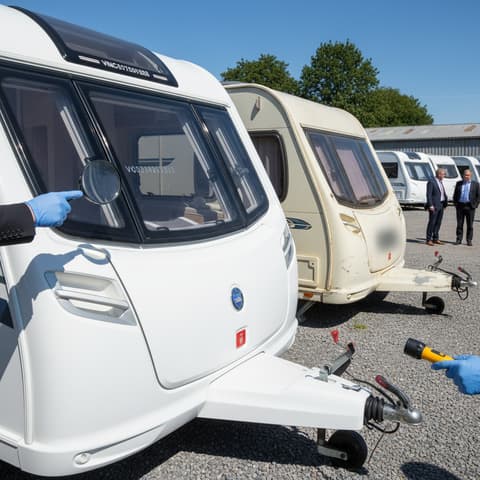
How to Spot a Cloned or Stolen Caravan Before You Buy
Protect your investment in 2026. Learn how to identify cloned caravans, verify 17-digit VINs, and perform essential CRiS checks to avoid stolen vehicle scams.
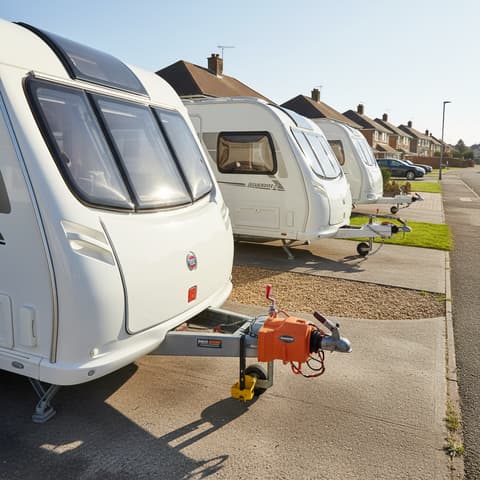
Five Essential Security Upgrades for Your Driveway Storage
Protect your caravan or motorhome in 2026 with our expert guide to driveway security. From Sold Secure locks to Thatcham S5 trackers, secure your investment.
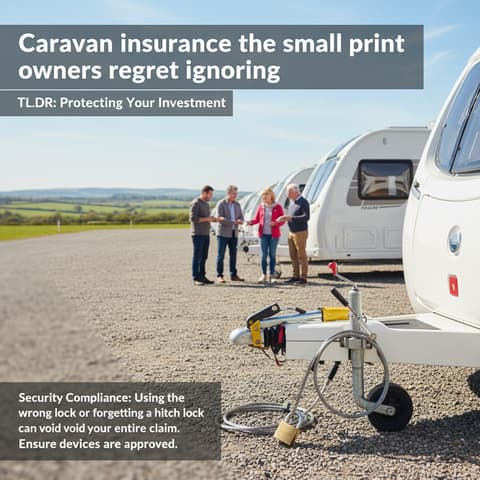
Caravan insurance the small print owners regret ignoring
Don't let small print void your caravan insurance. Learn about 2026 security requirements, tyre age clauses, and weight limits to protect your investment.