
Can I Drive This Motorhome on a Standard Licence
Can you drive a motorhome on a standard UK licence? Learn about the 3,500kg MAM limit, C1 'grandfather rights', and how to check your payload for 2026.
Can you drive a motorhome on a standard UK licence? Learn about the 3,500kg MAM limit, C1 'grandfather rights', and how to check your payload for 2026.
Ready to find yours?
Put this knowledge into action

The RoamWorthy editorial team combines decades of caravan, motorhome and campervan ownership experience with industry expertise to provide trusted buying advice.
View all articles →TL;DR: Whether you can drive a motorhome on a standard UK licence depends on the vehicle's Maximum Authorised Mass (MAM) and when you passed your driving test. If the motorhome weighs over 3,500kg, you likely need a C1 category licence.
- Passed before 1 Jan 1997: You usually have C1 entitlement (up to 7,500kg) via 'grandfather rights'.
- Passed after 1 Jan 1997: You are limited to 3,500kg (Category B) unless you pass an additional C1 test.
- The Plate is King: Always check the physical weight plate on the chassis, not just the brochure or V5C.
- Age Matters: C1 entitlements must be renewed at age 70 with a medical.
People don’t get motorhome weights wrong because they’re careless. They get them wrong because the industry uses confusing terms, and the real-world limit is not the brochure number—it’s what you can drive legally when the motorhome is fully loaded. Understanding your legal limits is essential for insurance validity and road safety in 2026.
The Critical Threshold: 3,500kg MAM
For UK drivers, 3,500kg Maximum Authorised Mass (MAM)—also known as Gross Vehicle Weight (GVW)—is the most important figure. This is the maximum the vehicle is legally allowed to weigh, including fuel, passengers, and cargo.
If a motorhome's MAM exceeds 3,500kg, your ability to drive it depends on your licence "grandfather rights" or additional testing. You can use our Motorhome Weight Checker to quickly see where you stand.
Step 1: Check Your Licence Categories
Before falling in love with a luxury Niesmann And Bischoff or a large Auto-Trail Imala, check the back of your photocard licence or use the DVLA online portal:
- Category B: Allows you to drive vehicles up to 3,500kg. This is the standard for those who passed after January 1997.
- Category C1: Allows you to drive vehicles between 3,500kg and 7,500kg. If you passed your car test before 1 January 1997, you likely have this automatically.
Note: C1 entitlement expires when you turn 70. To keep it, you must pass a medical assessment (D4 form) and submit a D2 application every three years.
Step 2: Locate the Physical Weight Plate
Brochures are helpful, but plates win arguments. Every motorhome has a stage-two build plate (often found under the bonnet, inside the door frame, or under the passenger seat). This plate overrides the original manufacturer (e.g., Fiat or Ford) plate if the motorhome was uprated during build.
Look for the MAM or GVW. If you are looking at premium models like a Le Voyageur or Frankia, many are plated at 4,500kg or higher, requiring a C1 licence. If you are looking at a Motorhome Model that sits on a heavy chassis, always verify the plate before purchase.
Step 3: The Payload Trap
Payload is the difference between the Mass in Running Order (MIRO) and the MAM. It is what you have "left over" for your gear. Payload disappears faster than you think:
- Passengers: Often only a 75kg driver is included in the base weight. A family of four can easily add 250kg+.
- Essential Habituation: Gas bottles, water tanks (often only 20% full in brochures), and leisure batteries.
- Dealer Extras: Awnings, bike racks, and solar panels added after manufacture eat directly into your payload.
- Personal Effects: Food, clothing, and outdoor furniture.
A common mistake is buying a 3,500kg motorhome like a Swift Trekker S to stay on a standard licence, only to find that after adding gear, the vehicle is illegally overweight. If you are converting a van, use our Campervan Conversion Checker to monitor your weight build-up.
Practical Buying Checklist
- What is the plated MAM? Verify this against the physical plate, not just the V5C logbook.
- What is the User Payload? Ask for the weight including any fitted extras like air conditioning or awnings.
- Has it been uprated or downrated? Some owners downrate a 3,850kg van to 3,500kg to sell to Category B holders, but this leaves very little usable payload.
- What is the Train Weight? If you plan to tow, check the Gross Train Weight (GTW) on the plate. Use our Towing Calculator if you plan to pull a trailer or car.
The Weighbridge Reality Check
If you are touring in a vehicle close to its limit, such as a heavily loaded Volkswagen California, visit a local public weighbridge. It is the only way to be 100% certain you are legal. Driving overweight can result in fixed penalty notices, points, and can void your insurance in the event of an accident.
Frequently Asked Questions
Can I drive a motorhome over 3,500kg on a car licence?
Only if you passed your test before 1 January 1997 or have taken a separate C1 driving test. Check your licence for the C1 code.
What happens if I drive a 3,850kg motorhome on a Category B licence?
You are effectively driving "otherwise than in accordance with a licence." This usually carries a fine, penalty points, and will likely invalidate your insurance policy, leaving you personally liable for damages.
Can I change the weight of my motorhome?
Yes, this is called uprating or downrating. It often involves a paper exercise through specialists or mechanical upgrades like air suspension to change the legal limit shown on the plate. This must be updated with the DVLA.
What to do next
- Use our Motorhome Weight Checker to verify your specific situation.
- Explore Motorhome Models to compare MAM across different brands.
- Read our guide on Campervan Weight Limits for smaller van-based builds.
Ready to find yours?
Put this knowledge into action
Related Tools
Related Makes & Models
Spotted an error? Let us know.
Continue Reading
More expert guides to help you make informed decisions
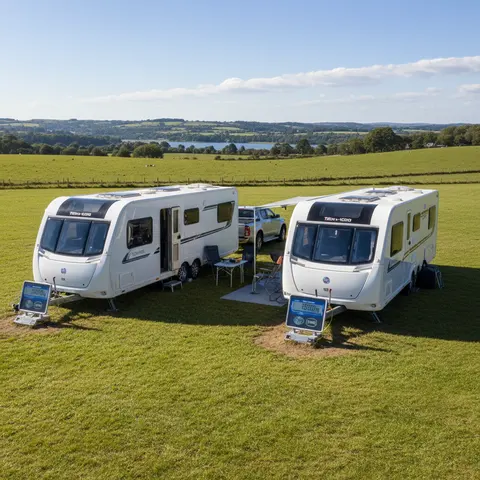
Understanding Payload and Weights for Twin Axle Caravans
Master twin-axle caravan weights for 2026. Learn about the 'Payload Trap', quad-motor movers, and how to stay legal with Gross Train Weight (GTW) limits.
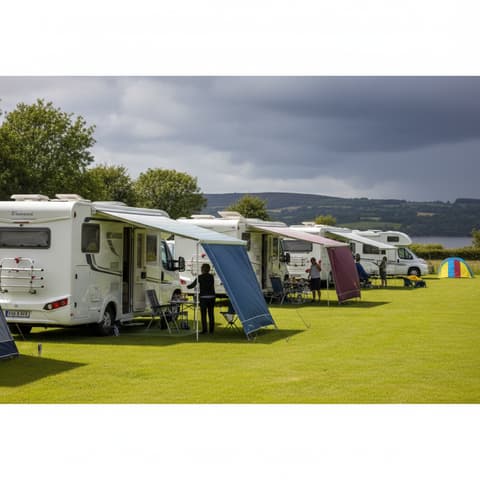
Essential Guide to Motorhome Awning Safety and Care
Expert guide to motorhome awning safety and maintenance. Learn how to prevent wind damage, manage payload weights, and maintain your awning for the 2026 season.
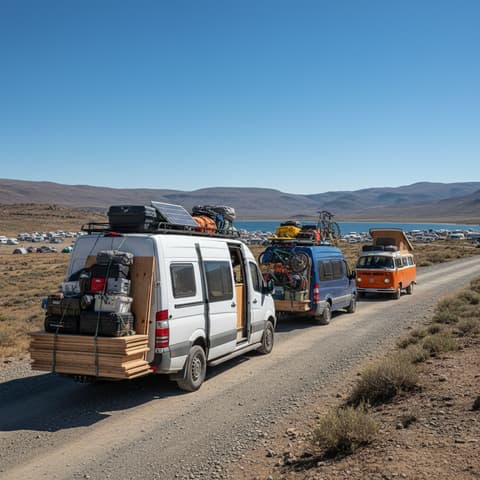
Managing payload on a 3,500 kg campervan
Quick answer: payload is the difference between your MIRO and MTPLM. On a 3,500 kg base, the working figure is often under 600 kg once a high-spec conversion is in. Weigh the converted vehicle loaded for a real trip before assuming it is legal.