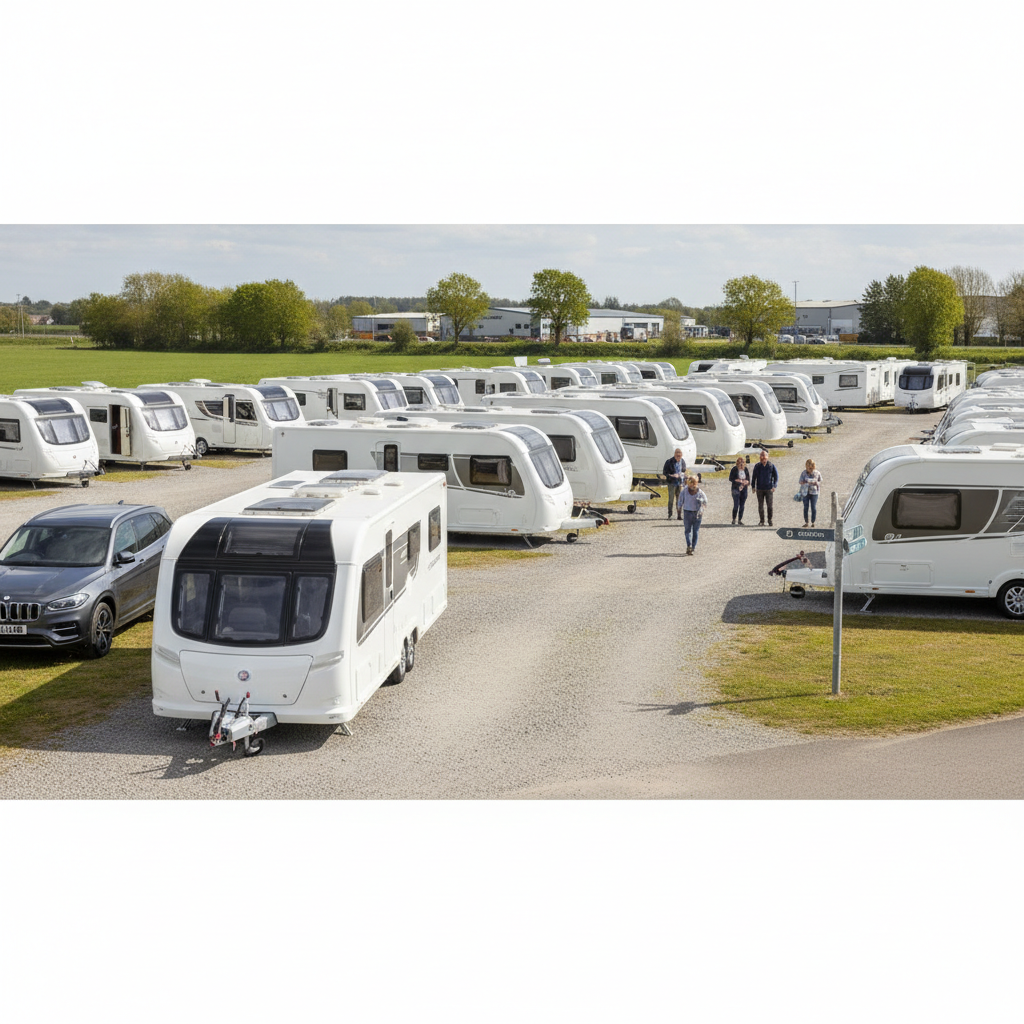
Is Late Summer a Good Time to Buy a Caravan? A Practical Buyer's Guide
Discover why August is a strategic time to buy a caravan. Learn about stock availability, inspection tips, and the benefits of late-season shakedown trips.
Discover why August is a strategic time to buy a caravan. Learn about stock availability, inspection tips, and the benefits of late-season shakedown trips.

As the peak summer season transitions into autumn, the caravan market enters a distinct phase. For many prospective owners, August represents a strategic window to browse used caravans. While the spring rush is driven by the desire to secure a vehicle for the first bank holiday, the late summer buyer is often looking at a different set of advantages, ranging from stock availability to the practicalities of inspecting a vehicle in active-season conditions.
Quick Answer: Is Late Summer a Good Time to Buy?
Yes, late summer is a practical time to purchase a caravan. By mid-to-late August, the market often sees an influx of stock as owners trade in vehicles following their final summer tours. Crucially, buying now allows for a 'shakedown' trip in mild weather before winter storage, and provides the opportunity to inspect vehicles for common issues like ventilation performance and water system integrity while temperatures are still representative of typical touring conditions.
The late summer period is characterised by a shift in dealer inventory. As families conclude their summer holidays and decide to change their touring setup, buyers may find a broader selection of vehicles. This period allows buyers the time to compare caravan layouts thoroughly without the peak-spring pressure. When visiting caravan dealers, the August window provides a calmer environment to discuss specific requirements compared to the high-volume sales periods of March and April.
Practical Benefits of a Summer Inspection
Viewing a caravan in August offers several technical advantages that are lost during the winter months. When a vehicle has been sitting in the sun, it is far easier to identify certain issues. Heat exacerbates the smell of damp; if a caravan has a water ingress issue, the warm August air inside a closed vehicle will often make it apparent immediately. In winter, cold air can mask these musty scents.
Furthermore, testing a fridge-freezer in 20°C+ weather is a true reflection of its capability. You can verify if the cooling system is functioning correctly under load, which is harder to gauge when the ambient temperature is already near freezing. Late summer storms also provide a natural test for window seals and roof lights. If you are viewing a used Swift Challenger or a Coachman Vip, checking for signs of recent water tracking after a typical August downpour is a sensible step.
Strategic Timing: The 'Shakedown' Trip
One of the most significant risks of buying a caravan in late autumn or winter is that the vehicle may go straight into storage without being used. Buying in August allows for at least one or two weekend trips in September. This 'shakedown' period is essential for testing the water heater and pump system, ensuring the battery charging system is functional, and checking that all moving parts operate correctly. It also allows you to verify the comfort of the bedding and the general ergonomics of the living space.
When inspecting vehicles in August, come prepared with a checklist that reflects the season. While the sun may be shining, you are buying a vehicle for all-year potential. Check soft furnishings for sun-fading or brittle fabrics, which indicates how the van was stored during peak heat. Look for 'cracking' in the tyre sidewalls, as heat can accelerate the degradation of older rubber. If a solar panel is fitted, check the regulator output in direct sunlight to ensure the system is generating charge.
Market Observations and Stock Availability
The late summer market typically provides a unique intersection of availability and environmental conditions that favour the buyer. By purchasing in August, you avoid the inflated demand of the spring while retaining enough of the touring season to ensure your new investment is fit for purpose. For those seeking specific ranges, models such as the Bailey Pegasus, Elddis Avante, or the Bailey Unicorn series are frequently represented in dealer inventories as owners upgrade.
If you are planning to purchase before the end of the month, follow these steps to ensure a smooth transition into ownership. First, secure storage now, as sites often fill up in September. Second, check the service history to ensure the caravan has had its annual habitation check. Third, ask about inclusions; in late summer, some sellers may include accessories like awnings or water barrels that they no longer need for their next vehicle. Finally, use resources to explore caravan models and understand the differences between ranges, such as the lightweight Bailey Phoenix or the high-specification Coachman Laser.
A Practical Way to Compare Your Shortlist
Reduce the choice to a small number of realistic candidates and compare them against the same criteria. Start with the way you expect to use the vehicle rather than the longest equipment list. Think about who normally travels, how often beds need to be made up, how much indoor space matters on a wet day, how much storage you genuinely use and which parts of the layout might become irritating when repeated on every trip.
Write those priorities down before you look again. A simple three-column note — essential, useful and optional — makes it easier to separate a feature you genuinely need from one that simply looks appealing in the moment. Use the same headings for every candidate so the comparison stays fair.
Score the same five things each time
- Layout fit: Can the people travelling use the space without constantly moving around one another?
- Daily routine: Picture breakfast, packing, relaxing and getting ready for bed rather than judging the interior while it is empty.
- Storage usability: Focus on how easy spaces are to reach, not just how many cupboards you can count.
- Comfort: Spend enough time sitting and moving around to notice whether the space feels natural for you.
- Overall fit: Compare the whole ownership proposition rather than allowing one attractive detail to dominate the decision.
A practical way to compare your shortlist
Reduce the choice to a small number of realistic candidates and compare them against the same criteria. Start with the way you expect to use the vehicle rather than the longest equipment list. Think about who normally travels, how often beds need to be made up, how much indoor space matters on a wet day, how much storage you genuinely use and which parts of the layout might become irritating when repeated on every trip.
Write those priorities down before you look again. A simple three-column note — essential, useful and optional — makes it easier to separate a feature you genuinely need from one that simply looks appealing in the moment. Use the same headings for every candidate so the comparison stays fair.
Score the same five things each time
- Layout fit: can the people travelling use the space without constantly moving around one another?
- Daily routine: picture breakfast, packing, relaxing and getting ready for bed rather than judging the interior while it is empty.
- Storage usability: focus on how easy spaces are to reach, not just how many cupboards you can count.
- Comfort: spend enough time sitting and moving around to notice whether the space feels natural for you.
- Overall fit: compare the whole ownership proposition rather than allowing one attractive detail to dominate the decision.
Frequently Asked Questions
While winter is often cited as a time for lower demand, August offers a better balance of stock availability and the ability to test the caravan in use. Prices are dictated by condition and demand rather than a fixed monthly discount.
Look for consistent annual habitation reports that include damp meter readings. This is the most critical document for protecting your investment and verifying the structural integrity of the vehicle.
Manufacturers typically announce new models in late summer. While some new-season stock may begin to appear in dealer showrooms, physical stock for the following year often arrives in greater volumes during the autumn.
Late summer can be an excellent time to buy an awning, as used caravans may come with one included by the previous owner, and retailers may be clearing current-year stock to make room for new designs.
Heat exacerbates the smell of damp. If a caravan has a water ingress issue, the warm August air inside a closed vehicle will often make it apparent immediately, whereas cold winter air can mask these musty scents.
Related on RoamWorthy
Can your car tow it?
Free towing check. Takes 30 seconds
Save outfits, compare setups, download or email a PDF report. Find compatible caravans.
Related Tools
Related Makes & Models
Spotted an error? Let us know.
Continue Reading
More posts to help you make informed decisions