
Motorhome storage lockers how to load without breaking the rear axle
Master motorhome loading: Learn how the lever effect impacts your rear axle and how to stay legal and safe with our 2026 guide to weight distribution.
Master motorhome loading: Learn how the lever effect impacts your rear axle and how to stay legal and safe with our 2026 guide to weight distribution.
Ready to find yours?
Put this knowledge into action

The RoamWorthy editorial team combines decades of caravan, motorhome and campervan ownership experience with industry expertise to provide trusted buying advice.
View all articles →Quick Summary: Loading for Safety
- The Lever Effect: Weight in a rear garage acts as a lever, potentially lifting the front wheels and overloading the rear axle.
- Axle vs. MAM: You can be under your Maximum Authorised Mass (MAM) but still exceed individual axle weight limits.
- The Golden Rule: Heavy items should be placed low down and as close to the centre of the wheelbase as possible.
- Verification: Always use a public weighbridge to check individual axle loads when fully packed for a trip.
Rear garages in modern motorhomes, such as those found on the Chausson S 514 or the Laika range, are brilliant for storage. However, they often become a dumping ground for heavy gear like e-bikes, awnings, and toolkits. This is the fastest way to overload your rear axle whilst mistakenly believing you are still within your overall weight limit. Understanding the physics of your chassis is essential for safe touring in 2026.
The Science of the Rear Overhang (The Lever Effect)
Most motorhomes have a significant 'overhang'—the distance between the rear axle and the back of the van. When you place weight in a rear garage, it acts as a lever. Because the rear axle acts as a fulcrum, 100kg in the garage doesn't just add 100kg to the rear axle; due to the leverage effect, it can actually 'lift' weight off the front steering axle and transfer even more pressure (e.g., 120kg+) onto the rear axle.
This is particularly critical for large coachbuilt models like the Bailey Autograph 74 4 or the Frankia Platin, where the distance from the axle to the rear bumper can be substantial. If the front axle becomes too light, you lose traction and steering precision. This is why using a Motorhome Weight Checker is essential before embarking on long tours. For those considering a custom build, our Campervan Conversion Checker can help you plan your layout to avoid these weight distribution pitfalls.
Why Individual Axle Load Matters
Every vehicle has a manufacturer's plate (usually under the bonnet or in the door shut) listing the Maximum Authorised Mass (MAM) and the individual limits for Axle 1 (front) and Axle 2 (rear). Exceeding these is not just a safety risk; it is a legal offence in the UK. Overloading the rear axle leads to:
- Reduced Steering Grip: As the front end lifts, steering becomes light and unresponsive, especially in wet conditions.
- Tyre Failure: Excessive heat build-up in rear tyres can lead to high-speed blowouts. Check your tyre sidewalls for the 'Load Index' to ensure they match your axle limits. Refer to TyreSafe for specific pressure adjustments.
- Braking Inefficiency: The weight distribution shifts away from the front brakes, which typically do 60-70% of the stopping work.
- Legal Penalties: The DVSA can issue on-the-spot fines or 'prohibit' the vehicle from moving until the weight is redistributed or removed.
A Loading Strategy for 2026
- Heavy Items Low and Forward: Place heavy items (water, tinned food, batteries) on the floor, ideally between the front and rear axles. If you are looking at Motorhome Models with mid-chassis water tanks, you already have a head start.
- The Garage is for 'Bulk', not 'Mass': Use the rear locker for lightweight, high-volume items like outdoor chairs, windbreaks, and empty water containers.
- Lateral Balance: Many motorhomes, particularly those with heavy kitchen units or water tanks on one side, already have a natural lean. Distribute your gear to balance the weight from left to right to ensure even tyre wear and stable cornering.
- Secure the Load: Use the lashing points provided in garages. A shifting load during a sharp turn can instantly exceed an axle's lateral stability limit.
Pre-Trip Loading Checklist
- [ ] Check the VIN/Chassis plate for individual axle limits (Axle 1 and Axle 2).
- [ ] Weigh heavy items (e-bikes, gas bottles) before loading.
- [ ] Ensure heavy items are secured with straps to prevent sliding.
- [ ] Check tyre pressures against the manufacturer's 'fully laden' recommendation.
- [ ] Visit a weighbridge if you have added new permanent accessories like solar batteries or awnings.
Pro Tip: The Weighbridge Check
Don't guess your payload. Visit a local public weighbridge with the van fully loaded (including passengers and fuel). Ask for a 'per-axle' reading. This involves driving the front wheels onto the plate, taking a reading, then pulling the whole vehicle on. This turns guesswork into data-backed confidence. If you are browsing Motorhome Models or Campervan Models, always check the 'Mass in Running Order' (MRO) to understand your starting payload.
Frequently Asked Questions
Can I increase my axle limit?
In some cases, specialists can 'uprate' a chassis (common on Fiat Ducato or AL-KO frames) by upgrading the suspension or tyres, but this requires a new stage-2 build plate and DVLA notification. This is common for owners seeking more payload for heavy accessories.
Do e-bikes count towards the garage limit?
Absolutely. A pair of e-bikes can weigh 50kg+. When combined with a bike rack, this weight is at the furthest point of the lever, having the maximum impact on your rear axle. Always check the specific weight rating of the garage floor itself, not just the axle.
What is the difference between MAM and MTPLM?
In the UK, Maximum Authorised Mass (MAM) and Maximum Technically Permissible Laden Mass (MTPLM) are effectively the same thing: the absolute maximum the vehicle can weigh when fully loaded. For more details, see our Motorhome Weight Checker.
How do I find my nearest weighbridge?
Most local councils provide a list of public weighbridges. You can also find them at major ports, recycling centres, or large quarry sites. Expect to pay a small fee (usually £10-£25) for a weight ticket.
Ready to find yours?
Put this knowledge into action
Related Tools
Related Makes & Models
Spotted an error? Let us know.
Continue Reading
More expert guides to help you make informed decisions
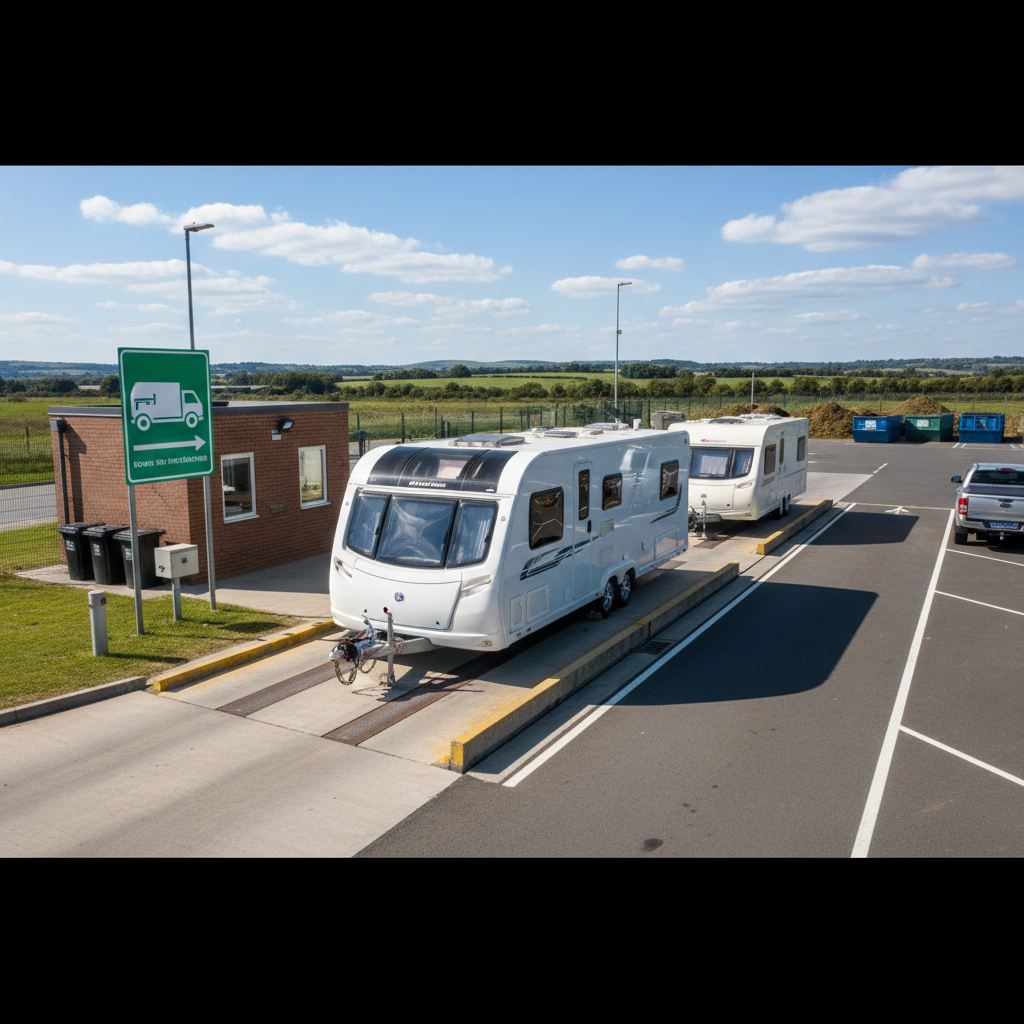
How to Use a Public Weighbridge Safely
Ensure your caravan or motorhome is legal for 2026. Learn how to use a UK public weighbridge to verify axle weights, GVW, and GTW to avoid DVSA fines.

Caravan noseweight and stability, how to measure and stay safe
Quick answer: noseweight is the downward force the caravan hitch puts on the towball. Aim for roughly 5 to 7 percent of the loaded caravan weight, and never exceed the lower of your car towball limit, hitch limit, or the caravan manufacturer noseweight figure.

Understanding Payload and Weights for Twin Axle Caravans
Master twin-axle caravan weights for 2026. Learn about the 'Payload Trap', quad-motor movers, and how to stay legal with Gross Train Weight (GTW) limits.