
The Reality of Electric Vehicle Towing in April 2026
Our April 2026 report explores the reality of EV towing: range expectations, the rise of pull-through charging, and why EVs offer superior towing stability.
Our April 2026 report explores the reality of EV towing: range expectations, the rise of pull-through charging, and why EVs offer superior towing stability.

Key Takeaways: April 2026 Report
- Range Expectations: EV towing range typically sits between 40% and 55% of the vehicle's unladen WLTP range due to aerodynamic drag and increased rolling resistance.
- Charging Infrastructure: 'Pull-through' charging bays are increasing at major motorway service areas (approx. 15% of hubs) but remain scarce in Northern England and Scotland.
- Stability Benefits: The high kerbweight and low centre of gravity of EVs provide superior towing stability compared to traditional ICE SUVs, significantly reducing 'snaking'.
- Tech Advancements: 800V architectures and 'Vehicle to Load' (V2L) are becoming standard, allowing EVs to power caravan appliances directly via the 13-pin socket or external ports.
In April 2026, the conversation around electric vehicles (EVs) in the UK caravanning community has shifted from "can they tow?" to "how do we charge efficiently?". With the UK's transition towards electrification accelerating, the early adopters of 2023-2024 are now seasoned veterans. Their real-world data paints a clear picture: whilst the instantaneous torque of an electric motor provides a superior towing feel, the logistics of a 300-mile spring journey require a new tactical approach.
At RoamWorthy, our experts have analysed charging accessibility and real-world efficiency data to provide this 2026 status report. Before setting off, ensure your outfit is legal by using our Caravan Towing Calculator and checking your car's kerbweight.
The Range Reality: 120 is the New 250
The most significant 'shock' for new EV towers is the impact of aerodynamics. A modern caravan is essentially a giant wind-break. In our latest 2026 tests, a Tesla Model X with an unladen range of 300 miles saw that figure drop to approximately 135 miles when towing a standard 1,500kg twin-axle caravan.
| Vehicle Type | WLTP Range (Unladen) | Est. Towing Range (1,500kg) | Efficiency Loss |
|---|---|---|---|
| Premium SUV (e.g. Model X) | 300+ miles | 120-140 miles | ~55% |
| Mid-range SUV (e.g. VW ID.4) | 260 miles | 100-115 miles | ~58% |
| Utility EV (e.g. VW Transporter) | 230 miles | 90-105 miles | ~60% |
The 'golden rule' for 2026 planning is to assume you will need to charge every 100-120 miles. This isn't a mechanical failure; it is physics. Caravanners who adopt a 'slow travel' philosophy are reporting much higher satisfaction than those attempting to maintain diesel-style four-hour stints. For those looking for more efficient pairings, check our Caravan Layouts guide for narrower, more aerodynamic options like the Swift Basecamp Plus or Knaus Sport.
The Infrastructure Challenge: The 'Uncouple' Problem
Whilst the number of ultra-rapid chargers in the UK has quadrupled since 2022, most remain designed for single cars in standard parking bays. For a caravanner, this often requires the 'uncouple dance': unhitching the caravan in a nearby bay, driving the car to the charger, and re-coupling 30 minutes later. In April 2026, this remains the primary hurdle for EV touring.
The Rise of 'Pull-Through' Charging
A positive trend is the emergence of dedicated 'Hubs' from providers like Gridserve and Ionity. These increasingly include 'pull-through' bays specifically for long vehicles, mirroring the traditional petrol station experience. Whilst roughly 15% of motorway hubs in the South of England now offer this, it remains a rarity in the North and Scotland, requiring careful route planning via apps like Zap-Map. Always check the Caravan and Motorhome Club (CMC) site listings for chargers located directly on-pitch or at site entrances. If you are considering a motorhome instead, use our Motorhome Weight Checker to compare payloads.
Weight and Stability: The EV Advantage
Where EVs undeniably win is in stability. Because the battery pack is located in the floor, an EV's centre of gravity is significantly lower than a diesel SUV. Combined with a high kerbweight (often 2,200kg to 2,500kg), an EV is an incredibly 'planted' tow car. The 'tail wagging the dog' (snaking) sensation is virtually eliminated. Use our tow car database to see how your EV's kerbweight compares to traditional 4x4s.
The EV-Ready Caravan
The 2026 caravan market is responding with 'Electric Ready' models. Brands like Knaus and Adria have released models with tapered front ends and weight-saving composite bodies. By reducing the MTPLM to under 1,200kg, these caravans help EV owners regain 15-20% of their lost range compared to traditional boxy designs. Look for models like the Bailey Pegasus Grande SE Turin or explore Caravan Models for high-spec options that still prioritise weight distribution.
Top Tips for EV Towing this Spring
- Pre-Condition: Always pre-heat the battery whilst the car is still on the home charger to maximise efficiency for the first leg of your journey.
- Filter for Accessibility: Use charging apps to filter specifically for 'Pull-through' or 'Motorway' chargers to avoid unhitching.
- The 55mph Sweet Spot: Dropping from 60mph to 55mph can increase your range by as much as 10-15% due to reduced wind resistance.
- Verify Your Limits: Ensure your car's towing capacity is legally sufficient. Check it with our towing capacity by reg tool.
- Check Tyre Pressures: Ensure both EV and caravan tyres are at the maximum recommended PSI for loaded conditions to reduce rolling resistance.
Frequently Asked Questions
Do electric cars have enough power for hills?
Yes. Electric motors provide 100% of their torque from zero RPM. An EV will pull a caravan up a steep 15% incline in the Lake District with far more ease and control than almost any internal combustion engine.
Can I charge my car from the caravan's battery?
Currently, no. However, 'Vehicle to Load' (V2L) technology in cars like the Hyundai IONIQ 5 or Volkswagen ID series allows the car to power the caravan, potentially eliminating the need for heavy leisure batteries. If you are converting a van, see our Campervan Conversion Checker.
Does towing void my EV warranty?
Only if you exceed the manufacturer's braked towing limit or fit a non-approved towbar. Always use a specialist for installation; see our EV towbar guide.
Can your car tow it?
Free towing check. Takes 30 seconds
Save outfits, compare setups, download or email a PDF report. Find compatible caravans.
Browse by Weight
Related Makes & Models
Spotted an error? Let us know.
Continue Reading
More expert guides to help you make informed decisions
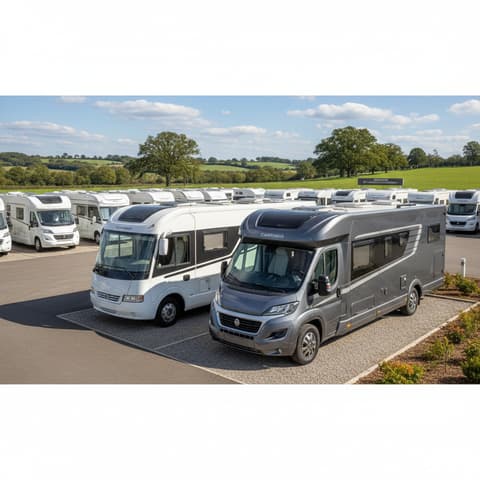
Premium Pre Owned Report for Hymer and Carthago
June 2026 Market Report: Why Hymer and Carthago dominate the premium used sector. Analysis of residual values, technical build quality, and C1 licence needs.
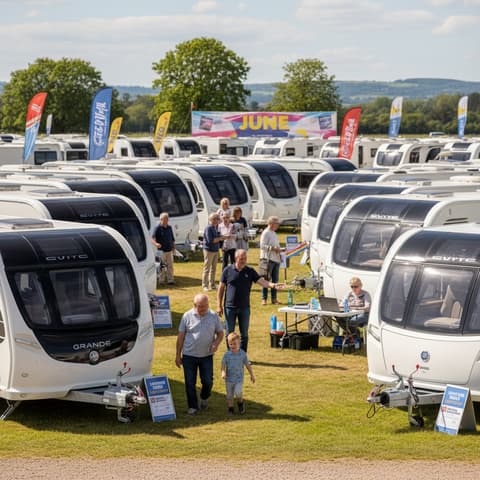
June 2026 Caravan Market Update and Pricing Report
June 2026 Caravan Market Report: 8ft-wide models dominate resale values, while family 6-berths sell in just 6 days. Get the latest pricing data and buying tips.
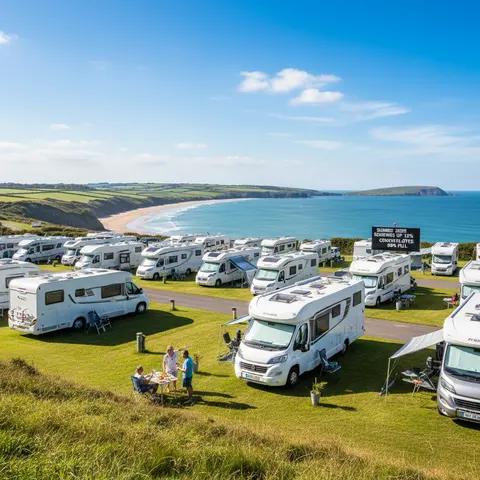
UK Campsite Availability Trends for the Summer 2026 Season
UK campsite bookings are up 12% for Summer 2026. Discover the latest trends in 'Super-Pitches', EV charging, and where to find availability in our market report.