
Caravan Noseweight Calculator
Noseweight affects towing stability more than most people realise. Enter your caravan and car details to find your safe target range and check any measured reading.Find your caravan noseweight target range.
Step 1 of 6
Your tow car
We'll pull your car's noseweight limit from the lookup
What is caravan noseweight?
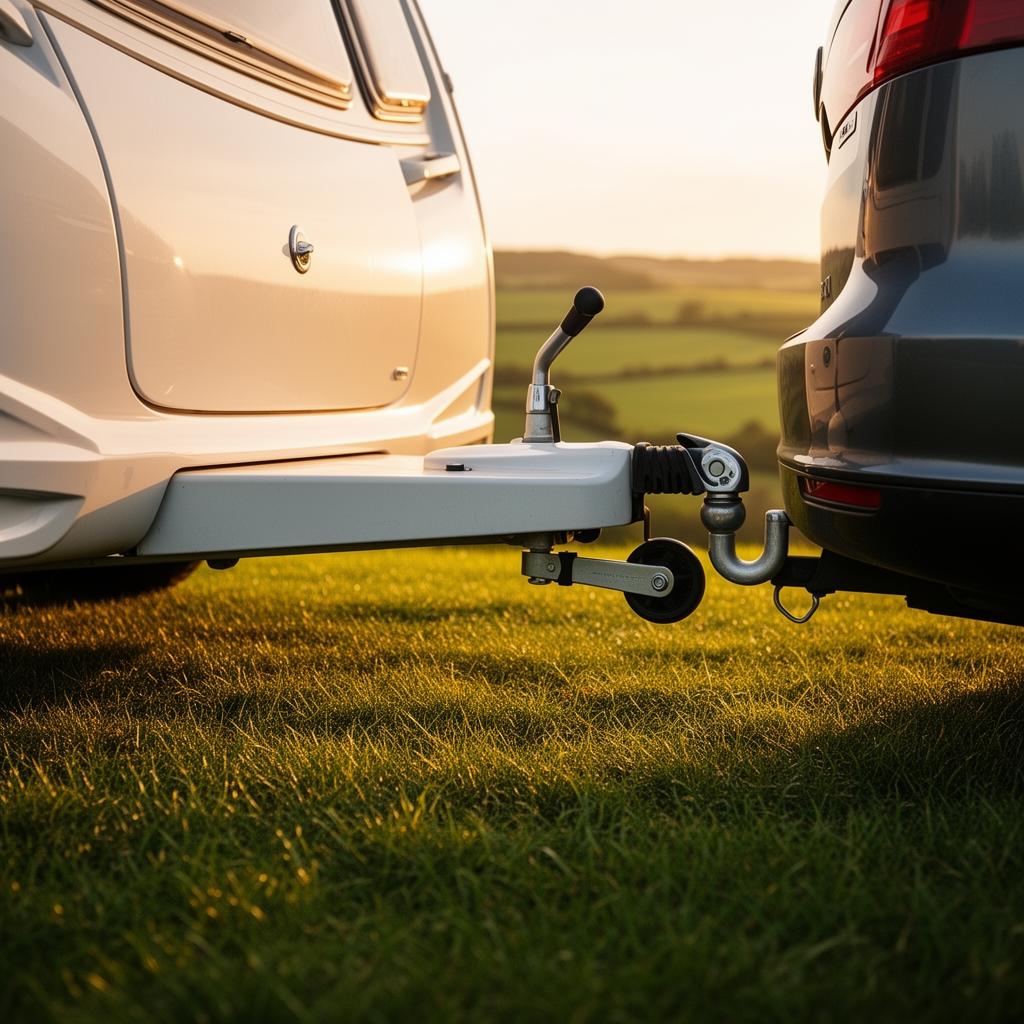
Noseweight is the downward force your loaded caravan places on the towball when hitched. It is a vertical load. The weight being transferred from the caravan's coupling head to your car's rear axle.
It is not the same as the caravan's total weight. A 1,500 kg caravan might have a noseweight of just 75-100 kg. Getting this figure right is one of the simplest things you can do to improve towing stability.
What is the ideal caravan noseweight?
The widely recommended target is 5-7% of the caravan's actual laden weight. For a caravan loaded to 1,400 kg, that means aiming for 70-98 kg on the towball.
But the percentage alone is not enough. Your effective cap is the lowest of three limits:
- Your car's rated noseweight. Stated in the owner's manual or VIN plate
- Your towbar's maximum noseweight. Stamped on the towbar itself
- Your caravan coupling head limit. Usually stamped on the coupling
If the 5-7% range exceeds any of these limits, you must stay within the lowest cap. Use our calculator above to find your actual safe target range.
What affects caravan noseweight?
Anything you put in the caravan. And where you put it. Changes the noseweight reading. Items ahead of the axle increase noseweight; items behind it decrease it.
Front locker contents
Heaviest impact. Awnings, ramps, levelling blocks
Gas bottles
Usually at the front, adding 10-20 kg each
Leisure battery
Often front-mounted, adds 20-30 kg
Motor mover
Axle-mounted, typically reduces noseweight slightly
Water containers
Full Aquarolls/waste water add significant weight
Awning & heavy gear
Large awnings can weigh 20-40 kg
For a full breakdown of caravan weights, see our caravan weights explained guide.
How to measure caravan noseweight
The most reliable method is a purpose-built noseweight gauge. These are inexpensive, widely available, and give a direct reading in seconds.
- Park the caravan on level ground, loaded exactly as it will be for travel.
- Unhitch from the car and support the jockey wheel or use the corner steadies to keep the caravan level.
- Place the noseweight gauge under the coupling head at normal hitch height (roughly 350-450 mm).
- Lower the coupling onto the gauge and read the weight.
- Re-check after any changes to loading.
A bathroom scale placed under a plank can give a rough approximation, but it is less accurate and harder to set up at the correct height. A proper gauge is the better option for regular checking.
What happens if noseweight is wrong?
Too low
- Increased risk of snaking and lateral instability
- The caravan rear becomes disproportionately heavy
- Small inputs. Crosswinds, overtaking lorries. Can amplify sway
Too high
- Overloads the towbar, coupling, or rear axle
- Lifts the car's front wheels, reducing steering grip
- Accelerates rear tyre wear and affects braking balance
How to adjust caravan noseweight safely
- Move heavy items forward to increase noseweight, or rearward to decrease it.
- Keep the heaviest gear low and over or just ahead of the axle.
- Avoid piling heavy kit at the very back. This is the most common cause of low noseweight.
- Make small changes, then re-measure each time.
- Never exceed your car, towbar, or coupling limit, even if the 5-7% range suggests a higher figure.
If your payload is already tight, adjusting noseweight becomes a balancing act. You may need to leave some items behind.
Worked examples
Lightweight 2-berth tourer
MTPLM 1,200 kg · Loaded weight 1,100 kg · Car noseweight limit 100 kg · Towbar limit 85 kg · Coupling limit 100 kg
- 5-7% of 1,100 kg = 55-77 kg
- Effective cap = 85 kg (towbar is the limiting factor)
- Target range: 55-77 kg. Comfortably within the 85 kg cap
Family 4-berth with awning and battery
MTPLM 1,700 kg · Loaded weight 1,600 kg · Car noseweight limit 100 kg · Towbar limit 100 kg · Coupling limit 100 kg
- 5-7% of 1,600 kg = 80-112 kg
- Effective cap = 100 kg
- Target range gets clipped: 80-100 kg. The 7% ceiling is above the cap
Cap wins over percentage
MTPLM 1,900 kg · Loaded weight 1,850 kg · Car noseweight limit 80 kg · Towbar limit 75 kg · Coupling limit 100 kg
- 5-7% of 1,850 kg = 93-130 kg
- Effective cap = 75 kg (towbar)
- Both ends of the percentage range exceed the cap. Actual target becomes: aim as close to 75 kg as possible without going over
Effect of moving heavy items
A caravan reading 60 kg on the gauge. Moving a 15 kg Aquaroll from behind the axle to the front locker increases noseweight to approximately 72 kg. Moving a 25 kg awning bag from the front locker to the rear bed drops it back to around 58 kg. Small redistributions make a real difference.
Common noseweight mistakes
Measuring when the caravan is empty instead of travel-loaded
Ignoring the towbar or car noseweight limit
Assuming more noseweight is always better
Forgetting that adding accessories changes the reading
Loading too much weight in the front locker
Not re-checking after changing what you pack
Noseweight frequently asked questions
Noseweight is the downward force the loaded caravan exerts on the towball when hitched.
It is not the same as the caravan's total weight. It is just the vertical load transferred to the tow car's rear axle through the coupling.
A common target is 5-7% of the caravan's actual laden weight.
However, your usable target must not exceed the lowest of three limits: your car's rated noseweight, your towbar's maximum, and the caravan coupling head limit.
Yes, 5-7% of actual laden weight is widely recommended by manufacturers and caravan clubs.
Going below 5% increases instability risk. Going above 7% may overload components. The key is to stay within this range and within all three equipment limits.
The lowest of the three is your effective cap.
For example, if your car allows 100 kg but your towbar is rated at 75 kg, your effective limit is 75 kg. Always check all three figures and work within the smallest.
Use a proper noseweight gauge on level ground with the caravan loaded as it would be for travel.
Place the gauge under the coupling head at normal hitch height. A bathroom scale with a piece of timber can give a rough reading, but a purpose-built gauge is more reliable and easier to use.
Excessive noseweight pushes down on the car's rear axle, lifting the front wheels.
This reduces steering grip, affects braking, and can overload the towbar or coupling. It also accelerates rear tyre wear.
Too little noseweight makes the rear of the caravan heavier than the front, increasing the risk of snaking and instability at speed.
Even a small reduction below the safe range can make a noticeable difference to handling.
Yes.
Every item you add or move inside the caravan changes the noseweight reading. Heavy items placed ahead of the axle increase it; items behind the axle decrease it. Always re-measure after loading.
Yes.
A motor mover is typically fitted at the rear axle and usually adds 30-40 kg to the caravan's weight. Because of its position, it generally reduces noseweight slightly. You should factor this into your loading plan.
Always.
Noseweight changes every time you add, remove, or rearrange items. A quick re-check with a gauge after loading takes 30 seconds and confirms you are within safe limits before setting off.
Yes.
Move heavy items. Such as tinned food, tools, or water containers. Further back in the caravan. Avoid stacking heavy kit in the front locker. Make small adjustments and re-measure each time. Never reduce noseweight below the 5% minimum target.
No.
Payload is the total weight you can add to the caravan. MTPLM is the maximum legal laden weight. Noseweight is just the portion of that total weight that pushes down on the towball. You can check payload with our caravan payload calculator.
Continue your towing setup
Noseweight is one part of the picture. Use these tools to complete your checks.