
The complete first-year ownership journey, the habits that keep it fun
Master your first year of motorhome or caravan ownership with expert tips on moisture management, warranty compliance, and safety habits that protect your investment.
Master your first year of motorhome or caravan ownership with expert tips on moisture management, warranty compliance, and safety habits that protect your investment.

The RoamWorthy editorial team combines decades of caravan, motorhome and campervan ownership experience with industry expertise to provide trusted buying advice.
View all articles →- Moisture Management: Ventilate and dry thoroughly after every outing to prevent damp and condensation.
- Warranty Compliance: Book an annual habitation check with an NCC-approved workshop to maintain manufacturer warranties.
- Safety Criticals: Monitor tyre age (5-year replacement recommendation), wheel bolt torque, and leisure battery health.
- Weight Awareness: Regularly audit your payload to stay within legal MTPLM limits.
- Documentation: A complete service history protects resale value and provides proof of maintenance.
The first twelve months of ownership are a critical period for any leisure vehicle. This is when the novelty of the 'new toy' meets the reality of the UK's unpredictable climate and the mechanical demands of life on the road. According to the National Caravan Council (NCC), the UK trade body representing the industry, proper maintenance through the supply chain is vital for vehicle longevity. Success in year one isn't about luck; it's about establishing habits that protect your investment for years to come.
The Reality Check: UK Weather vs Your Vehicle
Whether you have a luxury tourer, a robust Swift, or a compact campervan, the primary threat remains the same: moisture ingress. If you pack it away wet and ignore it, the vehicle will punish you later. Drying and ventilation might feel tedious after a long drive home, but they are the most effective ways to prevent damp and mould. The Caravan and Motorhome Club emphasizes that taking care of your outfit, including storage and tyre safety, is essential for a successful touring experience.
When considering the impact of the UK climate, owners must decide how to manage storage. Will you use a dedicated storage facility or keep the vehicle at home? The Caravan and Motorhome Club provides advice on storage facilities and seasonal pitches, which can influence how you manage moisture. A vehicle left in a damp, shaded area will require more frequent ventilation than one stored in a well-ventilated, sunny spot. The decision-making process for new owners often involves weighing the convenience of home storage against the security and professional oversight of a dedicated facility.
The Habits That Matter Most
- Post-Trip Dehumidification: Open all lockers and lift cushions after a trip to allow air circulation. If you've been out in the rain, use a microfibre cloth to dry window seals and door frames.
- The Visual Audit: Perform quick visual checks under sinks, around skylights, and inside the gas locker area. Look for any signs of discolouration on wallboards.
- Weight Management: Before heading out, use our Motorhome Weight Checker. It is surprisingly easy to exceed your MTPLM (Maximum Technically Permissible Laden Mass) by adding gear over the months.
- Warranty Compliance: Ensure your annual habitation check is booked well in advance. The NCC Approved Workshop Scheme is the industry standard for these checks. Missing this by even a few weeks can void manufacturer warranties, particularly the long-term ingress warranties offered by major brands.
Establishing these habits early is vital. For example, when performing a visual audit, ask yourself: Is that a new water mark, or was it there last month? Keeping a photographic record of the interior during the first month can help you identify changes later. Similarly, when managing weight, consider a 'one-in, one-out' policy for gear to ensure you don't slowly creep toward your MTPLM limit without noticing.
The 10-Minute Monthly Routine
You don't need to be a mechanic to maintain your vehicle. Once a month, perform this 'sensory' check to catch issues before they require professional intervention:
- The Sniff Test: Enter the vehicle after it has been closed for a few days. A musty or 'earthy' smell is often the first sign of a seal failure.
- The Touch Test: Run your hand along the wall boards, especially under windows and in the corners of upper lockers. They should feel firm and dry. Soft spots are a red flag for damp.
- Battery Health: Check the voltage of your leisure battery. Letting it drop too low frequently can permanently reduce its lifespan. The NCC maintains a verified battery list to help owners choose the right replacements.
- Tyre Inspection: Check for 'flat spots' if the vehicle hasn't moved. Inspect for sidewall cracking (crazing), which is common in vehicles that sit stationary in direct sunlight.
First-Year Maintenance Checklist
- [ ] Post-Trip: Dry all surfaces and empty the 'grey' and 'black' water tanks completely to prevent stagnant smells and frost damage.
- [ ] Monthly: Charge the leisure battery and check tyre pressures (including the spare).
- [ ] Quarterly: Clean and lubricate window and door seals with a silicone-based protector.
- [ ] Bi-Annually: Check the torque of your wheel bolts using a calibrated torque wrench.
- [ ] Annually: Book a professional habitation service and damp report with an NCC-approved workshop.
Protecting Your Resale Value
A well-documented first year sets the tone for the vehicle's entire life. Keep a dedicated folder for every receipt, from a replacement bulb to the major annual service. If you ever decide to upgrade to a newer model—perhaps browsing our used motorhomes or used caravans—a 'full service history' is your strongest negotiating tool. Buyers look for evidence that the vehicle has been cared for according to industry standards.
Consider the scenario of a private sale versus a dealer trade-in. A dealer will likely perform their own damp check, but having your own NCC-approved reports from year one provides a baseline that can prevent disputes over the vehicle's condition. It demonstrates a level of care that suggests the mechanical and structural integrity has been a priority, not an afterthought.
Safety and Legal Compliance
Safety on the road is paramount. TyreSafe.org reports that on average over the last five years, 163 people are killed or seriously injured in incidents related to 'defective tyres'. In 2025, this figure rose to 201. For leisure vehicles, tyres often age out before the tread wears down. It is recommended to replace tyres every five years and never exceed seven years, regardless of how much tread remains. This is due to rubber degradation and UV damage, which can lead to catastrophic failure even if the tyre looks visually acceptable.
Furthermore, ensure you are familiar with your towing limits and driving licence requirements. The Caravan and Motorhome Club provides guidance on driving licences and matching your car and caravan. Overloading or using an unsuitable tow car not only risks your safety but can also lead to legal complications and voided insurance policies. Regular audits of your equipment using a weight check tool are essential for staying within the law.
Frequently Asked Questions
Do I really need a professional damp check in the first year?
Yes. Even brand-new vehicles can develop leaks due to settling during transit or manufacturing defects. Catching it in year one ensures it is fixed under the manufacturer's warranty. Most warranties require an annual check at an approved workshop to remain valid. Failure to provide this documentation can result in the rejection of future claims.
How often should I move my vehicle?
If stored, try to move the vehicle every 2-4 weeks. This prevents tyre flat-spots and keeps the braking system from seizing. For motorhomes, this also helps circulate engine fluids and maintains seal lubrication. If you cannot move the vehicle, consider using tyre cradles to distribute the weight more evenly.
What is the '5-year rule' for tyres?
While the legal tread depth is 1.6mm, leisure vehicle tyres degrade over time due to UV exposure and standing. TyreSafe recommends replacing tyres every 5 years to avoid failures caused by rubber degradation. Always check the DOT code on the sidewall to determine the age of your tyres.
What is an NCC Approved Workshop?
The Approved Workshop Scheme is a joint enterprise between the NCC, The Caravan and Motorhome Club, and The Camping and Caravanning Club. It ensures that technicians are qualified to the required standards to perform habitation checks and repairs, providing peace of mind that the work meets industry safety standards.
Can I use portable gas heaters inside my campervan?
The NCC warns campervan users not to use portable gas heaters indoors. These devices can pose a significant risk of carbon monoxide poisoning and are not suitable for the confined, often poorly ventilated spaces of a leisure vehicle. Always rely on the vehicle's integrated, professionally installed heating system.
How do I know if I am overloading my vehicle?
You must check your vehicle's MTPLM (Maximum Technically Permissible Laden Mass) against its actual weight. You can use a weight check tool or visit a local weighbridge. Remember that the payload includes everything added after manufacture, including water, gas, and personal belongings.
Further Reading
Ready to find yours?
Put this knowledge into action
Related Tools
Related Makes & Models
Spotted an error? Let us know.
Continue Reading
More expert guides to help you make informed decisions

Preventing Condensation and Mould in Your Campervan
Learn how to prevent campervan condensation and mould. Discover the importance of active ventilation, NCC safety warnings regarding gas heaters, and how to protect your health on
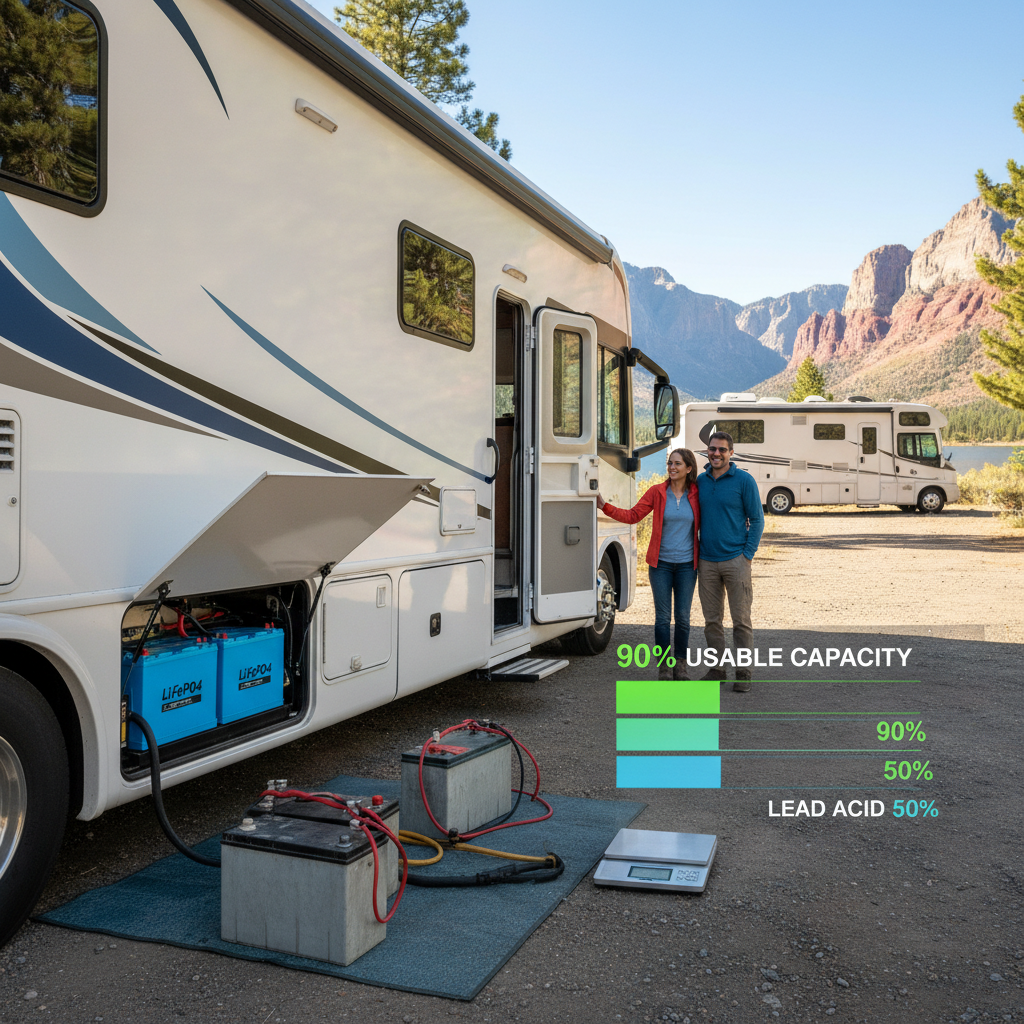
Switching to Lithium Batteries for Motorhome Power
Thinking of switching to lithium? Learn why LiFePO4 batteries are the ultimate 2026 upgrade for motorhome off-grid power, weight savings, and longevity.

Caravan noseweight and stability, how to measure and stay safe
Quick answer: noseweight is the downward force the caravan hitch puts on the towball. Aim for roughly 5 to 7 percent of the loaded caravan weight, and never exceed the lower of your car towball limit, hitch limit, or the caravan manufacturer noseweight figure.