
Motorhome touring in March what to prep after winter storage
Prepare your motorhome for the 2026 spring season with our March maintenance guide. Cover tyre safety, water sterilisation, gas checks, and damp prevention.
Prepare your motorhome for the 2026 spring season with our March maintenance guide. Cover tyre safety, water sterilisation, gas checks, and damp prevention.
Ready to find yours?
Put this knowledge into action

The RoamWorthy editorial team combines decades of caravan, motorhome and campervan ownership experience with industry expertise to provide trusted buying advice.
View all articles →TL;DR: March Motorhome Readiness
- Safety First: Inspect tyres for 'flat spots' and sidewall cracking; check pressures for a fully laden vehicle.
- System Flush: Sterilise the fresh water system with a dedicated cleaner to remove winter biofilm.
- Power Check: Deep-charge leisure batteries for 24+ hours and test voltage stability under load.
- Gas & Heating: Verify gas hose dates (5-year rule) and check Alde glycol levels if applicable.
- Compliance: Ensure MOT, tax, and insurance are valid before your first 2026 spring outing.
March motorhome touring is a highlight of the UK calendar, marking the transition from winter hibernation to the first spring adventures. However, the excitement of the first trip can be dampened if winter storage has led to seized components, perished seals, or electrical gremlins. A methodical approach to your 2026 spring prep ensures your first outing is spent enjoying the view rather than calling out breakdown services.
1. Exterior and Running Gear Safety
Before moving the vehicle, perform a thorough walk-around. Tyres are the most critical check; even if they have plenty of tread, rubber can degrade and crack when stationary for months. Ensure pressures are set to the manufacturer's specification for a fully laden vehicle—use our Motorhome Weight Checker to ensure you aren't exceeding your MTPLM (Maximum Technically Permissible Laden Mass) with extra spring gear. If you are looking to upgrade to a newer chassis, such as a Volkswagen California or a Mercedes-Benz Marco Polo, remember that modern TPMS (Tyre Pressure Monitoring Systems) still require manual verification after long storage.
- Tyre Inspection: Check for 'crazing' in the sidewalls and ensure no flat spots have developed. Check the DOT code for age; tyres over 7 years old should be professionally inspected. Remember to check the spare tyre as well.
- Fluid Levels: Check engine oil, coolant, and screen wash. Look under the chassis for any signs of fresh fluid leaks (pink/green for coolant, black for oil).
- Road Lights: Ask a partner to help verify all indicators, brake lights, and marker lights are functioning correctly.
- Brake Check: Handbrakes can seize over winter. Release and apply gently several times on level ground to ensure movement. Listen for any grinding sounds whilst moving, which may indicate surface rust on the discs.
2. The Habitation 'Wake-Up' Call
The habitation area requires more than just a quick dust. Systems that have sat stagnant are prone to failure upon first use, particularly if they weren't fully drained down before the first frost.
Water System Sterilisation
Standing water in pipes can lead to bacterial growth. Close all drain-down valves (often left open for winter) and fill the fresh tank. Use a dedicated motorhome pipe cleaner (like Puriclean) to flush the system. Run every tap—including the shower—until the water runs clear and air locks are purged. Check the water heater (e.g., Truma or Alde) for any frost-induced cracks in the casing. If you have a Swift Lifestyle or Bailey Autograph 74 4, ensure the onboard pump is primed correctly to avoid running dry. For those considering a more robust setup, you might explore Motorhome Models with winterised plumbing like Laika or Carado.
Gas and Heating
Check the date stamp on your gas regulator hose; these typically need replacing every 5 years. Open your gas valves slowly and test the hob, fridge, and space heater. If you have an Alde wet heating system, check the glycol level in the expansion tank and ensure the fluid is still the correct colour (usually pink or blue). If it has turned clear or brown, it may need a professional flush to maintain corrosion protection. If you find your current heating system is struggling, it might be time to browse used motorhomes with upgraded Alde or Truma Combi 6E systems.
3. Electrical Health Check
A leisure battery that was "fine last year" may have dropped below a critical voltage over winter. Charge it fully via a mains hook-up for at least 24 hours before testing. If the voltage drops rapidly once the charger is removed, it may be time for a replacement. If you are planning to add more tech this year, check out the latest Motorhome Models to see how modern 2026 power management systems compare to your current setup, especially in premium brands like Niesmann And Bischoff or Le Voyageur.
4. Damp and Seals
March is the time when winter ingress becomes apparent. Use your nose first—a musty smell is the earliest warning sign of damp. Inspect the corners of lockers and around window seals for any 'soft' spots or discolouration. Pay close attention to roof lights and the seals around the cab-to-habitation transition. For owners of older Auto-Trail Imala or Elddis Riva 554 models, a dedicated damp meter is a worthwhile investment for peace of mind. If you are worried about damp in your current vehicle, you can find a dealer to perform a professional moisture check.
Spring Prep Checklist: The Final 5
- Wiper Blades: Check for tearing or 'smearing' after a winter of frost and ice.
- Fire Safety: Test smoke and Carbon Monoxide (CO) alarms; replace batteries if needed and check the expiry date on the fire extinguisher.
- Documentation: Verify your MOT, road tax, and insurance are valid for the upcoming season. Check your V5C address is current.
- Torque Check: If you removed wheels for storage, ensure wheel bolts are torqued to the correct setting using a calibrated torque wrench.
- Fridge Operation: Test on Gas, 12V (engine running), and 230V to ensure the cooling cycle is working on all energy sources.
FAQs: March Motorhome Prep
Should I get a full habitation service in March?
Ideally, yes. While DIY checks are great, a professional habitation service includes a calibrated damp test and a gas tightness test which are essential for safety and warranty compliance. You can find a dealer here to book a spring service.
What if my water pump is pulsing?
This usually indicates a small leak or an air lock. Check all joints and ensure the filter housing hasn't cracked due to frost damage over the winter. If the pump runs continuously, it may be a pressure switch issue. If you are converting a van, use our Campervan Conversion Checker to ensure your plumbing layout is efficient.
Can I use bleach to clean my water tanks?
It is not recommended. Household bleach can damage stainless steel components in water heaters and degrade rubber seals. Use a specialist, non-chlorine based steriliser.
How do I check my tyre age?
Look for the DOT code on the sidewall. The last four digits represent the week and year of manufacture (e.g., 1224 means the 12th week of 2024). For more on weights and tyres, see our Motorhome Weight Checker.
By dedicating one calm afternoon to these checks, you transform your first trip from a troubleshooting exercise into the relaxing escape it's meant to be. If you find your current van is showing its age, you can always browse used motorhomes for a spring upgrade or explore Motorhome Models for the latest 2026 innovations.
Ready to find yours?
Put this knowledge into action
Related Tools
Related Makes & Models
Spotted an error? Let us know.
Continue Reading
More expert guides to help you make informed decisions

Preventing Condensation and Mould in Your Campervan
Stop mould and damp in your campervan. Learn about the 2-litre rule, BS EN 721 ventilation standards, and why diesel heaters are the best for UK van life.
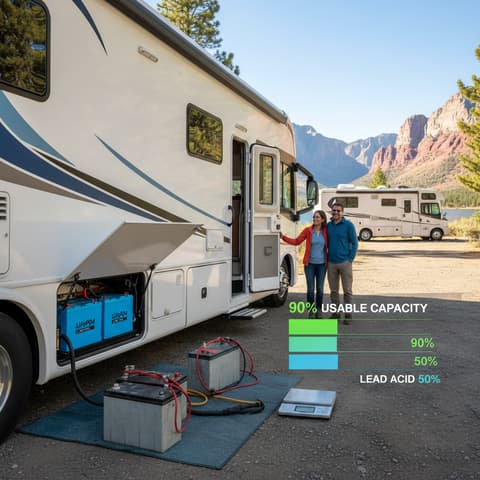
Switching to Lithium Batteries for Motorhome Power
Thinking of switching to lithium? Learn why LiFePO4 batteries are the ultimate 2026 upgrade for motorhome off-grid power, weight savings, and longevity.

Caravan noseweight and stability, how to measure and stay safe
Quick answer: noseweight is the downward force the caravan hitch puts on the towball. Aim for roughly 5 to 7 percent of the loaded caravan weight, and never exceed the lower of your car towball limit, hitch limit, or the caravan manufacturer noseweight figure.