
How to check your car towing capacity by registration
Quick answer: enter your registration into the RoamWorthy towing capacity tool. You will get the braked towing capacity, kerbweight, and a sense of which caravans are safe matches. Always confirm against the V5C and the manufacturer plate before buying.
Quick answer: enter your registration into the RoamWorthy towing capacity tool. You will get the braked towing capacity, kerbweight, and a sense of which caravans are safe matches. Always confirm against the V5C and the manufacturer plate before buying.

RoamWorthy Editorial researches UK caravans, motorhomes and campervans using RoamWorthy marketplace data, primary and official sources, and structured editorial review.
View all articles →Quick Summary
\n- \n
- Legal Limit: Your car\'s maximum braked towing capacity is the limit set by the manufacturer; exceeding this may lead to prosecution and mechanical issues. \n
- Easy Lookup: Use our registration-based tool for a quick check, but always cross-reference with your V5C logbook (Section O.1) and the vehicle VIN plate. \n
- The VIN Plate: The physical plate on your vehicle is a primary source for verifying your Gross Train Weight (GTW). \n
- The 85% Rule: This is a safety recommendation, not a law. For stability, especially for beginners, it is suggested to keep the caravan\'s loaded weight within 85% of the car\'s kerbweight. \n
- Consequences: Exceeding manufacturer limits may affect your insurance cover or claims and lead to mechanical failure. \n
With the touring season approaching, many prospective caravanners are asking the same question: "What can my car actually tow?" It is a vital question, as the UK market for used caravans features a wide range of high-spec, heavy twin-axle models—like the Bailey Unicorn Cartagena or Swift Challenger 645. Understanding your car\'s limits before you fall in love with a layout is the hallmark of a savvy buyer.
\n\nRoamWorthy provides data-driven tools to simplify the buying process. Our team cross-references manufacturer data to assist with lookups for everything from a Volkswagen Transporter to a luxury Le Voyageur motorhome. Whether you are looking at Caravan Models or planning a Campervan Conversion, weight is your first consideration.
\n\n\n\nThe Two Critical Towing Numbers
\nWhen you check your towing capacity, you are looking for two distinct figures that help determine your safe limits:
\n\n1. Maximum Braked Towing Capacity
\nThis is the legal limit set by the car manufacturer. It represents the maximum weight the car is rated to pull on a 12% gradient. For a typical mid-sized SUV like a Volkswagen Tiguan, this might be 1,800kg–2,500kg depending on the engine and drivetrain. For a heavy-duty tow car like a Land Rover Discovery, it can be as high as 3,500kg. Note that unbraked towing is almost always limited to 750kg regardless of the vehicle\'s size. You can find specific vehicle details in our tow car database.
\n\n2. Kerbweight
\nThe kerbweight (or Mass in Running Order, depending on the standard used) generally refers to the weight of the car with fluids and fuel, but definitions can vary by manufacturer. This number is used for calculating the "85% rule"—safety guidance from the Caravan and Motorhome Club suggesting a caravan\'s loaded weight (MTPLM) should not exceed 85% of the car\'s kerbweight for improved stability. You can calculate your match using our Caravan Towing Calculator.
\n\nHow to Use the Registration Lookup
\nThe quickest way to find these numbers is to use your vehicle\'s registration. Our Check towing capacity by reg tool pulls data from technical databases to provide your car\'s specific limits. However, because specifications can vary, you should always verify these figures against your V5C logbook or the physical VIN plate on the vehicle.
\n\nThe VIN Plate: Verifying the Weights
\nWhile digital lookups are helpful, you should always check your vehicle\'s VIN plate to verify legal weights. Usually located in the door shut, under the bonnet, or on the B-pillar, it will list four weights in kilograms:
\n\n\n\n\n\n\n\n\n\n\n\n\n\n\n\n\n\n\n\n\n\n\n\n\n\n\n\n\n\n\n| Line Number | Weight Type | Definition |
|---|---|---|
| 1 | MAM / GVW | Maximum Authorised Mass (Car + passengers + luggage) |
| 2 | GTW / GCW | Gross Train Weight (Maximum allowed weight of Car + Caravan combined) |
| 3 | Axle 1 | Maximum load for the front axle |
| 4 | Axle 2 | Maximum load for the rear axle |
The Calculation: To find your towing capacity from the plate, subtract the first number (MAM) from the second (GTW). If the GTW is listed as zero or there is a dash, the vehicle is not type-approved for towing. Note that some vehicles have a reduced GTW when the car is fully loaded; always check the handbook for specific conditions. You can verify your actual loaded weights at a public weighbridge.
\n\nSafe Matching for UK Roads
\nSpring in the UK often brings unpredictable crosswinds and wet motorways. This is why many experts recommend sticking to the 85% guidance for those new to towing. If your car has a 2,000kg legal limit but a 1,800kg kerbweight, an 85% match would be a caravan with an MTPLM of 1,530kg. This margin is intended to provide stability when navigating motorways or winding roads. Explore Caravan Layouts to find a model that fits within your car\'s limits.
\n\nThe Smart Tower\'s Checklist
\n- \n
- Check Capacity: Use our registration tool to find your braked limit and cross-reference with your V5C. \n
- Verify Licence: A full Category B car licence allows you to tow a trailer up to 3,500kg MAM, subject to the vehicle\'s legal limits. A separate B+E test is no longer required. \n
- Noseweight: Check the maximum vertical load your towball can handle (usually between 50kg and 100kg). \n
- Tyre Health: Inspect your car and caravan tyres for age and pressure; the BTMA provides guidance on maintaining tyre safety while towing. \n
- Model Search: Browse Caravan Makes to find weights for specific models like the Bailey Pegasus or Swift Challenger. \n
Frequently Asked Questions
\nIs the towing capacity different for automatic cars?
\nOften, yes. Some automatic gearboxes or CVTs have different cooling requirements or gear ratios, which may lead to a different towing limit compared to the manual version. Always check the specific data for your exact model.
Can I tow more if I have a B+E licence?
\nA B+E licence (acquired before 1997 or held previously) allows for a heavier total outfit weight, but it does not increase the mechanical towing limit of your car set by the manufacturer.
What happens if my registration is not found?
\nSome vehicles may not be in the database. In this case, you must refer to section O.1 of your V5C logbook or the physical VIN plate.
Does an electric car have a towing capacity?
\nMany modern EVs, such as the Volkswagen ID.4 or Tesla Model Y, have specified towing capacities. However, towing range in an EV is highly dependent on the model, route, weather, and the trailer being towed. Always verify the GTW on the VIN plate, as some EVs are not type-approved for towing.
Once you know your capacity, you can explore Caravan Models with the confidence that your car is a safe and legal match. For those looking for a first-time purchase, our First-timer\'s guide to caravans 2026 provides further essential information.
Ready to find yours?
Put this knowledge into action
Can your car tow it?
Free towing check. Takes 30 seconds
Save outfits, compare setups, download or email a PDF report. Find compatible caravans.
Related Tools
Browse by Weight
Related Makes & Models
Spotted an error? Let us know.
Continue Reading
More expert guides to help you make informed decisions
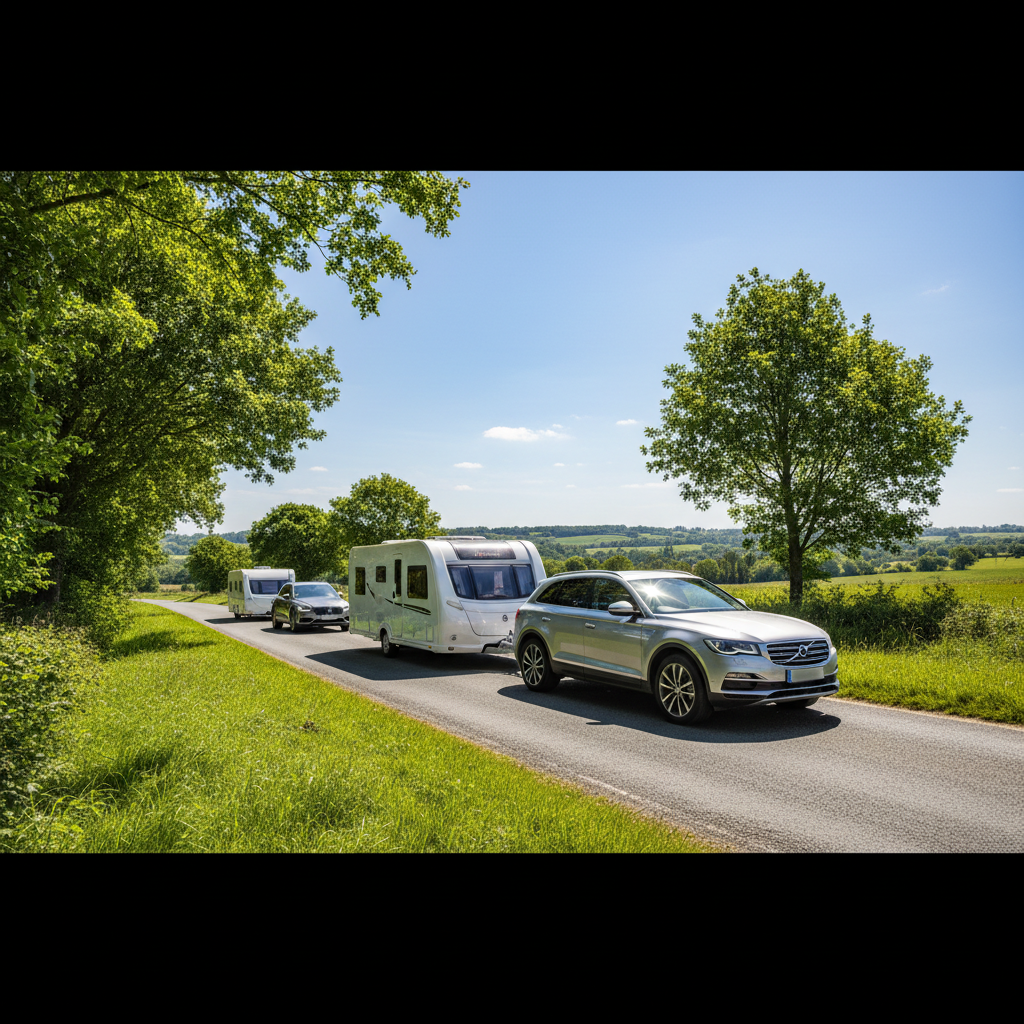
Best Tow Cars 2026: What 6,957 UK Towing Samples Reveal
Analysis of 6,957 catalogue samples across 237 tow-car models reveals the strongest towing limits, the mainstream sweet spot and major variant gaps.
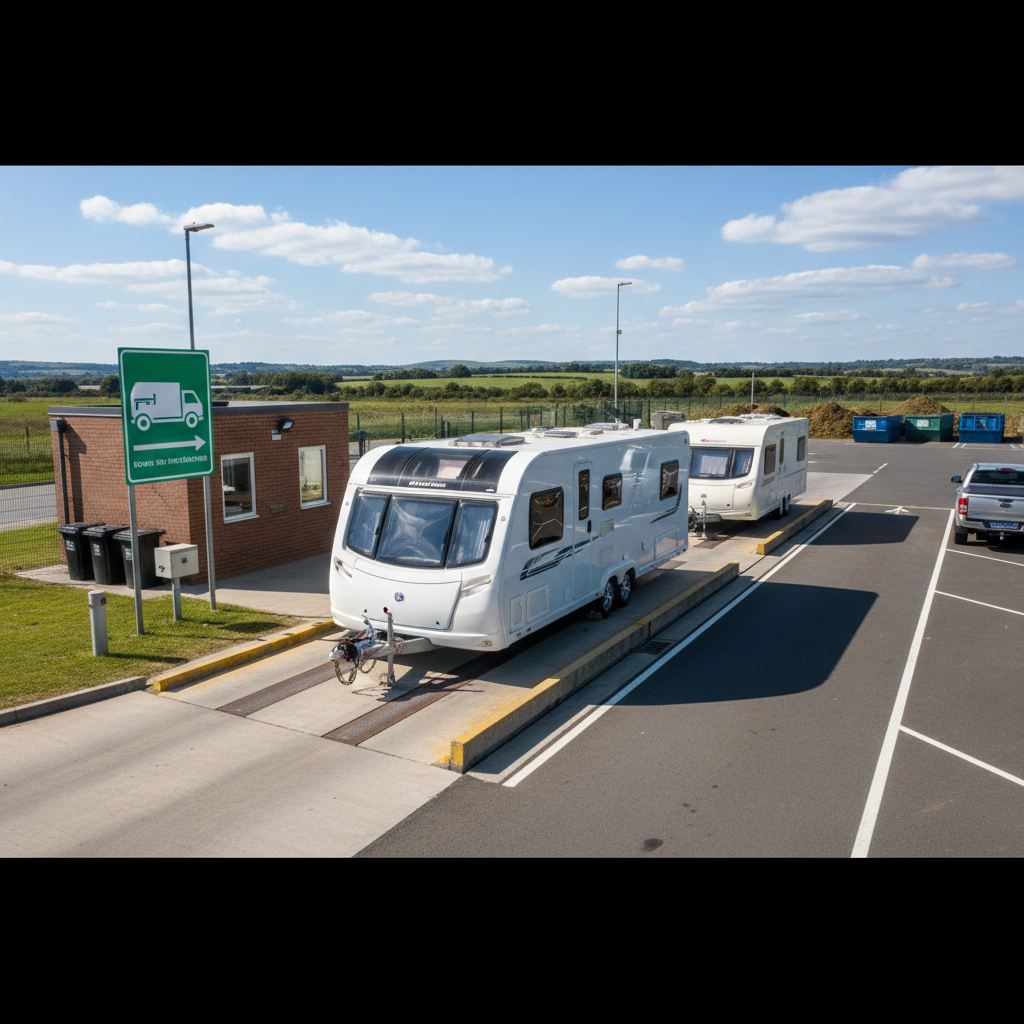
How to Use a Public Weighbridge Safely
Ensure your caravan or motorhome is road-legal. Learn how to find a UK public weighbridge, understand DVSA weight terms, and verify your axle limits to avoid fines.
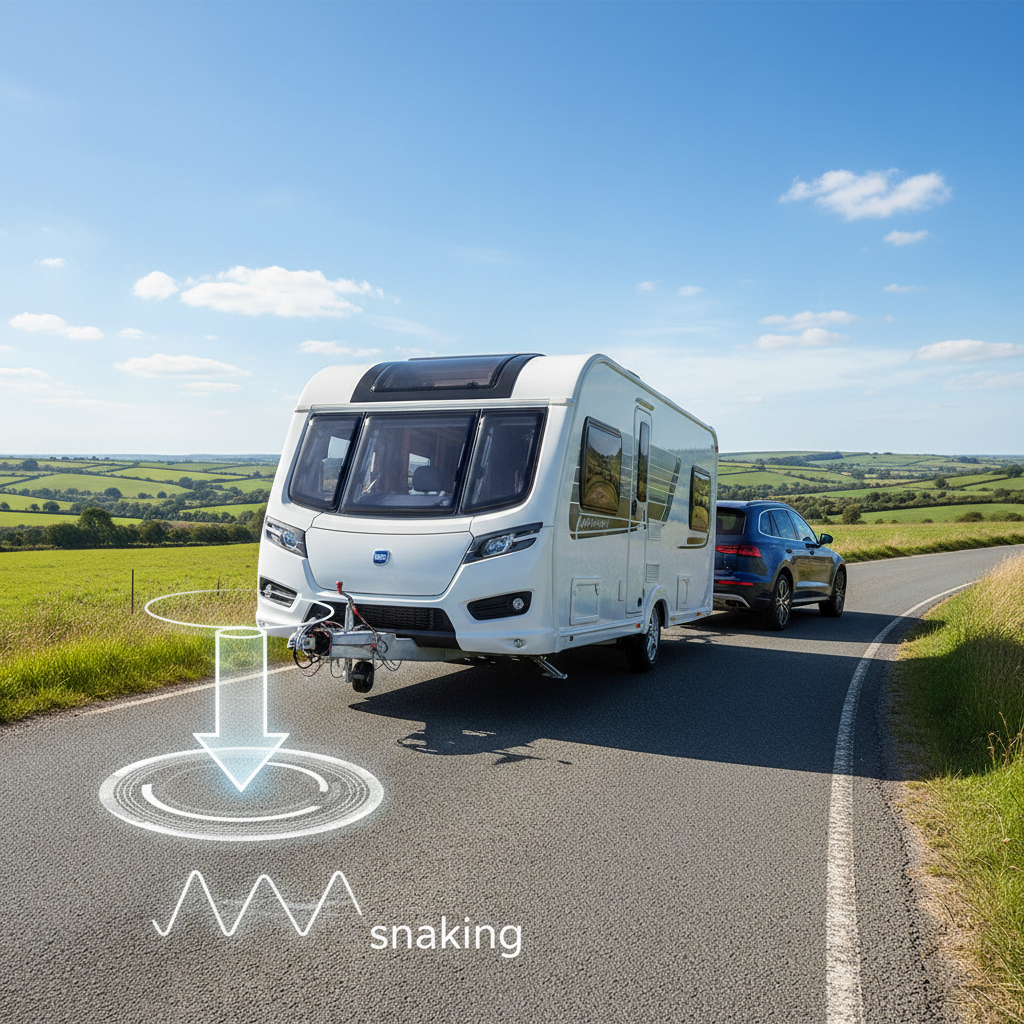
Caravan noseweight and stability, how to measure and stay safe
Quick answer: noseweight is the downward force the caravan hitch puts on the towball. Aim for roughly 5 to 7 percent of the loaded caravan weight, and never exceed the lower of your car towball limit, hitch limit, or the caravan manufacturer noseweight figure.