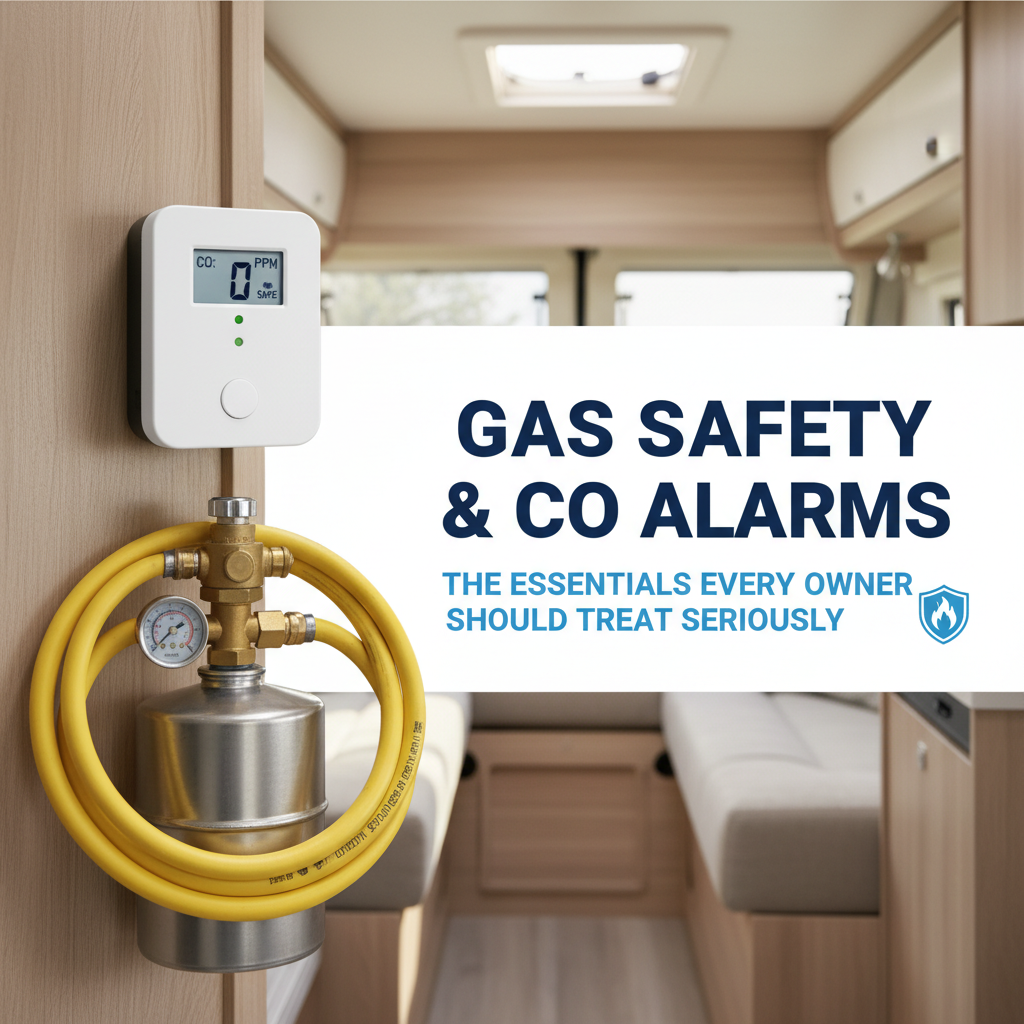
- Annual Servicing: Gas systems must be professionally inspected annually by an AWS or Gas Safe registered engineer.
- CO Alarms: Use an EN 50291-2 certified alarm; replace every 5-10 years as per manufacturer instructions.
- Hose Life: Replace rubber gas hoses (pigtails) every 5 years; check the date stamp for expiry.
- Ventilation: Never block floor drop vents or roof vents; they are critical for preventing gas buildup and CO poisoning.
- Flame Quality: A healthy flame is crisp and blue; yellow or orange flames indicate dangerous incomplete combustion.
Gas systems in modern leisure vehicles like the Bailey Alicanto Grande Deluxe Porto or Swift Challenger SE 480 are engineered to stringent safety standards. However, safety is a continuous process, not a one-time check. Problems typically arise from neglect, expired components, or unauthorised DIY modifications. This guide outlines the essential safety protocols for 2026 to keep your tours risk-free.
The Carbon Monoxide (CO) Essential
Carbon Monoxide is often called the 'silent killer' because it is odourless, colourless, and tasteless. In the confined space of a motorhome or caravan, it can reach fatal concentrations within minutes if an appliance is faulty or ventilation is restricted.
- The Right Alarm: Ensure your alarm is certified to BS EN 50291-2. Unlike standard domestic alarms, these are specifically tested for use in recreational vehicles to withstand vibration and extreme temperature swings.
- Placement: Follow manufacturer instructions, but generally, place it at head height when sleeping, at least 1-3 metres away from fuel-burning appliances like the cooker or heater.
- Testing: Press the 'test' button weekly. If the alarm chirps or shows a fault light, replace it immediately. Note that CO sensors have a finite life (usually 5, 7, or 10 years) regardless of battery level.
Gas System Components & Maintenance
Hoses and Regulators
Rubber high-pressure hoses (pigtails) have a limited lifespan. Check the date printed on the hose; if it is more than 5 years old, it must be replaced. Look for signs of 'crazing' (fine cracking) or stiffness. Ensure your regulator is securely mounted and shows no signs of corrosion. For those using larger models like the Adria Alpina, ensure your gas locker can accommodate the weight of larger bottles without exceeding your payload. Use our Motorhome Weight Checker to stay within limits.
Ventilation: The 'Lungs' of your Van
Leisure vehicles feature 'drop vents' in the floor and fixed vents in the roof. Because LPG (Propane/Butane) is heavier than air, it sinks to the lowest point. Blocking these vents to stop draughts is extremely dangerous. Ensure they are clear of dust, pet hair, or stored equipment. If you have recently added thick carpets or rugs, ensure they do not cover these floor vents.
Safe Habits for Every Trip
- Travel Safety: Unless your vehicle is fitted with a crash-sensing regulator (such as the Truma MonoControl or DuoControl), gas bottles must be turned off at the valve before you start the engine or move the caravan.
- The Gas Locker: This should be a 'sealed' environment from the living area. Do not store flammable materials, electrical items, or loose equipment that could damage the regulator or hoses in the gas locker.
- Flame Check: A healthy gas flame should be crisp and blue. A lazy, yellow, or orange flame is a sign of incomplete combustion and a major CO risk. If you see this, turn off the appliance and seek professional help immediately.
Professional Inspections
While basic visual checks are your responsibility, a full pressure leak test (tightness test) should be part of your annual service rhythm. If you are buying a used vehicle, such as a Volkswagen California or an Adria Adora, ensure you see a recent gas safety certificate or Habitation Check report from an Approved Workshop Scheme (AWS) member. Browse Caravan Models to see which brands offer the best accessibility for gas maintenance.
Pre-Trip Gas Safety Checklist
- [ ] CO alarm tested and within its expiry date (check the sticker on the back).
- [ ] Gas bottles secured upright with straps and valves closed for transit.
- [ ] Visual check of hoses for cracks, perishing, or date expiry.
- [ ] All floor drop vents and roof lights unobstructed.
- [ ] Gas spanner/tool present for bottle changes (if not hand-tightened).
- [ ] All passengers know the location of the main gas shut-off valve.
- [ ] Leak detection spray or soapy water used to check connections after a bottle change.
Frequently Asked Questions
Can I use a domestic CO alarm in my caravan?
It is not recommended. Domestic alarms (EN 50291-1) are not tested for the vibration, humidity, and temperature fluctuations found in mobile dwellings. Always look for the 'Part 2' (EN 50291-2) certification.
How often should I replace my gas regulator?
While there is no legal expiry, most manufacturers (like Truma or Cavagna) recommend replacing regulators every 10 years to ensure internal diaphragms remain flexible and accurate.
What is the difference between Propane and Butane in winter?
Propane (red bottles) has a much lower boiling point (-42°C) than Butane (blue bottles, approx 0°C). For winter touring in the UK, Propane is essential as Butane will fail to gasify in freezing temperatures.
Next Steps
- Compare Truma vs Alde heating systems to understand your appliance's gas consumption.
- Use our Motorhome Weight Checker to ensure your gas bottle upgrades don't exceed your payload.
- Check your towing capacity with our Caravan Towing Calculator if carrying extra gas bottles.
- Find a Dealer for a professional habitation check.
- Browse used caravans with verified service histories.