
Selling privately vs part exchange, the calm way to decide
Should you sell your caravan privately or part-exchange? Compare the 10-20% higher returns of private sales against the speed and safety of dealer trade-ins.
Should you sell your caravan privately or part-exchange? Compare the 10-20% higher returns of private sales against the speed and safety of dealer trade-ins.
Ready to find yours?
Put this knowledge into action

The RoamWorthy editorial team combines decades of caravan, motorhome and campervan ownership experience with industry expertise to provide trusted buying advice.
View all articles →- Private Sale: Best for maximising profit (typically 10-20% higher return) if you have the time for admin and viewings.
- Part Exchange: Best for convenience, speed, and legal protection when buying your next leisure vehicle.
- Hybrid Option: Consider a 'Sale or Return' (SOR) agreement with a dealer for a middle-ground approach.
- 2026 Market Tip: Digital-first buyers now expect high-definition video tours and recent damp reports as standard for private listings.
Selling your caravan or motorhome is a trade-off between two primary currencies: time and money. While a private sale often yields a higher headline figure, part exchange offers a level of "peace of mind" that is hard to quantify until you are in the thick of a transaction. As we look toward the 2026 market, where buyers are increasingly cautious about vehicle history and damp issues, understanding the nuances of both paths is essential for a stress-free transition.
The Financial Reality Check
Before listing your Swift Challenger or Bailey Autograph, you must establish your baseline. Use our free valuation tool to see the current market spread. Generally, the "gap" between a trade-in price and a private sale price covers the dealer's overheads: reconditioning, warranties, VAT, and profit margin.
In the current UK market, private buyers are often looking for a saving of at least 15% compared to dealer forecourt prices to justify the lack of a warranty. If your price is too close to a dealer's price, your phone may stay quiet.
Option 1: The Private Sale (Maximising Return)
Selling privately is effectively taking on the job of a salesperson. It is the best route if your vehicle is in high demand—such as a well-maintained Volkswagen California or a modern Adria Adora.
Private sale is best when:
- You have a full service history: Including up-to-date habitation checks (essential for buyer confidence).
- You have time: You can commit to answering enquiries within hours and hosting viewings at weekends.
- The vehicle is niche: Rare layouts or high-spec models like a Niesmann And Bischoff often perform better when sold to enthusiasts privately.
- You have no outstanding finance: While possible to sell with finance, it is significantly more complex for private buyers to navigate safely.
Pro Tip: Always check your depreciation profile before pricing to ensure you aren't overvaluing sentimental additions.
Option 2: Part Exchange (The Path of Least Resistance)
If you are eyeing a new Bailey Alicanto Grande at a dealership, part-exchanging your current rig simplifies the logistics. The dealer takes the risk of the old vehicle off your hands the moment you drive away in the new one.
Part exchange is best when:
- Speed is critical: You want to secure a specific new model, like a Swift Trekker S, before it sells.
- Mechanical uncertainty: If your vehicle has minor issues or an ageing cambelt you don't want to fix yourself, a dealer will factor these into the trade-in price.
- Legal Simplicity: Under the Consumer Rights Act 2015, selling to a trader is significantly less risky for you than selling to a private individual who may claim misrepresentation later.
- Negative Equity: Dealers can often roll outstanding finance into a new deal, which is nearly impossible in a private sale.
Comparison Table: At a Glance
| Feature | Private Sale | Part Exchange |
|---|---|---|
| Financial Return | High (Market Value) | Lower (Trade Value) |
| Speed | Weeks to Months | Instant |
| Security | Moderate (Risk of Scams) | High (Regulated) |
| Effort | High (Admin/Viewings) | Minimal |
The 2026 Seller’s Checklist
Actionable Steps for a Smooth Sale
- Gather the 'Paper Trail': Collate all manuals, CRiS registration documents (for caravans), and V5C (for motorhomes). Ensure you have the radio codes and alarm fobs.
- The 'Deep Clean' Effect: A professional valet can add hundreds to a private sale price or prevent a dealer from 'chipping' your part-ex price. Pay special attention to the oven and shower tray.
- Safety First: If selling privately, never let a buyer test drive a motorhome without proof of insurance, and always have a friend present during viewings. Only accept cleared funds (BACS) before releasing the vehicle.
- Weight Check: Ensure you aren't selling a motorhome with heavy modifications that might put it over its MTPLM. Use our Motorhome Weight Checker to be sure.
- Get Three Quotes: Even if you plan to part-exchange, get quotes from at least two different local dealers to ensure the offer is competitive.
Frequently Asked Questions
Can I part-exchange a caravan for a motorhome?Yes, most large dealerships deal in both and are happy to facilitate a cross-category trade, though specialist dealers may offer better rates for their specific niche.
What is 'Sale or Return' (SOR)?This is where a dealer sells the vehicle on your behalf for a commission. You get a higher price than a trade-in, but without the hassle of private viewings. Ensure you have a written contract stating when payment will be released to you after the sale.
Do I need a new Habitation Check to sell?While not legally required, a check less than 6 months old from an NCC-approved workshop is the single best way to prove your vehicle is damp-free and safe, significantly speeding up a private sale.
What happens to my insurance when I sell?You must notify your insurer immediately. If part-exchanging, you can usually transfer the policy to the new vehicle on the day of the swap.
Next Steps on RoamWorthy
- Explore the latest Caravan Layouts for your next purchase.
- Research specific brands in our Caravan Model Hub.
- Check your towing limits with our Towing Calculator before upgrading to a heavier model.
- Ensure your conversion is legal with our Campervan Conversion Checker.
Ready to find yours?
Put this knowledge into action
Related Makes & Models
Spotted an error? Let us know.
Continue Reading
More expert guides to help you make informed decisions

Campsite memberships compared, when they are worth it and when they are not
Is a caravan club membership worth it in 2026? Compare CMC and C&CC benefits, pitch savings, and exclusive CL/CS site access to see if you'll save money.
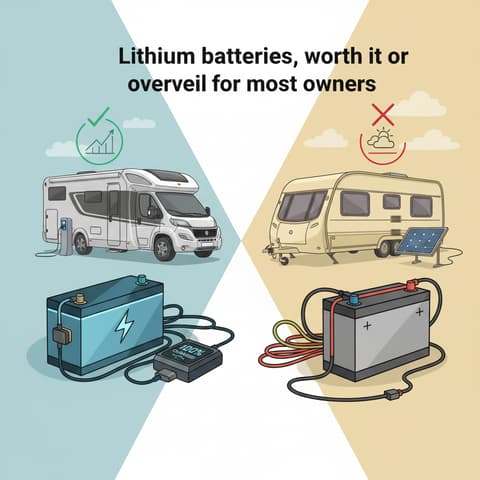
Lithium batteries, worth it or overkill for most owners
Is a lithium leisure battery worth the cost? Discover if LiFePO4 is right for your caravan or motorhome, covering weight savings, charging, and off-grid benefits.
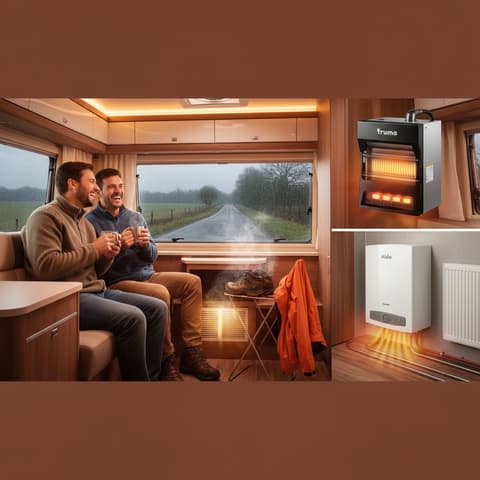
Heating explained, Truma vs Alde and what matters on a wet February weekend
Truma vs Alde: Which caravan heating system is best for UK winters? Compare blown air vs hydronic central heating, warm-up speeds, and maintenance requirements.