
Lithium batteries, worth it or overkill for most owners
Is a lithium leisure battery worth the cost? Discover if LiFePO4 is right for your caravan or motorhome, covering weight savings, charging, and off-grid benefits.
Is a lithium leisure battery worth the cost? Discover if LiFePO4 is right for your caravan or motorhome, covering weight savings, charging, and off-grid benefits.
Ready to find yours?
Put this knowledge into action

The RoamWorthy editorial team combines decades of caravan, motorhome and campervan ownership experience with industry expertise to provide trusted buying advice.
View all articles →- Off-Grid Essential: Best for those avoiding electric hook-up (EHU) or using high-drain inverters for coffee machines and hair dryers.
- Weight Efficiency: Saves 15-20kg on average, crucial for staying within motorhome payload or MTPLM limits.
- Charging Ecosystem: Requires lithium-compatible mains chargers, solar MPPTs, and B2B chargers for Euro 6 engines.
- Longevity: Lasts 10+ years (2,000-5,000 cycles) compared to 3-5 years for traditional lead-acid or AGM.
- Temperature Sensitivity: Standard LiFePO4 cannot be charged below 0°C without internal heating elements.
Is a Lithium Upgrade Right for Your Touring Style?
Lithium (LiFePO4) leisure batteries are frequently cited as the single best upgrade for modern motorhomes and caravans. However, they are not a 'drop-in' miracle for every owner. Whilst they offer incredible depth of discharge (often up to 90-100% usable capacity) and significant weight savings, they require a specific ecosystem of chargers to function safely and efficiently. If your system isn't designed to handle them, you risk paying for performance you simply won't see.
The Reality Check: Usage vs. Cost
Before investing £500 to £1,500+ on a lithium setup, evaluate your actual touring habits. If your touring is mostly on-grid at sites like Haven or Caravan and Motorhome Club locations, lithium is likely a luxury, not a necessity. In these scenarios, your battery acts merely as a buffer. However, for owners of premium models like the Bailey Alicanto Grande Deluxe Porto or Swift Challenger SE 480, the weight saving can provide much-needed headroom for additional accessories like motor movers or air conditioning.
When Lithium Makes Sense (The 'Off-Grid' Hero)
- Consistent Off-Grid Use: If you prefer wild camping or 'off-grid' rallies where 230V hook-up isn't available.
- High-Drain Appliances: If you run an inverter to power laptops, Nespresso machines, or microwaves. Lithium maintains a stable voltage (around 13V+) even under high current draw, whereas lead-acid voltage can 'sag' and trigger inverter cut-offs.
- Solar Efficiency: Lithium batteries accept charge much faster (higher charge current) than lead-acid, allowing you to harvest more energy during short UK winter days.
- Weight Constraints: A 100Ah lithium battery typically weighs 10-12kg, compared to 25-30kg for a similar lead-acid unit. This is vital for campervan conversions where every kilo counts.
When It Is Probably Overkill
- The 'Hook-up' Habit: If you rarely spend a night away from a 16A bollard, a high-quality NCC Category A or B AGM battery is a more logical financial choice.
- Low Power Demands: If your needs are limited to LED lights and the water pump.
- Legacy Systems: If you aren't prepared to upgrade your 10-year-old onboard charger or solar regulator. Older units may lack the specific LiFePO4 profile needed to reach 100% State of Charge (SoC).
Technical Compatibility: What to Check First
Lithium batteries require a specific charging profile. Unlike lead-acid, they do not like 'float' voltages for long periods and can be damaged by 'desulphation' pulses. Check the following:
- Mains Charger: Does your built-in power centre (e.g., Sargent or Nordelettronica units found in many UK caravan models) have a lithium toggle? Many modern Swift Trekker S or Bailey Pegasus Grande GT75 models are now coming 'lithium-ready'.
- Solar Controller: Is it an MPPT (Maximum Power Point Tracking) controller with a LiFePO4 preset? PWM controllers are often less efficient for lithium and may not provide the correct termination voltage.
- Battery-to-Battery (B2B) Charging: Modern Euro 6 engines (common in the Volkswagen California or Auto-Trail Imala) use smart alternators. A B2B charger is essential to prevent the alternator from overheating and to ensure the lithium battery receives the correct voltage whilst driving.
Pre-Purchase Action Plan
- [ ] Audit your energy: Calculate your daily Ah usage (see our Electric Basics guide).
- [ ] Verify Charger: Locate your power distribution unit (PDU) and check the manual for lithium compatibility.
- [ ] Inspect Cabling: Lithium can discharge at 1C (100A for a 100Ah battery). Ensure your cables are thick enough to prevent voltage drop and heat.
- [ ] Temperature Check: Standard LiFePO4 cannot be charged below 0°C. If you tour in winter, look for batteries with integrated heating elements.
- [ ] Professional Install: Consult a specialist from our Dealer Directory to ensure your BMS is configured correctly.
Frequently Asked Questions
Can I just swap my lead-acid for lithium?
Physically, they often fit the same trays, but you must ensure your charging sources won't exceed the battery's maximum charge voltage (usually 14.4V to 14.6V). Without a lithium-compatible charger, you may only charge the battery to 80-90% capacity, or worse, expose it to harmful high-voltage pulses from an old-style 'desulphation' mode.
How long do lithium leisure batteries last?
Most are rated for 2,000 to 5,000 cycles at 80% depth of discharge. For the average UK tourer, this could mean a lifespan of 10-15 years, significantly outlasting the running costs of replacing lead-acid every 3 years.
Are they safe?
Modern LiFePO4 (Lithium Iron Phosphate) is very stable. Unlike Lithium-Ion (NMC) used in phones or some cars, LiFePO4 is not prone to thermal runaway. Ensure the battery is UN38.3 certified and has a built-in Battery Management System (BMS) to protect against over-voltage and short circuits.
Do I need a B2B charger for a caravan?
Whilst motorhomes with smart alternators definitely need a B2B, caravans can also benefit. Long cable runs from the car to the caravan often result in significant voltage drop; a B2B charger ensures the lithium battery in the caravan receives the correct voltage regardless of the cable length.
Thinking of upgrading your whole setup? Explore the latest motorhome models or caravan layouts that often come with lithium-ready systems as standard.
Lithium leisure battery pricing (UK, 2026)
| Capacity | Typical UK price (2026) | Usable Ah (80% DoD lead-acid vs 95% LiFePO4) | Notes |
|---|---|---|---|
| 100Ah LiFePO4 | £420-£650 | ~95Ah usable | Direct swap for a 110Ah AGM in most vans. |
| 150Ah LiFePO4 | £620-£900 | ~142Ah usable | Sweet spot for weekend off-grid. |
| 200Ah LiFePO4 | £800-£1,200 | ~190Ah usable | Genuinely off-grid capable with 200W of solar. |
| Victron 200Ah smart | £1,400-£1,900 | ~190Ah usable | 10-year warranty, BMS visible on VictronConnect. |
Lithium leisure battery FAQ
Do I need a new charger?
Yes if your existing charger has no LiFePO4 profile. Fitting a lithium battery to a lead-acid charger works short-term but shortens battery life and may void warranty. Budget £150-£300 for a modern multi-chemistry charger.
Can I mix lithium and lead-acid on the same bus?
Only through a proper DC-DC charger or Battery Protect. Direct parallel connection is unsafe and will kill the lead-acid bank quickly.
Are lithiums safe under a bed?
LiFePO4 chemistry is thermally stable and the cells do not vent hydrogen, so under-bed and interior installs are fine. Fit a fused isolator within 200mm of the positive terminal per NCC guidance.
How long do they last?
Quality LiFePO4 cells deliver 3,000-5,000 cycles to 80% capacity. In leisure use that is typically 10-15 years, which is where the payback maths becomes favourable vs replacing lead-acid every 4-5 years.
Ready to find yours?
Put this knowledge into action
Can your car tow it?
Free towing check. Takes 30 seconds
Save outfits, compare setups, download or email a PDF report. Find compatible caravans.
Related Makes & Models
Spotted an error? Let us know.
Continue Reading
More expert guides to help you make informed decisions
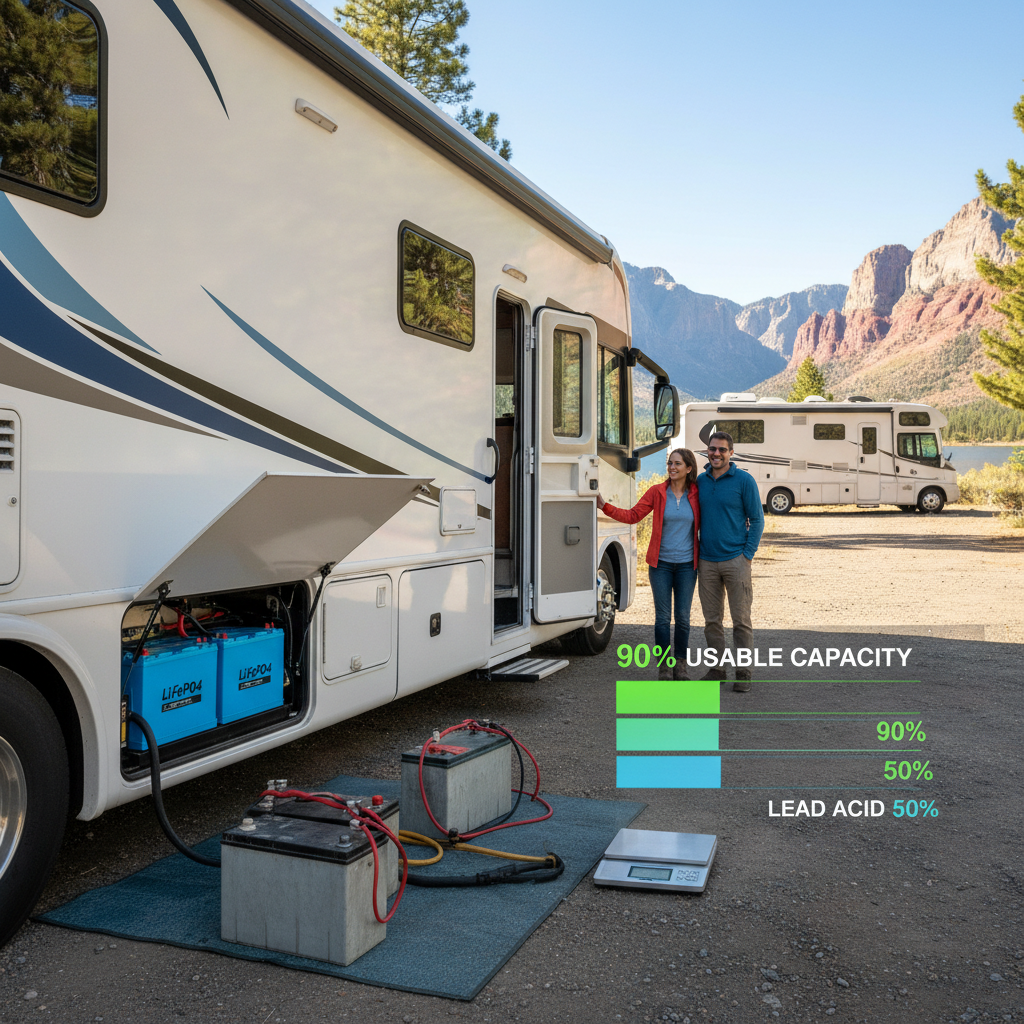
Switching to Lithium Batteries for Motorhome Power
Thinking of switching to lithium? Learn why LiFePO4 batteries are the ultimate 2026 upgrade for motorhome off-grid power, weight savings, and longevity.

Campsite memberships compared, when they are worth it and when they are not
Is a caravan club membership worth it in 2026? Compare CMC and C&CC benefits, pitch savings, and exclusive CL/CS site access to see if you'll save money.
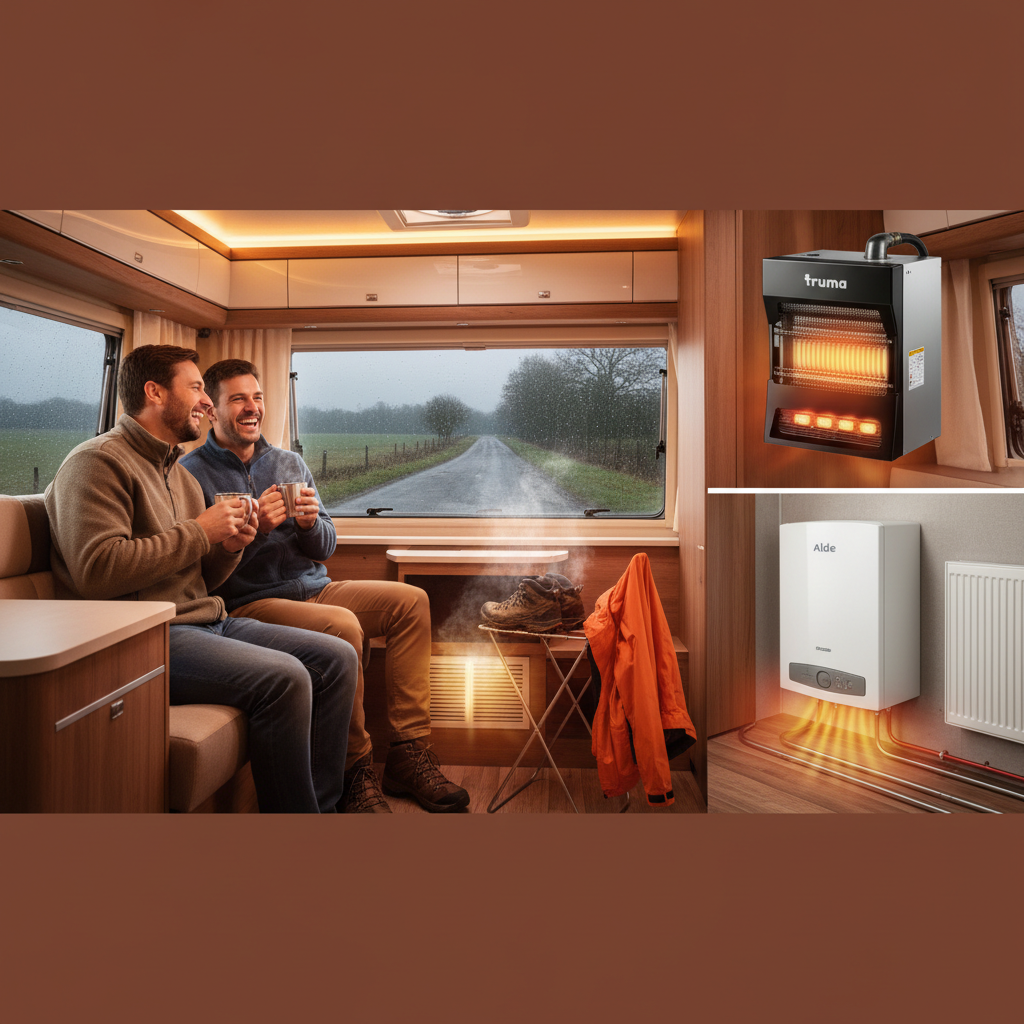
Heating explained, Truma vs Alde and what matters on a wet February weekend
Truma vs Alde: Which caravan heating system is best for UK winters? Compare blown air vs hydronic central heating, warm-up speeds, and maintenance requirements.