
Electric hook-up and solar basics, 12V vs 230V without the confusion
Master your caravan's 12V and 230V systems. Learn about leisure batteries, solar charging, and EHU basics to stay powered up on every UK pitch.
Master your caravan's 12V and 230V systems. Learn about leisure batteries, solar charging, and EHU basics to stay powered up on every UK pitch.
Ready to find yours?
Put this knowledge into action

The RoamWorthy editorial team combines decades of caravan, motorhome and campervan ownership experience with industry expertise to provide trusted buying advice.
View all articles →At a Glance: Powering Your Adventures
- 12V DC: The 'heartbeat' of your van, powering lights, pumps, and electronics via the leisure battery.
- 230V AC: Standard UK mains power available via Electric Hook-Up (EHU) for sockets and heavy appliances.
- Solar Power: Primarily a maintenance charger in the UK; essential for off-grid but weather-dependent.
- Safety First: Always use a high-quality, orange 25m hook-up cable and check your RCD (breaker) if power drops.
Whether you are touring in a luxury Bailey Alicanto or a compact Volkswagen California, understanding your power supply is the difference between a relaxing break and a cold night in the dark. Modern leisure vehicles are complex, but they follow a predictable logic.
The Simple Model: 12V vs 230V
Most UK leisure vehicles operate on a 'dual-voltage' system. Understanding the split is the key to managing your power effectively without blowing fuses or tripping site bollards.
1. The 12V System (Direct Current)
This is powered by your leisure battery. It is designed to keep the essentials running even when you aren't plugged into a wall.
- Powers: LED lighting, water pumps, fridge ignition, USB ports, and control panels.
- Off-Grid: This is your primary source when 'wild' camping or at sites without hook-up.
- Charging: Charged by the engine alternator while driving (via a split-charge relay or DC-DC charger), a solar panel, or the onboard charger when on EHU.
2. The 230V System (Alternating Current)
This is standard UK mains power, accessed via the Electric Hook-Up (EHU) point on the side of your van.
- Powers: Standard 3-pin domestic sockets, microwave, electric heating elements (like those in the Swift Challenger 645), and air conditioning.
- Limitations: Most UK campsites provide 10A or 16A. If you try to run a domestic kettle and a hairdryer at the same time, you will likely trip the site's bollard.
- Inverters: These devices convert 12V to 230V. While useful for charging a laptop off-grid, they can drain a standard lead-acid battery in minutes if used for high-heat appliances. For heavy inverter use, see our lithium batteries guide.
The Leisure Battery: The Heart of the System
Your leisure battery is not the same as a car battery. While a car battery provides a massive burst of power to start an engine, a leisure battery is designed to release energy slowly over a long period. Battery health is paramount; a tired battery makes every component feel broken. If your lights dim when the water pump kicks in, your battery is likely failing or discharged.
Pro Tip: Check your battery's NCC (National Caravan Council) classification. Category A is for high-demand off-grid use, while Category C is for basic backup when usually connected to EHU. Always account for the weight of larger batteries using our Motorhome Weight Checker.
Solar Basics for 2026
Solar technology has become more efficient, but the laws of physics remain. If you rely on solar in winter in the UK, expect modest results.
- Trickle vs. Bulk: Think of solar as a trickle charger that tops up what you use, rather than a generator that powers the whole van.
- The Controller: Ensure you use an MPPT (Maximum Power Point Tracking) controller rather than the older PWM style; they are up to 30% more efficient in the UK's overcast conditions.
- Shading: Even a small shadow from a tree branch across one corner of a panel can reduce its output by over 50%.
The "No Drama" Troubleshooting Routine
- If 230V fails: Check the RCD/MCB breakers in your van's consumer unit. If those are fine, check the reset button on the campsite bollard.
- If 12V fails: Check the master switch on your control panel. Check the voltage; if it's below 12.2V, your battery is nearly empty.
- If one item fails: Locate your fuse box. Most modern vans like the Swift Challenger range use standard automotive blade fuses.
Essential Power Checklist
- Cables: Use a 25m heavy-duty orange cable. Always uncoil it fully to prevent heat build-up (induction).
- Spares: Carry a pack of assorted blade fuses (5A, 10A, 15A, 20A).
- Winter Care: If not using the van, remove the battery and keep it charged at home, or ensure the solar panel is clear of snow and debris.
- Weight: Large battery banks and solar arrays add up. Use our Campervan Conversion Checker to stay within your payload limits.
Frequently Asked Questions
Can I run my fridge on 12V?
Usually, the 12V setting on a 3-way fridge only works while the engine is running to maintain temperature during transit. It will drain a leisure battery very quickly if used while parked.
Do I need an inverter?
Only if you need to power 230V appliances while away from a hook-up. Most modern travellers find that 12V USB adapters are sufficient for phones and tablets.
How do I know how much power I have left?
A simple voltmeter is a start, but a dedicated battery monitor (like a Shunt) provides a 'fuel gauge' for your battery, showing exactly how many Amp-hours remain.
Next clicks on RoamWorthy
Ready to find yours?
Put this knowledge into action
Related Makes & Models
Spotted an error? Let us know.
Continue Reading
More expert guides to help you make informed decisions
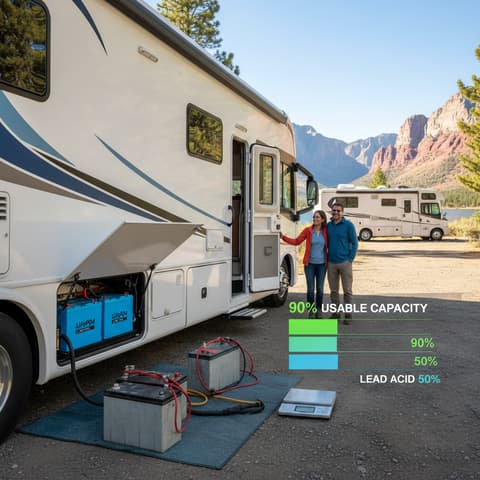
Switching to Lithium Batteries for Motorhome Power
Thinking of switching to lithium? Learn why LiFePO4 batteries are the ultimate 2026 upgrade for motorhome off-grid power, weight savings, and longevity.
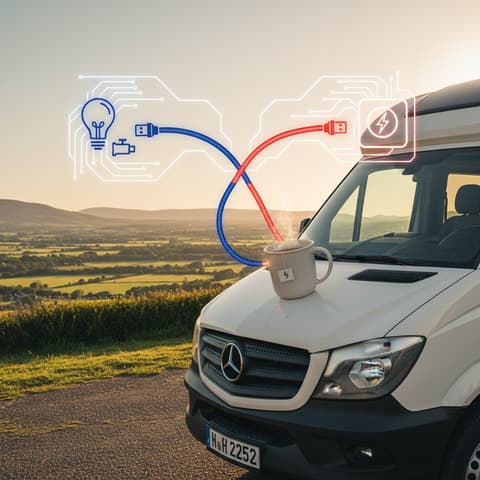
Campervan electrics in one cup of tea
Demystify campervan electrics in the time it takes to drink a tea. Learn about 12V vs 230V, lithium upgrades, and UK safety standards for 2026.

Campsite memberships compared, when they are worth it and when they are not
Is a caravan club membership worth it in 2026? Compare CMC and C&CC benefits, pitch savings, and exclusive CL/CS site access to see if you'll save money.