
Caravan Maintenance Tips for Beginners
Master caravan maintenance for 2026. From pre-trip safety checks to winterising and damp prevention, our guide keeps your caravan safe and holds its value.
Master caravan maintenance for 2026. From pre-trip safety checks to winterising and damp prevention, our guide keeps your caravan safe and holds its value.

Sarah is an experienced motorhome owner and full-time traveller with expertise in wild camping, off-grid living and campervan conversions.
View all articles →The Beginner's Guide to Caravan Maintenance (2026 Edition)
Owning a caravan offers unparalleled freedom, but it also brings the responsibility of maintaining a complex vehicle that combines automotive engineering with domestic utilities. Whether you own a lightweight Swift Basecamp Plus or a flagship Bailey Unicorn Cartagena, a proactive maintenance regime is the difference between a stress-free holiday and a costly breakdown. This guide outlines the essential habits for the modern caravanner.
- Safety First: Check tyre pressures and wheel nut torque before every single trip.
- Water is the Enemy: Use a moisture meter quarterly to catch damp before it becomes structural.
- Professional Care: An annual AWS-approved habitation service is essential for warranty and safety.
- Winter Protocol: Always drain the water system fully to prevent frost damage to pipes and taps.
- Tyre Age: Replace tyres every 5 years regardless of tread depth due to UV degradation.
1. Pre-Trip Safety Checklist
Never head off on holiday without performing these five essential checks. If you are unsure about your caravan's weight limits, use our Caravan Towing Calculator to ensure a safe match.
- Tyres and Wheels: Check pressures against the manufacturer's plate (including the spare). Inspect for sidewall cracking. Crucial: Re-torque wheel nuts after the first 25–50 miles of any wheel removal. Most caravans require 110Nm to 130Nm, but always check your handbook.
- Lights and Electrics: Connect your 13-pin plug and verify indicators, brake lights, fog lamps, and number plate illumination.
- Hitch and Brakes: Ensure the hitch head clicks into place securely. Clean stabiliser pads with brake cleaner if they groan. Check the breakaway cable is routed correctly and the handbrake holds on a slope.
- Noseweight: Use a noseweight gauge to ensure you are within the limit of both your caravan hitch and your towcar's towball.
- Gas Safety: Ensure bottles are strapped tight. Check pigtail hoses for signs of perishing or 'orange peel' texture.
2. Monthly In-Season Maintenance
Keep your caravan in peak condition during the summer months with these quick tasks:
- Water System: Run the pump and check for drips under the van. Listen for the pump 'cycling' when taps are off—this often indicates a hidden leak.
- Battery Health: Ensure terminals are clean. If you aren't using the van, top up the leisure battery monthly or use a solar regulator to maintain charge.
- Seal Care: Treat window and door rubber seals with a silicone conditioner to prevent them from sticking and tearing.
- Chassis: Lightly grease corner steady threads. Avoid over-greasing, as this attracts road grit which can grind down the threads.
3. Seasonal & Winter Care
Properly 'winterising' your caravan can save thousands in repair bills. For more on long-term care, see our guide on the Servicing schedule.
- The Big Drain Down: In winter, open all taps (including the shower) to the central position, open the yellow drain-down valve, and remove the shower head. Frozen water in a plastic tap will crack the internal cartridge.
- Damp Prevention: Stand cushions vertically to allow airflow. Use a pinless moisture meter to check corners and around windows. Readings above 15-20% require professional investigation.
- Sterilisation: Every spring, flush the system with a food-safe cleaner (like Puriclean) to remove biofilm from the pipes.
4. Tyres, Brakes, and Running Gear
Caravan tyres rarely wear out through tread depth; they fail due to age and UV degradation. For more information on specific models and their running gear, browse our Caravan Models hub.
- The 5-Year Rule: Replace tyres every 5 years, and never exceed 7 years, regardless of how much tread is left. Check the DOT code on the sidewall for the manufacture date.
- Brake Service: If the caravan 'shunts' against the car when braking, or if the handbrake pulls up very high, your brake shoes need professional adjustment.
- Shock Absorbers: Check for oil leaks on the dampers. Modern models like the Swift Challenger or Coachman Laser 665 often feature sophisticated chassis setups that rely on functional shocks for stability.
5. The Annual Habitation Service
While DIY maintenance is great, a professional habitation service is non-negotiable. An Approved Workshop Scheme (AWS) technician will check:
- Gas tightness and carbon monoxide emissions.
- 230V and 12V electrical safety.
- Full damp report using professional-grade equipment.
- Chassis and braking system integrity.
Maintaining a full service history is vital for your warranty and significantly boosts resale value when you browse caravans for sale to upgrade. If you are looking for a specific layout to make maintenance easier, see our Caravan Layouts guide. You can also Find a Dealer near you for professional support.
Essential Caravan Tool Kit
| Tool | Purpose |
|---|---|
| Torque Wrench | Ensuring wheel nuts are safely tightened (typically 19mm or 21mm socket). |
| Moisture Meter | Early detection of water ingress (aim for pinless to avoid wall damage). |
| Silicone/PTFE Spray | Lubricating seals and locker hinges without attracting dust. |
| Socket Tester | Checking site bollard wiring safety and reverse polarity. |
Frequently Asked Questions
Can I use a pressure washer to clean my caravan?
It is not recommended. High-pressure water can force its way past window seals and into the mastic joints of the bodywork, causing damp. Use a dedicated caravan shampoo and a soft brush instead.
How often should I change my gas hose?
Check the date printed on the hose. Generally, orange high-pressure pigtails should be replaced every 5 years, but inspect annually for cracking. Always refer to the manufacturer's specific guidance.
Do I need to service a brand-new caravan?
Yes. To maintain your manufacturer warranty (e.g., from Bailey, Swift, or Elddis), you must have an annual service performed by an authorised dealer or AWS workshop, usually within a specific window of the purchase anniversary. For more on the first year of ownership, read our First-year ownership guide.
What is the correct tyre pressure for my caravan?
There is no universal pressure. You must check the data plate (usually near the door) or the owner's manual. Pressures vary significantly based on the MTPLM of the caravan.
Ready to find yours?
Put this knowledge into action
Can your car tow it?
Free towing check. Takes 30 seconds
Save outfits, compare setups, download or email a PDF report. Find compatible caravans.
Related Makes & Models
Spotted an error? Let us know.
Continue Reading
More expert guides to help you make informed decisions

Preventing Condensation and Mould in Your Campervan
Learn how to prevent campervan condensation and mould. Discover the importance of active ventilation, NCC safety warnings regarding gas heaters, and how to protect your health on
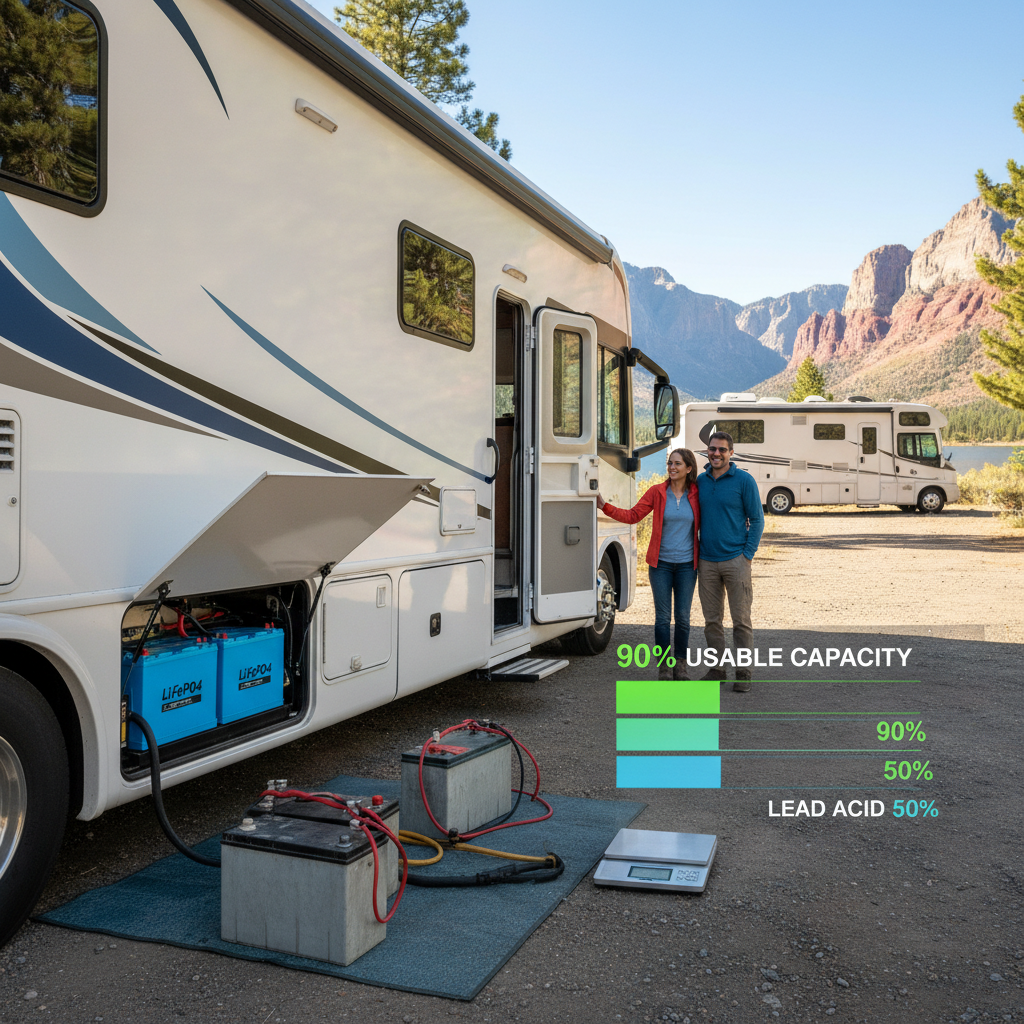
Switching to Lithium Batteries for Motorhome Power
Thinking of switching to lithium? Learn why LiFePO4 batteries are the ultimate 2026 upgrade for motorhome off-grid power, weight savings, and longevity.

Caravan noseweight and stability, how to measure and stay safe
Quick answer: noseweight is the downward force the caravan hitch puts on the towball. Aim for roughly 5 to 7 percent of the loaded caravan weight, and never exceed the lower of your car towball limit, hitch limit, or the caravan manufacturer noseweight figure.