
The Sunday Afternoon Checklist That Prevents Monday Regret
Prevent damp, flat batteries, and tyre failure with this 20-minute Sunday caravan reset. Essential maintenance tips to protect your resale value and peace of mind.
Prevent damp, flat batteries, and tyre failure with this 20-minute Sunday caravan reset. Essential maintenance tips to protect your resale value and peace of mind.

The RoamWorthy editorial team combines decades of caravan, motorhome and campervan ownership experience with industry expertise to provide trusted buying advice.
View all articles →Quick Answer: The 20-Minute Sunday Reset
- Prevent Damp: Airing out and checking lockers prevents costly water ingress and condensation.
- Protect Tyres: Visual checks catch sidewall cracking before they cause blowouts.
- System Health: Proper drainage prevents stagnant water and catastrophic winter frost damage.
- Resale Value: A well-documented maintenance habit adds significant value when selling or trading in.
- Battery Care: Isolating the 12V system prevents deep discharge and premature battery failure.
If you adopt only one habit as a caravan owner, make it this: before you hitch up and head home, perform a 20-minute "Sunday Reset." It isn’t about being precious; it’s about preventing the slow-burning problems—like damp, stagnant water, and tyre degradation—that cost thousands in repairs and tank your resale value. This routine is designed to transition your vehicle from a living space back into a road-ready trailer, ensuring that the transition to storage doesn't become a catalyst for decay.
The Sunday Afternoon Checklist
Whether you are packing up a premium Swift or a compact Bailey, these five steps ensure your next trip starts with a smile, not a repair bill. This process should be performed after all personal belongings are packed but before the final hitching procedure begins.
1. The Five-Minute Air-Out
Modern caravans are incredibly well-sealed, which is great for warmth but poor for moisture management. Open all windows and the habitation door for at least five minutes while you do your final sweep. This clears out the humid air generated from cooking and sleeping, preventing condensation from settling into soft furnishings during storage. Pay particular attention to the bathroom and kitchen areas where moisture levels are highest. For those with high-spec winterised models, don't assume the ventilation system does it all—manual airing is still vital to equalise the internal and external humidity levels.
Consider the scenario where you have cooked a final Sunday breakfast; the steam from the kettle and pans can linger in the fabrics for days if not properly vented. By opening the roof lights and the main door simultaneously, you create a cross-flow that replaces damp air with fresh, dry air, significantly reducing the risk of surface mould on curtains and upholstery.
2. The "Locker & Corner" Moisture Sweep
Damp is the silent killer of UK caravans. Use a torch to check the back of overhead lockers and under-seat storage areas. Look for "tackiness" on wallboards, discolouration, or a musty smell. Catching a seal failure early can be the difference between a minor reseal and a major wallboard replacement. For a deeper dive, see our Damp check guide for used caravans. If you own a Coachman or other bonded-construction models, check the junction points where panels meet, as these are the primary areas where movement can stress the sealant.
A useful buyer checklist for this stage includes:
- Check the ceiling around the status aerial entry point.
- Inspect the floor-to-wall joints inside the gas locker.
- Feel the wallboard around the window frames for any softening.
- Look for black spotting in the corners of the bed boxes.
3. Drain Down and System Sanitisation
Never leave water sitting in your pipes or heater tank. Open the drain-down valve (usually located near the water heater) and leave all taps in the 'open' central position (with the pump off). This prevents stagnant water from smelling and, crucially, protects your plumbing from frost damage during the colder months. The Camping and Caravanning Club recommends a full drain-down to prevent frost damage, as even a small amount of water in a plastic elbow joint can crack the fitting if it freezes.
Don't forget to empty the toilet cassette—leaving waste for even a week can lead to stubborn odours and seal degradation. Use a dedicated cassette cleaner periodically to maintain the internal blade seal. When you leave the taps open, it allows air to circulate through the pipes, which helps prevent the growth of biofilm and ensures that the system remains fresh for your next outing.
4. The Tyre and Torque Glance
Caravan tyres often age through UV damage and standing still rather than mileage. According to TyreSafe, 163 people are killed or seriously injured annually in incidents related to defective tyres. Furthermore, the 2025 figure of 201 tyre-related KSIs (Killed or Seriously Injured) represents a 19% year-on-year increase. Check for sidewall cracking and ensure your pressures are correct for the journey home. If you aren't sure of your weight limits, use our Caravan Towing Calculator to ensure you aren't overloading your axles.
Ensure your wheel nut indicators (if fitted) are aligned. Remember that industry guidance generally suggests replacing caravan tyres every 5 to 7 years regardless of tread depth. TyreSafe also notes that over 6 million UK tyres annually have illegal tread. While caravans rarely wear down tread through mileage, the rubber compounds harden over time, leading to reduced grip and an increased risk of delamination during high-speed motorway towing.
5. The 'Next Trip' Log
Keep a small notebook or a digital memo. Note down that flickering LED, the stiff locker catch, or the dwindling gas levels. Addressing these on a Monday morning from the comfort of home is far easier than discovering them on a Friday night at a campsite. This log also serves as a fantastic "provenance file" when you eventually look at Caravan Layouts for your next upgrade. If you are eyeing a new model from local caravan dealers, having a full history of your current van will maximise your part-exchange value.
Ask yourself: Did the water pump sound noisier than usual? Did the fridge take longer to cool on gas? These subtle changes are early warning signs of component failure. Documenting them allows you to book a professional service before a minor annoyance becomes a holiday-cancelling breakdown.
Why This Matters for Resale
When you eventually look to browse used caravans for sale, a buyer will notice the difference between a van that has been neglected and one that has been loved. A consistent routine, backed by a professional servicing and maintenance schedule, is your best insurance policy. In the current market, buyers are increasingly savvy about moisture history and security.
Ensure your Elddis or Swift can command a premium by keeping your CRiS registration documents up to date. CRiS (Central Registration & Identification Scheme) acts as a security check for buyers, confirming the name of the registered keeper and checking if the vehicle has been reported stolen, has outstanding finance, or has been written off by insurers. Always take your CRiS Registration Document with you when travelling, as it is proof that you are the registered keeper.
Actionable Advice: The Sunday Kit
Keep a small "Reset Kit" in your front locker containing:
- A high-quality LED torch for damp spotting in dark corners.
- A digital tyre pressure gauge for accurate pre-departure checks.
- Silicone spray for stiff window seals and locker hinges (avoid WD-40 on rubber).
- A microfibre cloth to wipe down condensation from window frames.
- A simple moisture meter (optional but recommended for older vans).
- A copy of your CRiS document for legal proof of ownership.
Frequently Asked Questions
Should I leave my fridge door open?
Yes. Always prop the fridge and freezer doors slightly ajar using the travel catch to prevent mould growth and unpleasant odours while in storage. This is particularly important for units found in most UK caravans, as the airtight seals that keep the cold in also trap moisture and bacteria when the unit is switched off.
Do I need to check my wheel nuts every Sunday?
While you don't need to torque them every week, a quick visual check is highly recommended. You should always torque them after the caravan has been stationary for a long period, after a wheel has been removed, or if you have hit a significant pothole. The UK Towing Safety Alliance has noted that trailer incidents have surged 37% on the strategic road network, often due to ageing vehicles and maintenance oversights.
What is the most common Sunday mistake?
Forgetting to turn off the master 12V switch or the aerial booster. These small draws can lead to a flat leisure battery within days, which can permanently damage the battery's capacity. If your van has a solar panel, ensure it is clean to maintain the trickle charge, as dust and bird droppings can significantly reduce its efficiency.
How do I prevent spiders and pests?
Ensure all food crumbs are vacuumed up and consider using a few drops of peppermint oil near floor vents, which is a natural deterrent. Also, ensure all external locker doors are clicked shut firmly to prevent rodents from finding a way into the floor insulation or internal cavities.
Is a CRiS check necessary for maintenance?
While not a maintenance task, a CRiS check is vital when buying or selling. It confirms the registered keeper and checks if the caravan has been reported stolen, written off, or has outstanding finance. For owners, ensuring your VIN CHIP® is intact is the industry standard in caravan identification and helps prevent and detect caravan crime.
How often should I check my tyre tread?
You should check tread depth and overall condition before every journey. TyreSafe notes that over 2 million MOT failures annually are due to tyre defects. While caravans do not undergo MOTs, the same safety standards apply to ensure the vehicle is roadworthy and legal.
What should I do with my water system in winter?
The Camping and Caravanning Club recommends a full drain-down to prevent frost damage. Open all taps and the drain valve to ensure no water remains in the internal plumbing or water heater. Leaving the taps in the open position prevents pressure build-up and allows the system to dry out completely, reducing the risk of bacterial growth.
Related on RoamWorthy
Can your car tow it?
Free towing check. Takes 30 seconds
Save outfits, compare setups, download or email a PDF report. Find compatible caravans.
Spotted an error? Let us know.
Continue Reading
More posts to help you make informed decisions

Preparing for July Touring - Peak Heat and High Season Strategy
Master July 2026 touring with our expert guide to high-season strategy. Learn how to manage heatwaves, fridge efficiency, and site etiquette for a stress-free trip.

Preventing Condensation and Mould in Your Campervan
Stop mould and damp in your campervan. Learn about the 2-litre rule, BS EN 721 ventilation standards, and why diesel heaters are the best for UK van life.
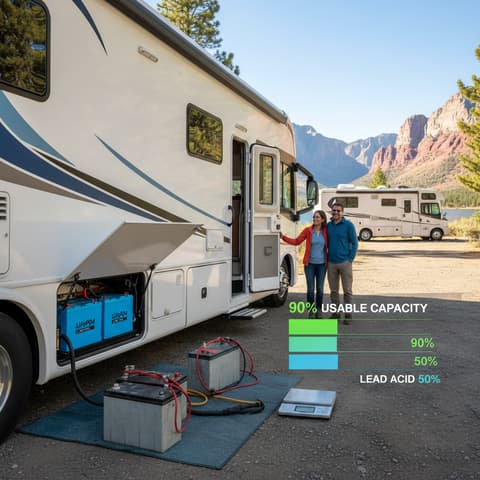
Switching to Lithium Batteries for Motorhome Power
Thinking of switching to lithium? Learn why LiFePO4 batteries are the ultimate 2026 upgrade for motorhome off-grid power, weight savings, and longevity.