
Motorhome Storage Before You Buy: Height, Length, Access and Everyday Practicality
Don't buy a motorhome that won't fit! Learn how to measure height, length, and turning circles for home or site storage before you commit to a purchase.
Don't buy a motorhome that won't fit! Learn how to measure height, length, and turning circles for home or site storage before you commit to a purchase.
Ready to find yours?
Put this knowledge into action

Finding the perfect floor plan is only half the battle when choosing a leisure vehicle. Before you commit to a purchase, you must determine where that vehicle will live when it is not on the road. Whether you plan to keep it on your driveway or at a dedicated facility, the physical dimensions of a motorhome—specifically its height, length, and width—dictate the practicality of your ownership experience.
The market offers a vast range of sizes, from compact van conversions like the Swift Carrera 132 140BHP Auto to substantial coachbuilt models. Failing to measure your available space accurately can lead to logistical challenges, including potential damage to your property or the vehicle itself, or the unexpected expense of professional storage fees.
Quick Answer: Will it Fit?
To ensure a motorhome fits your storage space, measure the total footprint including wing mirrors, bike racks, and ladders. Check for overhead obstacles like eaves or branches, and verify that the approach angle from the road allows for the vehicle's turning circle. If storing at home, ensure you have at least 0.5m of clearance on the habitation door side for access. If using professional storage, factor in the travel time and security accreditation of the site.
Assessing Your Driveway for a Motorhome
Storing a motorhome at home is a convenient option, allowing for easy loading and maintenance. However, a standard car parking space is rarely sufficient. Most UK driveways are designed for cars roughly 4.5 to 5 metres long. In contrast, even a compact Elddis Accordo typically exceeds 6 metres, while family-sized models like the Bailey Autograph can reach nearly 8 metres.
Length and Overhangs
When measuring your driveway, do not just measure the flat ground. Consider the "overhang"—the portion of the motorhome that extends beyond the rear wheels. If your driveway ends at a wall or a fence, the rear of the vehicle must have clearance. Furthermore, ensure the vehicle does not obstruct public access or footpaths. If you are looking at larger layouts, compare motorhome layouts to see how rear-lounge designs often result in longer rear overhangs compared to end-kitchen models.
The Width Trap
Width is a critical dimension. While a vehicle might be 2.3 metres wide, you must account for the wing mirrors. If you have a narrow gate or a side-of-house passage, you may need to fold the mirrors every time you move the vehicle. This becomes a significant chore that can discourage frequent use. If you are looking at wider models, such as the Swift Voyager, ensure you have enough clearance on either side to allow for safe manoeuvring and door access. Remember that habitation doors often swing outwards; if you park too close to a wall, you may find it difficult to enter the living area to pack for a trip.
Height Clearances and Overhead Obstacles
Height is a common reason motorhomes suffer damage at home. Unlike cars, motorhomes have roof-mounted equipment like TV aerials, solar panels, and skylights. When assessing your storage spot, look up. Common hazards include:
- House eaves and guttering.
- Overhanging tree branches.
- Telephone or power lines.
- Carports or garage door headers.
If you are considering a "Hi-Line" model with an overcab bed, such as those found in the Elddis Autoquest range, your height clearance requirements will be higher than a low-profile or van conversion model. Before you browse used motorhomes, record the height of your lowest overhead obstacle to use as a guide during your search. It is also worth noting that many modern motorhomes feature large roof lights that require clear overhead space.
Manoeuvrability and Access
A space might be large enough to hold a motorhome, but you must ensure you can get the vehicle into it. The turning circle of a motorhome is considerably larger than a car's. If you live on a narrow residential street with cars parked opposite your driveway, you may need to consider the turning arc required for a long-wheelbase vehicle. This is a common consideration for those looking at the Auto-Trail Imala or similar coachbuilt models.
Consider the "break-over angle" as well. If your driveway has a steep incline or a sharp change in gradient at the entrance, long motorhomes with low rear bumpers may be at risk of grounding. You can research different motorhome body types to see which chassis configurations offer better ground clearance for your specific access needs.
Ground Surface and Weight
A motorhome is a heavy vehicle. A fully laden vehicle sitting in the same spot for months can affect some driveway surfaces. If your driveway is not reinforced, you may wish to consider ground protection or a dedicated concrete pad. Long-term parking on soft ground can also lead to moisture issues, so ensuring the area is well-ventilated is a sensible precaution.
Professional Storage Sites
If home storage is not viable, you will need a professional facility. When choosing a site, look for those with recognised security accreditations, such as CaSSOA (Caravan Storage Site Owners’ Association). These sites are graded based on security features like CCTV and perimeter fencing. Using a high-security site is a common way to meet requirements when navigating motorhome insurance essentials.
However, professional storage introduces logistical considerations. If the site is a significant distance away, you may need to plan your trips more carefully. You also need to consider how you will maintain the leisure battery. Unless the site offers electric hook-up (EHU) or your vehicle has a solar setup, you may need to visit the site regularly to check the systems. For those looking at power management, switching to lithium batteries is one option to discuss with a specialist for better long-term voltage stability.
Security and Maintenance at Home
If you do store at home, security is a priority. Consider physical security measures such as wheel clamps, steering locks, or driveway posts. Many owners also use a cover to protect the bodywork, though it is important to ensure the cover is breathable. Proper winterising routines are essential if the vehicle is to remain stationary during the colder months, particularly draining the water system.
Before you finalise a purchase, it is worth using a motorhome model catalogue to check the technical specifications of your shortlisted vehicles. Compare these against your driveway measurements, including a buffer for error. If the fit is too tight, you may find that a slightly smaller model, like the Elddis Majestic, offers a more relaxed ownership experience. Additionally, consider the proximity of your neighbours to ensure the vehicle does not negatively impact their property.
Everyday Practicality and Access
Beyond the physical fit, consider how you will use the vehicle while it is parked. Will you need to access the storage lockers to load gear? If the lockers are on the side of the vehicle that faces a wall, you will have to move the motorhome every time you want to pack or unpack. Similarly, check the location of the waste water outlet and the toilet cassette hatch to ensure they are accessible for maintenance.
The Pre-Purchase Storage Audit
Before visiting motorhome dealers, conduct a thorough audit of your intended storage location. This prevents the heartbreak of buying a vehicle that you cannot safely park or access. Use the following framework to evaluate your space:
1. The Approach Path
Walk the route from the main road to your parking spot. Are there narrow gaps between parked cars? Are there sharp 90-degree turns? A motorhome does not follow the same path as a car; the rear wheels will "cut in" on corners. If your driveway is at an angle to the road, you may need to swing wide, which requires the road to be clear of obstructions.
2. The Vertical Envelope
It is not just the roof of the motorhome you need to worry about. Consider the height of the habitation door and any side-mounted awnings. If you park close to a wall with an overhanging roof, you might find that you can park the vehicle, but you cannot open the door without the top of it hitting the eaves.
3. Utility Access
If you plan to keep the motorhome plugged into a trickle charger, where is your nearest outdoor socket? Ensure cables do not create a trip hazard across public footpaths. Similarly, if you intend to wash the vehicle at home, ensure you have sufficient space to move a ladder around the perimeter safely.
Trade-offs: Size vs. Convenience
There is often a direct trade-off between the living space inside a motorhome and the ease of storing it. A large tag-axle motorhome offers unparalleled luxury but may require a dedicated commercial storage plot. Conversely, a van conversion can often double as a second car and fit into a standard driveway, but offers less internal storage for long-term touring.
When viewing a vehicle, ask yourself: "How much effort will it take to get this on the road?" If the storage process involves moving two cars, unfolding mirrors, and navigating a centimetre-perfect gap, you may find yourself using the motorhome less often than you planned. A smaller vehicle that is easy to "grab and go" often provides more value through increased usage.
Final Checklist Before Buying
- Physical Measurement: Measure the actual vehicle at the dealership, including any fitted accessories like ladders or bike racks.
- Turning Test: Assess whether your street access allows for the turning arc of your chosen model.
- Neighbourly Check: Consider the impact of a large vehicle on neighbouring properties, including light blockage or sightlines.
- Service Access: Ensure you have enough room to open the habitation door and locker doors while the vehicle is parked.
- Ground Check: Verify that your driveway surface is suitable for the vehicle's weight and won't sink or crack.
By treating storage as a primary buying criterion, you ensure that your new motorhome remains a source of freedom rather than a logistical burden. For more help with the purchasing process, refer to our motorhome buying checklist. Whether you are buying privately or from a specialist, having your storage plan finalised will give you the confidence to make the right choice.
Ready to find yours?
Put this knowledge into action
Related Tools
Related Makes & Models
Spotted an error? Let us know.
Continue Reading
More expert guides to help you make informed decisions
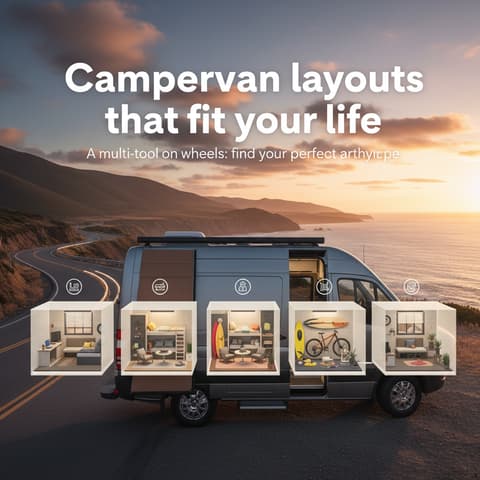
Campervan layouts that fit your life
Choosing the right campervan layout is critical for UK vanlife. From side-kitchen Weekenders to fixed-bed Explorers, find the perfect configuration for 2026.

Can My Car Tow This Caravan? Complete UK Towing Guide 2026
Is your car safe to tow? Learn the 85% rule, UK licence laws, and how to find your car's true towing capacity using the VIN plate in our 2025/26 guide.
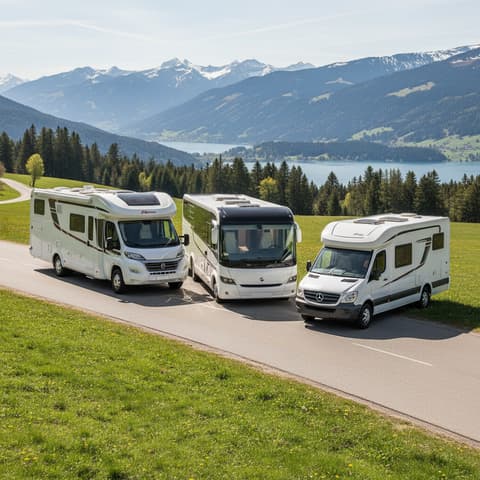
Motorhome Body Types: Coachbuilt vs A-Class vs Campervan
Compare Motorhome body types: Coachbuilt, A-Class & Campervans. Expert guide on UK driving licences, insulation, fuel economy, and 2026 pricing for UK buyers.